Blog

  • Earaches

    Ear, Nose & Throat Conditions

    Signs & Symptoms

    *  Mild to severe ear pain.

    *  Feeling of fullness or discomfort in the ears.

    *  Tugging at the ear and restlessness in young children.

    *  Ear pain.

    *  Some hearing loss.

    *  Blood or other discharge from the ear (especially after sticking an object in the ear or exposure to extremely loud noise).
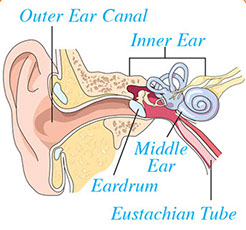
    Illustration of ear.

    Causes

    The most common cause of earaches is plugged Eustachian tubes. These go from the back of the throat to the middle ear. Fluid or pressure in a plugged Eustachian tube causes pain. This is caused by an infection of the middle ear, a cold or sinus infection, or allergies. Other things that can cause ear pain include changes in air pressure in a plane, something stuck in the ear, too much earwax, tooth problems, and ear injuries.

    Treatment

    Treatment includes pain relievers and methods to dry up or clear the blocked ear canal. Self-care can be used to treat many earaches. Severe and/or constant ear pain needs a medical diagnosis. Often, antibiotics are not needed for middle ear infections in children. About 8 in 10 children with ear infections get better without antibiotics. Let your child’s doctor decide if and when an antibiotic should be prescribed.

    Questions to Ask

    Self-Care / Prevention

    To Help Prevent Ear Pain

    *  Don’t put cotton-tipped swabs, bobby pins, etc., in your ears. This could damage the eardrum.

    *  Don’t blow your nose with too much force.

    *  If you can, avoid places that have very loud noises (construction sites, etc.). Wear earplugs when exposed to loud noises.

    *  Keep the volume on low when using stereos, compact discs (CDs), etc. If someone else can hear the music when you are listening to one of these devices with earphones, the volume is too loud.

    To Avoid Getting “Swimmer’s Ear”

    *  Wear wax or silicone earplugs.

    *  Wear a bathing cap.

    *  Don’t swim in dirty water. Swim on the surface not underneath the water.

    *  Use an over-the-counter product, such as Swim-Ear, as directed.

    To Reduce Ear Pain

    *  Place a warm washcloth next to the ear. Some health professionals recommend putting an ice bag or ice in a wet washcloth over the painful ear for 20 minutes.

    *  Take an over-the-counter medicine for pain as directed on the label.

    To Open Up the Eustachian Tubes and Help Them Drain

    *  Sit up. Prop your head up when you sleep.

    *  Yawn. This helps move the muscles that open the Eustachian tubes.

    *  Chew gum or suck on hard candy. (Do not give to children under age 5.) This tip is especially helpful during pressure changes that take place during air travel, but can also help if you wake up with ear pain.

    *  When traveling by air, stay awake when the plane takes off and lands. Wear ear plugs.

    *  Take a steamy shower.

    *  Use a cool-mist vaporizer, especially at night.

    *  Drink plenty of cool water.

    *  Gently, but firmly, blow through your nose while holding both nostrils closed until you hear a pop. This can be done several times a day.

    *  If okay with your doctor, take a decongestant to help relieve the swelling that causes the pain. (Don’t use a nasal spray decongestant for more than 3 days unless directed by your doctor.)

    *  When you give a baby a bottle, hold the baby in an upright position.

    To Treat a Mild Case of “Swimmer’s Ear”

    The goal is to clean and dry the outer ear canal without doing further damage to the top layer of skin.

    *  Shake the head to expel trapped water.

    *  Dry the ear canal. Get a clean facial tissue. Twist each corner into a tip and gently place each tip into the ear canal for 10 seconds. Repeat with the other ear using a new tissue.

    *  Use an over-the-counter product, such as Swim-Ear. Drop it into the ears to fight infection. Follow package directions.

    *  Do not remove earwax. This protects the ear canal.

    For an Insect in the Ear

    Shine a flashlight into the ear. Doing this may cause the insect to come out.

    Resources

    National Institute on Deafness and Other Communication Disorders (NIDCD)

    800.241.1044
    www.nidcd.nih.gov

    Healthier at Home book by the American Institute for Preventive Medicine. www.HealthyLife.com. All rights reserved.

    © American Institute for Preventive Medicine
  • Dry Skin

    Skin Conditions

    Signs & Symptoms

    *  Itchy skin. The skin can be red from scratching it.

    *  Chapped skin.

    *  Skin cracks, peels, and/or flakes.

    Causes

    *  Aging. The body naturally produces less oil and moisture.

    *  Cold winter weather. Dry air or heat.

    *  Washing the skin often. Using harsh skin products.

    *  Chronic and excessive sun exposure.

    *  Allergies. An underactive thyroid gland. Diabetes. Kidney disease. Other skin conditions, such as psoriasis.

    Treatment

    Dry skin is not a serious health risk. It can be managed with self-care. When dry skin is a symptom of a health problem, treating the problem treats the dry skin.

    Questions to Ask

    Self-Care / Prevention

    *  Drink 8 or more glasses of water a day.

    *  Apply an oil- based lotion daily.

    *  Wear rubber gloves when you wash dishes.

    *  Take showers instead of baths. Use warm (not hot) water. Try sponge baths.

    *  Apply a moisturizing cream while your skin is damp. Use products with lanolin.

    *  If you do bathe, do so for only 15 to 20 minutes in lukewarm water. Pat yourself dry. Do not rub.

    *  Put soap on a washcloth, not right on the skin.

    *  Use a mild liquid soap, like Cetaphil lotion or use a fatted soap. Avoid deodorant, medicated, or alkaline soaps.

    *  Don’t use moisturizers with fragrances, preservatives, or alcohol.

    *  Use a night cream for the face.

    *  Stay out of the strong sun. Do not use tanning salons. When in the sun, use a sunblock with a sun protection factor (SPF) of at least 15.

    *  Don’t scratch or rub dry skin.

    Resources

    American Academy of Dermatology

    866.503.SKIN (503.7546)

    www.aad.org

    Healthier at Home book by the American Institute for Preventive Medicine. www.HealthyLife.com. All rights reserved.

    © American Institute for Preventive Medicine
  • Aging Dry Skin

    Skin Conditions

    The skin naturally becomes drier with age. The body produces less oil and moisture. The skin also becomes thinner and less elastic.

    Signs & Symptoms

    *  Itchy skin. The skin can be red from scratching it.

    *  Chapped skin

    *  Skin that cracks, peels, and/or flakes

    Causes, Risk Factors & Care

    *  Aging

    *  Cold winter weather

    *  Dry air or heat

    *  Harsh skin products

    *  Washing the skin often

    *  Some medications

    *  Allergies

    *  An underactive thyroid gland; diabetes; and/or kidney disease

    *  Other skin conditions, such as psoriasis

    Dry skin is not a serious health risk. With self-care, it can be easily managed. When it is a symptom of a health condition, treating the condition treats the dry skin.

    Self-Care / Prevention

    *  Drink 8 or more glasses of water a day.

    *  Moisturize your skin daily. Use an oil-based lotion.

    *  Don’t overexpose your skin to water, such as with washing dishes. Wear rubber gloves when you wash dishes.

    *  Take a shower instead of a bath. Use warm (not hot) water. Apply a moisturizing cream while your skin is damp. Use products with lanolin.

    *  If you prefer to bathe, bathe for only 15 to 20 minutes in lukewarm water. Pat yourself dry. Do not rub. Use a bath oil on your skin after bathing.

    *  Try sponge baths.

    *  Use a washcloth instead of soaping the skin directly.

    *  Use a mild liquid soap, like Cetaphil Lotion, or a fatted soap. Avoid deodorant, medicated, or alkaline soaps.

    *  Don’t use moisturizers with fragrances, preservatives, or alcohol.

    *  Use a night cream for the face.

    *  Stay out of the strong sun.

    *  Do not use tanning salons.

    *  Use a sunblock with a sun protection factor (SPF) of 15 or higher.

    *  If you get symptoms of dry skin:

    – Don’t scratch or rub the skin.

    – Apply oil-based moisturizers often.

    – Lessen exposure of the affected area to water.

    When to Seek Medical Care

    Contact Doctor When:

    *  You have any of these problems with dry skin:

    – Deep cracks on the hands or feet

    – Tight, shiny, or hardened skin

    – Itchy skin areas that are raised, have red borders, and are covered with large white or silver-white scales

    *  You have signs of an infection (fever; increased redness, swelling, pain, or tenderness; pus; blisters; red streaks from the affected area).

    *  You have diabetes and the dry skin is troublesome.

    *  You have symptoms of low thyroid.

    *  You have dry skin without a rash and you itch all over.

    *  Severe itching keeps you from sleeping.

    *  Self-care brings no relief.

    Health at Home Lifetime book by the American Institute for Preventive Medicine. www.HealthyLife.com. All rights reserved.

    © American Institute for Preventive Medicine
  • Dry Mouth

    Dental & Mouth Concerns

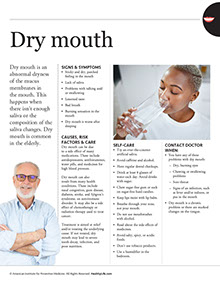
    Dry mouth is an abnormal dryness of the mucus membranes in the mouth. This happens when there isn’t enough saliva or the composition of the saliva changes. Dry mouth is common in the elderly.

    Signs & Symptoms

    *  Dry, parched feeling in the mouth

    *  Lack of saliva

    *  Problems with talking and/or swallowing

    *  Lessened taste

    *  Bad breath

    *  Burning sensation in the mouth

    *  Dry mouth is worse after sleeping

    Causes, Risk Factors & Care

    Dry mouth can be due to a side effect of many medications. These include antidepressants, antihistamines, water pills, and medicines for high blood pressure.

    Dry mouth can also result from many health conditions. These include nasal congestion, gum disease, diabetes, stroke, and Sjögren’s syndrome, an autoimmune disorder.

    Treatment is aimed at relief and/or treating the underlying cause. If not treated, dry mouth may lead to severe tooth decay, infection, and poor nutrition.

    Self-Care

    *  Try an over-the-counter artificial saliva, such as Xerolube.

    *  Avoid caffeine and alcohol.

    *  Have regular dental checkups.

    *  Drink at least 8 glasses of water each day. Avoid drinks with sugar.

    *  Avoid salty, spicy, or acidic foods.

    *  Don’t use tobacco products.

    *  Take a multivitamin that your doc- tor recommends.

    *  Use a humidifier in the bedroom.

    *  Keep your lips moist with lip balm.

    *  Breathe through your nose, not your mouth.

    *  Do not use mouthwashes with alcohol.

    *  Read about the side effects of medicines.

    Medical Care

    Contact Doctor When:

    *  The dry mouth is a chronic problem or there are marked changes on the tongue.

    *  You have any of these problems with dry mouth:

    – Dry, burning eyes

    – Chewing or swallowing problems

    – Sore throat

    – Signs of an infection, such as fever and/or redness, or pus in the mouth

    Health at Home Lifetime book by the American Institute for Preventive Medicine. www.HealthyLife.com. All rights reserved.

    © American Institute for Preventive Medicine

  • Don’T Be Too Macho For Your Own Good

    Men’s Health

    Image of 30 year old male.

    Men typically suffer more serious illnesses and die at a younger age than women. You wouldn’t know it by looking at the average doctor’s waiting room, though. Men don’t report as many symptoms as women do, and they let a problem go further before they seek medical help.

    If you have a tendency to ignore or downplay physical or emotional problems, or exhibit other kinds of self-destructive, “macho” behavior, make a conscious effort to change. Here’s how:

    *  Pay attention to pain and discomfort. If you’re sick or injured, see a doctor.

    *  Take safety precautions at work, home, or when you drive.

    *  Balance work and play.

    *  Don’t stifle feelings of compassion and sensitivity.

    *  Learn to express your feelings without losing your temper. Don’t feel compelled to compete all the time.

    *  If you experience emotional problems, consult a professional counselor.

    A Year of Health Hints book by the American Institute for Preventive Medicine. www.HealthyLife.com. All rights reserved.

    © American Institute for Preventive Medicine

  • Don’T Pull That Tooth

    Dental & Mouth Concerns

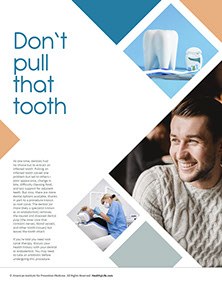
    Image of dentist.

    At one time, dentists had no choice but to extract an infected tooth.  Pulling an infected tooth solved one problem but led to others-poor appearance, change in bite, difficulty chewing food, and less support for adjacent teeth. But tooth extraction is rarely necessary now, thanks to a procedure known as root canal. The dentist (or more likely a specialist known as an endodontist) removes the injured and diseased dental pulp (the inner core that contains nerves, blood vessels, and other tooth tissues) but leaves the tooth intact.

    If you’re told you need root canal therapy, be sure to let your dentist or endodontist know if you have a heart murmur, history of rheumatic heart disease, or mitral valve prolapse. If so, you may need to take an antibiotic before undergoing this procedure.

    A Year of Health Hints book by the American Institute for Preventive Medicine. www.HealthyLife.com. All rights reserved.

    © American Institute for Preventive Medicine

  • Don’T Be Duped By Antiwrinkle Creams

    Mature Health: Over Age 50

    Image of women looking in a mirror examing her face.

    Don’t be misled by over-the-counter skin care products that claim to get rid of wrinkles. There’s no such thing. The closest thing to a wrinkleremoving cream is retinoic acid, a synthetic form of vitamin A. Applied to the skin surface, retinoic acid increases blood flow and stimulates skin cells called fibroblasts to produce new collagen (a protein that keeps skin smooth). This process can help to reduce tiny wrinkles and make deep wrinkles less noticeable. Retinoic acid also speeds up the rate that your skin’s cells move to the surface and die off to be replaced with new cells, so your skin looks younger.

    Retinoic acid is available as Retinol in over-the-counter products and by prescription under the trade name Retin-A. Regular vitamin A has no effect on wrinkles, whether it’s taken orally or applied directly to the skin.

    A Year of Health Hints book by the American Institute for Preventive Medicine. www.HealthyLife.com. All rights reserved.

    © American Institute for Preventive Medicine
  • Prevent Poisoning

    First Aid

    Do This, Not That

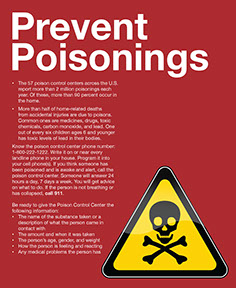
    *  The 57 poison control centers across the U.S. report more than 2 million poisonings each year. Of these, more than 90 percent occur in the home.

    *  More than half of home-related deaths from accidental injuries are due to poisons. Common ones are medicines, drugs, toxic chemicals, carbon monoxide, and lead. One out of every six children ages 6 and younger has toxic levels of lead in their bodies.

    Know the poison control center phone number: 1-800-222-1222. Write it on or near every landline phone in your house. Program it into your cell phone(s). If you think someone has been poisoned and is awake and alert, call the poison control center. Someone will answer 24 hours a day, 7 days a week. You will get advice on what to do. If the person is not breathing or has collapsed, call 911.

    Be ready to give the Poison Control Center the following information:

    *  The name of the substance taken or a description of what the person came in contact with

    *  The amount and when it was taken

    *  The person’s age, gender, and weight

    *  How the person is feeling and reacting

    *  Any medical problems the person has

    Chemical and Alcohol Poisoning

    Lead Poisoning

    Carbon Monoxide (CO) Poisoning

    Safe at Home - Do This, Not That Book. Published by the American Institute for Preventive Medicine.

    © American Institute for Preventive Medicine

  • Dizziness & Vertigo

    Brain & Nervous System

    Dizziness is feeling lightheaded. It is a symptom of another condition. Vertigo is a spinning feeling. It affects the inner ear, the brain’s gravity-and-motion detector.

    Dizziness Conditions

    Heat Stroke

    Signs & Symptoms

    Sudden dizziness with:

    *  Hot, dry, red skin

    *  High fever. No sweating.

    *  Pulse that is rapid and then gets weak

    *  Exposure to very, very hot conditions

    What to Do

    Get immediate care.

    Stroke or Transient Ischemic Attack

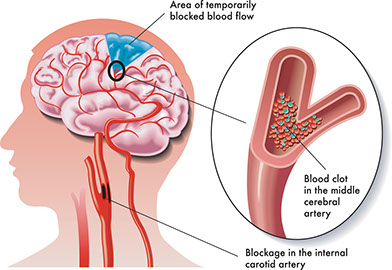
    Illustration on how a stroke is caused.

    Signs & Symptoms

    Dizziness with “Stroke Warning Signs

    What to Do

    Follow “Immediate Care” guideline.

    Heart Attack

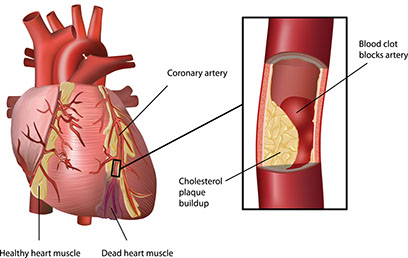
    Illustration of how a heart attack is caused.

    Signs & Symptoms

    Dizziness with “Heart Attack Warning Signs

    What to Do

    Follow “Immediate Care” guidelines

    Irregular Heartbeat

    Signs & Symptoms

    Dizziness with a heart rate greater than 130 beats per minute or less than 50 beats per minute or an irregular heart rhythm

    What to Do

    Get immediate care.

    Dehydration

    Signs & Symptoms

    Dizziness with “Signs & Symptoms” of dehydration

    What to Do

    Get immediate care.

    Intestinal Obstruction

    Signs & Symptoms

    Dizziness with:

    *  Abdominal pain and swelling that worsen

    *  Inability to pass stool or gas

    *  Vomiting

    What to Do

    Get immediate care.

    Dissecting Aortic Aneurysm

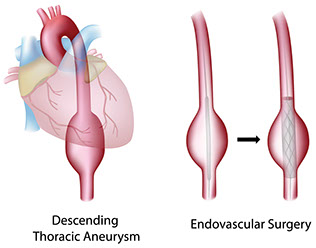
    Illstration of a descending thoracic aneurysm.

    This is a tear in the main artery from the heart.

    Signs & Symptoms

    Dizziness and fainting. Severe chest pain with extreme pain felt across the upper back (not just on one side) that came on within 15 minutes for no apparent reason, such as an injury or back strain. The pain can spread to the abdomen.

    What to Do

    Get immediate care. (Do not take aspirin.)

    Ear Infection

    Signs & Symptoms

    Dizziness with ear pain, ringing in the ear, pus or other ear discharge, fever

    What to Do

    Contact doctor.

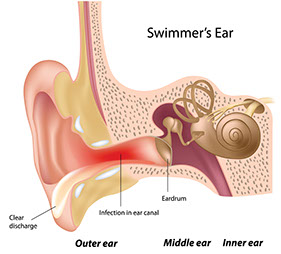
    Illustration of swimmer's ear.

    Labyrnthitis

    This is an inflammation in the ear that usually results from an upper respiratory infection.

    Signs & Symptoms

    Dizziness with:

    *  True spinning sensation

    *  Loss of balance

    *  Nausea and vomiting

    *  Ringing in the ears

    *  Jerky movements of the eye

    What to Do

    Contact doctor.

    Low Blood Sugar

    This can occur in persons taking insulin or oral pills for diabetes and/or after not eating for 4 or more hours.

    Signs & Symptoms

    Dizziness with hunger, sweating, trembling, anxiety, and confusion

    What to Do

    Use self-care.

    Temporary Drop in Blood Pressure (Orthostatic Hypotension)

    This could be a side effect of taking medicines, such as ones for high blood pressure and depression.

    Signs & Symptoms

    Dizziness when getting up too quickly from a seated or lying position

    What to Do

    Use self-care.

    Other Causes of Dizziness:

    *  Alcohol

    *  New medications, antibiotics, or high doses of aspirin

    *  A change in altitude or motion sickness

    *  Sudden movement, such as with turning the head quickly

    *  Seeing fast moving objects Treatment for dizziness depends on the cause.

    Vertigo

    Signs & Symptoms

    *  Wooziness

    *  Sense that the room is spinning

    *  Nausea

    *  Blurred vision

    *  Floating, rocking, and/or rolling feeling

    *  Sense of walking on an uneven surface

    *  Loss of balance

    Causes, Risk Factors & Care

    Vertigo is caused by a problem with the inner ear. Causes of vertigo are:

    *  Benign Positional Vertigo (BPV). This is the most common type. It may happen when you turn over in bed, get up, sit down, bend over, or just tilt your head. The sensations start within seconds of changing positions and last less than a minute. As bothersome as BPV is, it rarely signals more serious disease. Risk factors for BPV are aging, viral infections, and a prior head injury.

    *  Ménière’s disease. This condition may be due to spasms of blood vessels in the inner ear, fluid retention in the inner ear, or allergic reactions. Ménière’s disease is linked with a decrease in hearing and tinnitus. It sometimes leads to permanent hearing loss.

    *  Multiple sclerosis. With this, the covering that protects nerves (myelin) is destroyed. Over time, scar tissue (sclerosis) forms where the myelin used to be in the brain and spinal cord. Scar tissue or inflammation in the brain may cause vertigo symptoms.

    After proper diagnosis, most cases of vertigo are easily treated in the doctor’s office or at home with self-care.

    While attacks of Ménière’s disease can continue for many years, some symptoms can be controlled with medication.

    Self-Care

    For Orthostatic Hypotension:

    *  Don’t jump out of bed. Go from a lying position to a sitting position slowly. Sit on the edge of the bed a few minutes. Stand up slowly.

    *  From a sitting position, stand up slowly. Hold onto the arms of the chair or the head of the bed for support.

    *  If you feel lightheaded, sit back down for a few minutes. Take a few deep breaths. Get up again, slowly.

    For Benign Positional Vertigo (BPV):

    *  Sit on the side of the bed and lean to your right, resting the right ear on the bed. This might make you dizzy and nauseous at first.

    *  Wait 20 seconds until the dizziness stops and sit up straight.

    *  Wait another 20 seconds and repeat steps 1 and 2 on your left side.

    *  Do this exercise 10 to 15 times, 3 times a day.

    For Ménière’s Disease:

    *  Lie still in bed until the dizziness and nausea are gone.

    *  Walk with assistance.

    *  Don’t change positions too fast.

    *  Do not drive, climb ladders, or work around dangerous machinery.

    *  Decrease the amount of salt and fluids in your diet.

    *  Avoid bright lights. Do not read when you have a spinning feeling.

    *  Resume your normal activities when symptoms go away.

    *  Avoid alcohol, caffeine, and tobacco.

    Health at Home Lifetime book by the American Institute for Preventive Medicine. www.HealthyLife.com. All rights reserved.

    © American Institute for Preventive Medicine