Blog

  • Breathe Healthy

    Respiratory conditions

    Man standing outside, arms open, eyes closed, breathing fresh air.

    Take a slow, deep breath while counting to 5. Now blow it out slowly to the count of 5. Isn’t it amazing how the simple act of taking a breath can make you feel calm? You have your lungs to thank. Together, they provide oxygen for every cell in your body and influence every part of your health. When your lungs are healthy, the rest of you can be too. But unhealthy lungs make everyday activities a struggle.

    To breathe easier, protect your lungs from irritants like cigarette smoke and pollutants, exercise for optimal lung health, and practice deep breathing to exercise your lungs.

    Health at Home Lifetime book by the American Institute for Preventive Medicine. www.HealthyLife.com. All rights reserved.

    © American Institute for Preventive Medicine

  • Breathe Comfortably

    Respiratory conditions

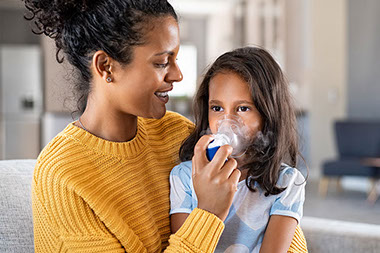
    Mom helping child with a breathing treatment.

    In colder climates, cold, dry air can irritate the airways and lungs. When you are outside in cold weather, wear a scarf and try to breathe through your nose. Don’t let indoor air drop below 64 degrees. Regularly use a nasal saline spray or gel. If you have pre-existing lung conditions, such as asthma, avoid using any wood-burning fireplaces in the winter. The smoke from the fire may also irritate your nasal passages. And, stay on top of your medication regimens.

    Be More Earth-Friendly

    When it gets cold outside, bring your plants inside! Find a sunny spot in a well-lit area of your house. Only water indoor plants when the soil feels dry and avoid placing them near air vents.

    Health at Home Lifetime book by the American Institute for Preventive Medicine. www.HealthyLife.com. All rights reserved.

    © American Institute for Preventive Medicine

  • Breast Care For Nursing Mothers

    Pregnancy & Prenatal Care

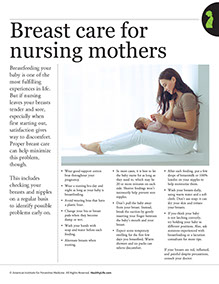
    Image of women with newborn baby.

    Breast-feeding your baby is one of the most fulfilling experiences in life.  But if nursing leaves your breasts tender and sore, satisfaction gives way to discomfort. Proper breast care can minimize this problem, though.

    *  Wear good support bras throughout your pregnancy.

    *  Wear a nursing bra day and night as long as your baby is breast-feeding.

    *  Avoid wearing bras that have a plastic liner.

    *  Change your bra or breast pads when they become damp or wet.

    *  Alternate breasts when nursing.

    *  Avoid nursing your baby more than 20 minutes at a time on each breast.

    *  Don’t pull the baby away from your breast. Instead, break the suction by gently inserting your finger between the baby’s mouth and your breast.

    *  Expect some temporary swelling for the first few days you breast-feed. Warm showers and ice packs can relieve discomfort.

    *  Wash your breasts daily, using warm water and a soft cloth. Don’t use soap; it can dry your skin and irritate your breasts.

    If your breasts are red, inflamed. and painful despite precautions, consult your doctor.

    A Year of Health Hints book by the American Institute for Preventive Medicine. www.HealthyLife.com. All rights reserved.

    © American Institute for Preventive Medicine

  • Breast Cancer

    Cancer

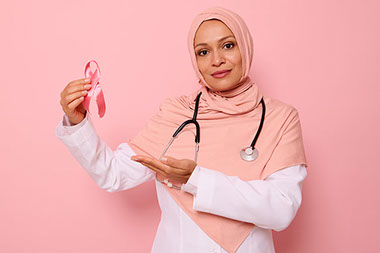
    Female doctor holding a pink ribbon for breast cancer awareness.

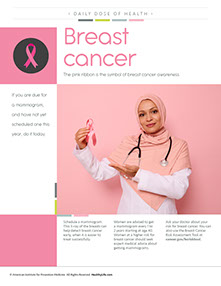
    The pink ribbon is the symbol of breast cancer awareness.

    If you are due for a mammogram, and have not yet scheduled one this year, do it today.

    Schedule a mammogram. This X-ray of the breasts can help detect breast cancer early, when it is easier to treat successfully.

    Women are advised to get a mammogram every 1 to 2 years starting at age 40. Women at a higher risk for breast cancer should seek expert medical advice about getting mammograms.

    Ask your doctor about your risk for breast cancer. You can also use the Breast Cancer Risk Assessment Tool atcancer.gov/bcrisktool.

    Health at Home Lifetime book by the American Institute for Preventive Medicine. www.HealthyLife.com. All rights reserved.

    © American Institute for Preventive Medicine

  • Bonding For A Beautiful Smile

    Dental & Mouth Concerns

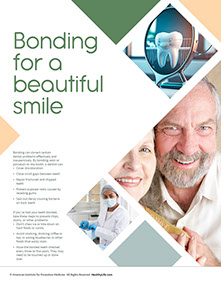
    Bonding can correct certain dental problems effectively and inexpensively. By bonding plastic or porcelain to the tooth, a dentist can:

    *  Cover discoloration.

    *  Close small gaps between teeth.

    *  Repair fractured and chipped teeth.

    *  Protect exposed roots caused by receding gums.

    *  Seal out decay-causing bacteria on back teeth.

    If you’ve had your teeth bonded, take these steps to prevent chips, stains, or other problems.

    *  Don’t chew ice or bite down on hard foods or candy.

    *  Avoid smoking, drinking coffee or tea, or eating blueberries or other foods that easily stain.

    *  Have the bonded teeth checked every three to five years. They may need to be touched up or done over.

    Image of women smiling.
    A Year of Health Hints book by the American Institute for Preventive Medicine. www.HealthyLife.com. All rights reserved.

    © American Institute for Preventive Medicine

  • Boils

    Skin Conditions

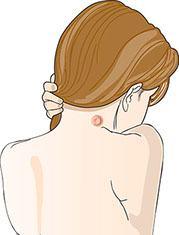
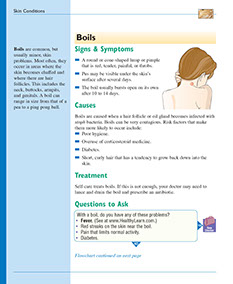
    Boils are common, but usually minor, skin problems. Most often, they occur in areas where the skin becomes chaffed and where there are hair follicles. This includes the neck, buttocks, armpits, and genitals. A boil can range in size from that of a pea to a ping pong ball.

    Signs & Symptoms

    *  A round or cone-shaped lump or pimple that is red, tender, painful, or throbs.

    *  Pus may be visible under the skin’s surface after several days.

    *  The boil usually bursts open on its own after 10 to 14 days.

    Illustration of a boil.

    Causes

    Boils are caused when a hair follicle or oil gland becomes infected with staph bacteria. Boils can be very contagious. Risk factors that make them more likely to occur include:

    *  Poor hygiene.

    *  Overuse of corticosteroid medicine.

    *  Diabetes.

    *  Short, curly hair that has a tendency to grow back down into the skin.

    Treatment

    Self-care treats boils. If this is not enough, your doctor may need to lance and drain the boil and prescribe an antibiotic.

    Questions to Ask

    Self-Care / Prevention

    *  Don’t scratch, squeeze, or lance boils.

    *  Put a hot water bottle over a damp washcloth and place it on the boil.

    *  Soak in a warm tub. Use an antibacterial soap. If boil is ready to burst open, take warm showers instead.

    *  Take an over-the-counter medicine for pain and swelling as directed.

    *  Wash your hands after contact with a boil. Keep clothing and other items that were in contact with the boil away from others.

    *  Once the boil begins to drain, keep it dry and clean. Loosely cover the boil with a sterile gauze dressing. Use first-aid tape to keep it in place. Replace the dressing if it gets moist.

    *  Wash bed linens, towels, and clothing in hot water. Do not share towels, sports equipment, etc.

    *  Don’t wear tight-fitting clothes over a boil.

    Healthier at Home book by the American Institute for Preventive Medicine. www.HealthyLife.com. All rights reserved.

    © American Institute for Preventive Medicine

  • How Your Body Changes, How Your Baby Grows

    Pregnancy & Prenatal Care

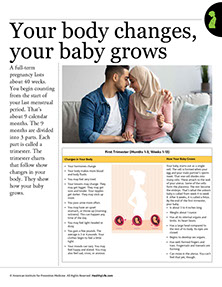
    A full-term pregnancy lasts about 40 weeks. You begin counting from the start of your last menstrual period. That’s about 9 calendar months. The 9 months are divided into 3 parts. Each part is called a trimester. The trimester charts that follow show changes in your body. They show how your baby grows.

    First Trimester

    (Months 1-3, Weeks 1-13)

    Changes in Your Body

    *  Your hormones change.

    *  Your body makes more blood and body fluids.

    *  You may feel very tired.

    *  You pass urine more often.

    *  You may have an upset stomach, or throw up (morning sickness). This can happen any time of the day.

    *  You may feel light-headed or dizzy.

    *  You gain a few pounds. The average is 3 or 4 pounds. Your clothes begin to feel a little tight.

    *  Your moods can vary. You may feel happy and elated. You may also feel sad, cross, or anxious.

    *  Your breasts may change.

    – They may get bigger.

    – They may get sore and tender.

    – Your nipples get darker. They may stick up more.

    How Your Baby Grows

    Your baby starts out as a single cell. The cell is formed when your egg and your male partner’s sperm meet. That one cell divides into many cells. These attach to the wall of your uterus. Some of the cells form the placenta. The rest become the embryo. That’s what the unborn baby is called from week 4 to week 8. After 8 weeks, it is called a fetus. By the end of the first trimester, your baby:

    *  Is about 3 to 4 inches long

    *  Weighs about 1 ounce

    *  Has all its internal organs and limbs. Its heart beats.

    *  Has a large head compared to the rest of its body. Its eyes are closed.

    *  Begins to develop sex organs

    *  Has well-formed fingers and toes. Fingernails and toenails are forming.

    *  Can move in the uterus. You can’t feel that yet, though.

    Second Trimester

    (Months 4-6, Weeks 14-27)

    Changes in Your Body

    *  You probably feel really good during this trimester. Most women do.

    *  You start to look pregnant as your belly expands. You gain about a pound a week. Loose or maternity clothes feel best.

    *  Your heart beats stronger. This helps push the extra body fluids around your body. It helps push them into the placenta, too.

    *  You start to feel your baby move. This usually starts between weeks 15 and 20 with a first baby. It may come earlier than that with babies after the first one. First you feel flutters. Then you feel kicks.

    *  Your breasts get ready to make milk.

    *  Your uterus starts to stretch out and get thinner.

    *  You may notice that you have:

    –  Backache

    –  Constipation

    –  Headache

    –  Mood swings

    –  Braxton-Hicks contractions

    –  Mild swelling of the ankles and feet

    –  Less morning sickness or none at all

    –  Less need to pass urine

    –  Bigger appetite

    –  Heartburn

    –  Larger veins in your hands and arms

    –  Stretch marks on your breasts and belly

    –  Leg cramps at night

    None of these is apt to change your sense of well-being, though.

    How Your Baby Grows

    Your baby begins to grow fast. Its organs mature. By the end of the second trimester, your baby:

    *  Is about 11 to 14 inches long

    *  Weighs about 2 to 2-1/2 pounds

    *  Swallows

    *  Sucks its thumb

    *  Moves and kicks

    *  Has wrinkly skin. Its skin is covered by a thick, white coating called vernix.

    *  Has hair growing on its head

    *  Has teeth forming in the jawbone

    *  Can open and close its eyelids

    *  Has eyes that are almost fully developed. Eyebrows and eyelashes start to grow.

    Third Trimester

    (Months 7-9, Weeks 28-40)

    Changes in Your Body

    You gain about a pound a week until the final few weeks. Then you may stop gaining weight or lose a pound or two. As the baby grows, your uterus and belly expand. You feel lots of pressure on your bladder. You need to pass urine more often.

    The baby pushes up on the bottom of your rib cage. The baby pushes up on the diaphragm. This can cause you to feel short of breath.

    The baby makes stronger movements and moves more often. You can feel its head, elbows, and feet as they push against your belly. You may be able to see the baby’s kicks! You may notice that:

    *  You feel hot and you sweat more than usual.

    *  A yellow liquid leaks from your breasts.

    *  Your hands and feet swell.

    *  Your navel may look flat or stick out.

    *  You feel tired.

    *  You have mood swings.

    Toward the very end of this trimester (near your due date):

    *  You may feel your uterus getting tight and hard.

    *  You may have “practice” contractions. These stop when you move your body or walk around.

    *  The baby “drops” into your pelvis. It is easier for you to breathe. It also makes you need to pass urine more often.

    *  You lose the mucus plug. You usually lose it shortly before delivery. It’s called bloody show then. You may notice it as a thick, stringy discharge for days. Or you may pass a big clump that looks like a wet cotton ball. Some women never notice the bloody show.

    How Your Baby Grows

    Your baby keeps growing and gaining weight. During this trimester, your baby:

    *  Grows to about 20 inches long

    *  Gains weight to 7 pounds or more

    *  Fills the uterus

    *  Opens and closes its eyes

    *  Responds to light and sound

    *  Moves a lot. Its movements are more like rolls and turns instead of kicks. These may slow down close to labor. But the baby does not stop moving before birth. Tell your health care provider if you notice a big decrease in your baby’s activity.

    *  Settles further down into your pelvis. Your baby is getting ready to be born!

    Prenatal Self-Care book by the American Institute for Preventive Medicine. www.HealthyLife.com. All rights reserved.

    © American Institute for Preventive Medicine

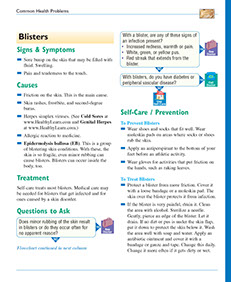
  • Blisters

    Skin Conditions

    Signs & Symptoms

    *  Sore bump on the skin that may be filled with fluid. Swelling.

    *  Pain and tenderness to the touch.

    Causes

    *  Friction on the skin. This is the main cause.

    *  Skin rashes, frostbite, and second-degree burns.

    *  Herpes simplex viruses.

    *  Allergic reaction to medicine.

    *  Epidermolysis bullosa (EB). This is a group of blistering skin conditions. With these, the skin is so fragile, even minor rubbing can cause blisters. Blisters can occur inside the body, too.

    Treatment

    Self-care treats most blisters. Medical care may be needed for blisters that get infected and for ones caused by a skin disorder.

    Questions to Ask

    Self-Care / Prevention

    To Prevent Blisters

    *  Wear shoes and socks that fit well. Wear moleskin pads on areas where socks or shoes rub the skin.

    *  Apply an antiperspirant to the bottom of your feet before an athletic activity.

    *  Wear gloves for activities that put friction on the hands, such as raking leaves.

    To Treat Blisters

    *  Protect a blister from more friction. Cover it with a loose bandage or a moleskin pad. The skin over the blister protects it from infection.

    *  If the blister is very painful, drain it. Clean the area with alcohol. Sterilize a needle. Gently, pierce an edge of the blister. Let it drain. If no dirt or pus is under the skin flap, pat it down to protect the skin below it. Wash the area well with soap and water. Apply an antibiotic ointment and cover it with a bandage or gauze and tape. Change this daily. Change it more often if it gets dirty or wet.

    Healthier at Home book by the American Institute for Preventive Medicine. www.HealthyLife.com. All rights reserved.

    © American Institute for Preventive Medicine