Blog

  • Your Home Is Your Castle. Keep It Safe To Prevent Costly Accidents.

    Home Safety

    Family of 4 sitting outside their front door.

    *  Install smoke alarms and a carbon monoxide detector. Check them at least every 6 months.

    *  Keep a working fire extinguisher handy.

    *  Keep medicines, vitamins, and all harmful substances out of children’s reach. In case of accidental poisoning, call the Poison Control Center at 1.800.222.1222.

    Prevent falls

    *  Keep walk paths inside and outside well lit and clear of clutter, electrical cords, snow, ice, etc.

    *  Clean up grease, water and other liquids right away.

    *  Don’t wax floors.

    *  Use rugs with nonskid backing.

    *  Install and use handrails on both sides of stairs.

    *  Use safety mats, grab bars, etc. in showers and tubs.

    * If you need to reach items in high cabinets or on shelves, use a sturdy step stool with handrails.

    A Year of Health Hints book by the American Institute for Preventive Medicine. www.HealthyLife.com. All rights reserved.

    © American Institute for Preventive Medicine

  • It’s Okay To Ask For Help

    Mental Health Care

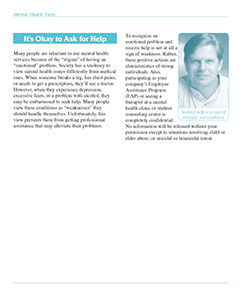
    Many people do not use mental health services because of the “stigma” of having an “emotional” problem. Society tends to view mental health issues differently from medical ones. When someone breaks a leg, has chest pains, or needs to get a prescription, they’ll see a doctor. However, when they have depression, excessive fears, or a problem with alcohol, they may be embarrassed to seek help. Many people view these problems as “weaknesses” they should handle on their own. Unfortunately, this view prevents them from getting professional help that may treat their problems with success.

    To recognize an emotional problem and receive help is not at all a sign of weakness. It is a sign of strength. Also, taking part in your company’s Employee Assistance Program (EAP) or seeing a therapist at a mental health clinic or student counseling center is completely confidential. No information will be released without your permission except in situations involving child or elder abuse, or suicidal or homicidal intent.

    Minding Your Mental Health Book. Published by the American Institute for Preventive Medicine. www.HealthyLife.com. All rights reserved.

    © American Institute for Preventive Medicine

  • Ask “Is This X-Ray Really Necessary?”

    Medical Exams

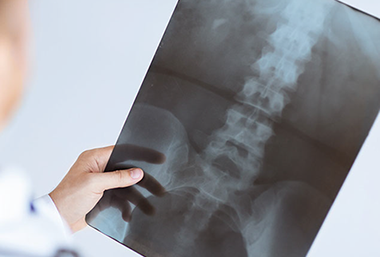
    Doctor holding an x-ray film.

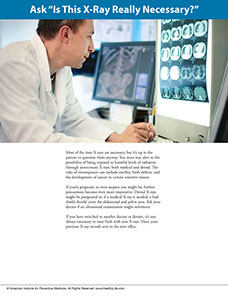
    Most of the time X-rays are necessary, but it’s up to the patient to question them anyway. You must stay alert to the possibility of being exposed to harmful levels of radiation through unnecessary X-rays, both medical and dental. The risks of overexposure can include sterility, birth defects, and the development of cancer in certain sensitive tissues.

    If you’re pregnant, or even suspect you might be, further precautions become even more imperative. Dental X-rays might be postponed or, if a medical X-ray is needed, a lead shield should cover the abdominal and pelvic area. Ask your doctor if an ultrasound examination might substitute.

    If you have switched to another doctor or dentist, it’s not always necessary to start fresh with new X-rays. Have your previous X-ray records sent to the new office.

    Page from A Year of Health Hints book by the American Institute for Preventive Medicine. www.HealthyLife.com. All rights reserved.

    © American Institute for Preventive Medicine

  • Install Smoke Detectors And Be Sure They Work

    Home Safety

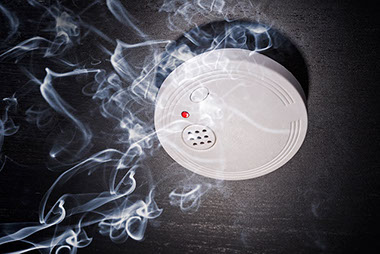
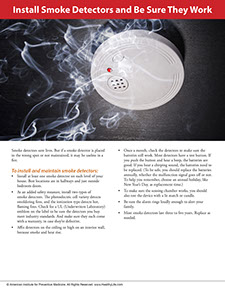
    Image of smoke around a smoke detector.

    Smoke detectors save lives. But if a smoke detector is placed in the wrong spot or not maintained, it may be useless in a fire.

    To install and maintain smoke detectors:

    *  Install at least one smoke detector on each level of your house. Best locations are in hallways and just outside bedroom doors.

    *  As an added safety measure, install two types of smoke detectors. The photoelectric cell variety detects smoldering fires, and the ionization type detects hot, flaming fires. Check for a UL (Underwriters Laboratory) emblem on the label to be sure the detectors you buy meet industry standards. And make sure they each come with a warranty, in case they’re defective.

    *  Affix detectors on the ceiling or high on an interior wall, because smoke and heat rise.

    *  Once a month, check the detectors to make sure the batteries still work. Most detectors have a test button. If you push the button and hear a beep, the batteries are good. If you hear a chirping sound, the batteries need to be replaced. (To be safe, you should replace the batteries annually, whether the malfunction signal goes off or not. To help you remember, choose an annual holiday, like New Year’s Day, as replacement time.)

    *  To make sure the sensing chamber works, you should also test the device with a lit match or candle.

    *  Be sure the alarm rings loudly enough to alert your family.

    *  Most smoke detectors last three to five years. Replace as needed.

    A Year of Health Hints book by the American Institute for Preventive Medicine. www.HealthyLife.com. All rights reserved.

    © American Institute for Preventive Medicine

  • The Ins And Outs Of Ambulatory Surgery

    Medical Care

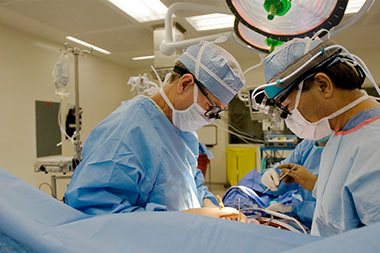
    Ambulatory surgery is surgery done on an outpatient basis. This can be done in a hospital. It can also be done at a freestanding center. One reason ambulatory surgeries are more common now than in the past is advanced medical practices. This includes the use of anesthesias that wear off quicker and have fewer side effects. Common ambulatory surgeries include:

    *  Endoscopy procedures.

    *  Hernia repair.

    *  Some plastic surgeries.

    *  Tubal ligation.

    *  Dilation and curettage (D & C).

    *  Breast biopsy.

    *  Tonsillectomy.

    *  Cataract and glaucoma procedures.

    *  Orthopedic procedures (such as arthroscopy of a knee).

    *  Benign and cancerous tumor procedures.

    Ambulatory or outpatient surgery has many advantages:

    *  Hospitalization poses the risk of exposure to infections and may also keep patients bedridden longer than is necessary.

    *  Ambulatory surgery gets you in and out quickly.

    *  The patient has a good deal of choice as to when the surgery will occur. The surgery is scheduled by appointment for patient convenience.

    *  Most people prefer healing at home in their own beds to staying in a hospital. The home can be a more comfortable place in which to heal than a hospital with its hectic schedules.

    *  Medical bills are much lower if you don’t have to stay in a hospital overnight.

    Things to consider:

    *  Many procedures need special preparation ahead of time. Follow your doctor’s orders exactly.

    *  You may need someone to drive you home and stay with you as you recover.

    *  Do not bring valuables with you when you have outpatient surgery.

    Page from A Year of Health Hints book by the American Institute for Preventive Medicine. www.HealthyLife.com. All rights reserved.

    © American Institute for Preventive Medicine

  • Informed Consent

    Medical Care

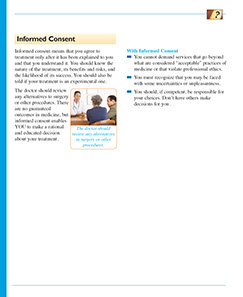
    Image of person filling out forms.

    Informed consent means that you agree to treatment only after it has been explained to you and that you understand it. You should know the nature of the treatment, its benefits and risks, and the likelihood of its success. You should also be told if your treatment is an experimental one.

    The doctor should review any alternatives to surgery or other procedures. There are no guaranteed outcomes in medicine, but informed consent enables YOU to make a rational and educated decision about your treatment.

    With Informed Consent

    *  You cannot demand services that go beyond what are considered “acceptable” practices of medicine or that violate professional ethics.

    *  You must recognize that you may be faced with some uncertainties or unpleasantness.

    *  You should, if competent, be responsible for your choices. Don’t have others make decisions for you.

    Page from the Healthier at Home book by the American Institute for Preventive Medicine. www.HealthyLife.com. All rights reserved.

    © American Institute for Preventive Medicine

  • Infant Safety

    Child Safety

    Young baby wearing blue hat and wrapped in blue blanket.

    Infants depend on their families to keep them safe. While all babies are unique, there are some safety issues that apply to all infants.

    Never leave a baby or young child alone near any water, such as a bathtub, a toilet, a bucket with water, etc., not even to answer a telephone or the door.

    Do not leave a baby alone on a changing table, bed, sofa or chair.

    Sudden Infant Death Syndrome (SIDS) is the leading cause of death among babies between 1 month and 1 year old. To reduce the risk, place a baby to sleep on its back with a wearable blanket on a flat, sleep surface, covered only with a fitted sheet. Do not use a blanket, pillow, or add toys.

    From infancy on, ask your child’s doctor to check your child’s vision at regular exams. In general, children should start getting vision screening exams starting at age 3.

    A Year of Health Hints book by the American Institute for Preventive Medicine. www.HealthyLife.com. All rights reserved.

    © American Institute for Preventive Medicine

  • Infant Immunization

    Pediatric Care

    Young child getting a vaccine from doctor.

    Starting as infants, one-time vaccination throughout childhood is essential to help provide immunity before children are exposed to potentially life-threatening diseases.

    Keep a record of vaccines your child gets. This includes the type of vaccine, the date, and place it was given. List any reactions your child had to the vaccines, too.

    Each state requires children to have vaccines before they enter child care or school. Schools, preschools and child care centers require proof of vaccines.

    Some vaccines can be combined. This means your child gets fewer shots.

    Find out current immunization guidelines and facts about vaccines from Centers for Disease Control and Prevention (CDC) atcdc.gov/vaccines. Vaccines are available from your child’s doctor or your local health department.

    A Year of Health Hints book by the American Institute for Preventive Medicine. www.HealthyLife.com. All rights reserved.

    © American Institute for Preventive Medicine

  • Improving Your Emotional Health

    Mental Health Care

    Smiling man with thumbs up.

    Your emotional and mental well-being is essential for overall health and happiness. How you feel and think affects how you live your life every day – in your personal and work life. Take steps to take care of your emotional health.

    Answering the following questions may help you reflect on how you are doing with your emotional health. Then, tally your scores for each question. You may consider taking further steps to improve in certain areas. You may also consider reaching out for additional help and support from a mental health professional.

    Never – 1 Point

    Rarely – 2 Points

    Sometimes – 3 Points

    Usually – 4 Points

    *  I follow healthy, self-care habits that include healthy eating, exercise and quality sleep.

    *  I give myself credit when I accomplish good things.

    *  When something goes wrong, I forgive myself if it is something within my control, figure out what went wrong, and try to do better next time.

    *  When good things happen, I feel grateful and hold on to those positive emotions for a while.

    *  I adapt to change in a positive way.

    *  I take time to reflect on my beliefs and principles that are important to me.

    *  I set priorities and say “no” to new tasks that would overwhelm me.

    *  I do relaxation exercises on a regular basis, such as mindfulness, meditation, yoga, tai chi, etc.

    *  I feel supported and respected by my friends and family.

    *  When I experience a personal crisis or loss, or I am grieving something, I reach out to talk to caring friends or a support agency.

    *  I communicate effectively, share my views and listen to others with empathy.

    *  I avoid using alcohol or non-prescription drugs to cope with stress.

    *  I continuously work to strengthen existing relationships and seek out new relationships.

    *  I volunteer or do acts of caring without expecting anything in return.

    Total Score:

    Score of 37 – 56: Your answers indicate that you are taking lots of positive steps to achieve emotional health. You may want to check for lower scores on individual questions to see if there are areas you want to work on further.

    Score of 18 – 36: Overall, your behaviors that support emotional health are good, but there may be room for improvement. Work on taking small steps to help enhance your emotional health.

    Score of 17 and below:  Your answers show some potential concern for your emotional health. Review and reflect on those areas in which you scored lower. Then, set some achievable goals to work on to make some improvements.

    Note: Although completing this emotional health self-assessment may help you reflect on, and take steps to improve, your emotional health, it is not a diagnostic tool. This tool is not intended to replace advice you receive from a health professional. If you have concerns about your emotional and mental well-being, reach out to a health professional.

    Source: National Institutes of Health

    Minding Your Mental Health Book. Published by the American Institute for Preventive Medicine. www.HealthyLife.com. All rights reserved.

    © American Institute for Preventive Medicine

  • Immunize Or Your Health Care Costs Could Rise

    Medical Exams

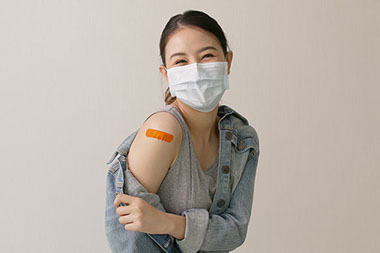
    Women wearing face mask, smiling, showing bandage on arm where she got a vaccine.

    Vaccines prevent many diseases that could have a costly impact, resulting in doctor’s visits, hospitalizations, and premature deaths. Sick children can also cause parents to lose time from work.

    *  Learn about vaccines you and your children need fromcdc.gov/vaccines.

    *  Find if and which vaccines are covered benefits of your health plan.

    *  Contact your local health department about its vaccine services.

    *  Find out about free or low-cost vaccines for kids from the Vaccines for Children (VFC) Program atcdc.gov/vaccines/programs/vfc/index.html.

    *  Beginning in early fall, read local papers and store ads to find out where flu shots will be given. Find out if and when flu shots will be given at work.

    ays to Well-Being book by the American Institute for Preventive Medicine. www.HealthyLife.com. All rights reserved.

    © American Institute for Preventive Medicine