Blog

  • Immunization Schedule

    Medical Exams

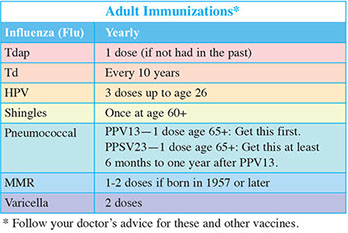
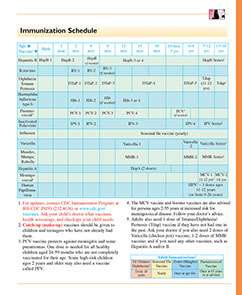
    1.  For updates, contact CDC Immunization Program at 800.CDC.INFO (232.4636) orwww.cdc.gov/vaccines. Ask your child’s doctor what vaccines, health screenings, and checkups your child needs.

    2.  Catch-up vaccines should be given to children and teenagers who have not already had them.

    3.  PCV vaccine protects against meningitis and some pneumonias. One dose is needed for all healthy children aged 24-59 months who are not completely vaccinated for their age.

    Vaccines for Traveling Abroad

    Before you travel to other countries, find out if you need certain vaccines. Get information from the CDC Travelers’ Information Line. Call 800.CDC.INFO (232.4636) or use thewww.cdc.gov/travelWeb site. Discuss your needs with your doctor.

    Page from the Healthier at Home book by the American Institute for Preventive Medicine. www.HealthyLife.com. All rights reserved.

    © American Institute for Preventive Medicine

  • If Money Grew On Trees

    Financial Health

    Model tree with bags of money hanging from it.

    But, it doesn’t, so build a budget! Use a plan to manage your money and stay out of debt.

    *  Identify your life goals and financial priorities.

    *  List all sources of income.

    *  Keep a log of everything you spend.

    *  Use a software program or a free app, such as one fromintuit.com.

    *  Include a savings plan in your budget, such as through your company’s 401K and a direct deposit into a savings account.

    *  Pay credit card balances in full. If you can’t do this, make more than the minimum payment.

    *  Pay down credit card debt. Start with the card that has the lowest balance.

    *  Don’t be late making payments.

    *  Don’t use credit cards for cash advances.

    ays to Well-Being book by the American Institute for Preventive Medicine. www.HealthyLife.com. All rights reserved.

    © American Institute for Preventive Medicine

  • How To Take Painkillers Safely

    Medication

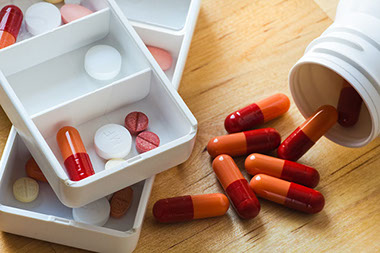
    Image of pills.

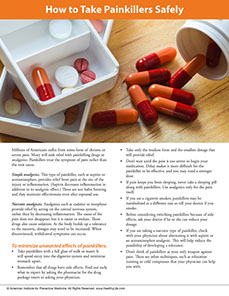
    Millions of Americans suffer from some form of chronic or severe pain. Many will seek relief with painkilling drugs or analgesics. Painkillers treat the symptom of pain rather than the root cause.

    Simple analgesics. This type of painkiller, such as aspirin or acetaminophen, provides relief from pain at the site of the injury or inflammation. (Aspirin decreases inflammation in addition to its analgesic effect.) These are not habit forming and they maintain effectiveness even after repeated use.

    Narcotic analgesics. Analgesics such as codeine or morphine provide relief by acting on the central nervous system, rather than by decreasing inflammation. The cause of the pain does not disappear, but it is easier to endure. These drugs also cause sedation. As the body builds up a tolerance to the narcotic, dosages may need to be increased. When discontinued, withdrawal symptoms can occur.

    To minimize unwanted effects of painkillers:

    *  Take painkillers with a full glass of milk or water. It will speed entry into the digestive system and minimize stomach upset.

    *  Remember that all drugs have side effects. Find out early what to expect by asking the pharmacist for the drug package insert or asking your physician.

    *  Take only the weakest form and the smallest dosage that will provide relief.

    *  Don’t wait until the pain is too severe to begin your medication. Delay makes it more difficult for the painkiller to be effective, and you may need a stronger dose.

    *  If pain keeps you from sleeping, never take a sleeping pill along with painkillers. Use analgesics only for the pain itself.

    *  If you are a cigarette smoker, painkillers may be metabolized at a different rate so tell your doctor if you smoke.

    *  Before considering switching painkillers because of side effects, ask your doctor if he or she can reduce your dosage.

    *  If you are taking a narcotic type of painkiller, check with your physician about alternating it with aspirin or an acetaminophen analgesic. This will help reduce the possibility of developing a tolerance.

    *  Don’t think of painkillers as your only weapon against pain. There are other techniques, such as relaxation training or cold compresses that your physician can help you with.

    Page from A Year of Health Hints book by the American Institute for Preventive Medicine. www.HealthyLife.com. All rights reserved.

    © American Institute for Preventive Medicine

  • How To Steer Clear Of Drunken Drivers

    Personal Safety

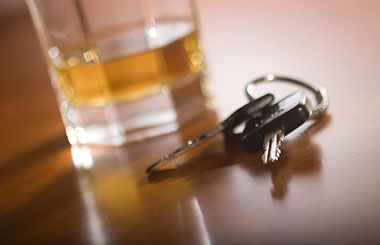
    Image of keys and a glass of alcohol in the background.

    Driving under the influence of alcohol is a common cause of auto accidents. If you can spot a drunken driver and stay out of his or her way, you may be able to avoid an accident. Watch out for drivers who:

    *  Drive too fast or too slow.

    *  Make jerky starts or stop abruptly.

    *  Overshoot stop signs.

    *  Ignore traffic signals.

    *  Follow cars too closely.

    *  Pass other cars too quickly or too slowly.

    *  Change lanes frequently.

    *  Drive without their lights on after sundown.

    *  Drive with their windows rolled down in cold or wet weather.

    *  Are obviously partying and having a good time with their passengers when they should be paying attention to the road.

    A Year of Health Hints book by the American Institute for Preventive Medicine. www.HealthyLife.com. All rights reserved.

    © American Institute for Preventive Medicine

  • How To Save Your Life In A House Fire

    Home Safety

    Image of mother and children in front of a house fire.

    Knowing how to react fast in a house fire can save your life and the lives of those you love. Here are some guidelines to follow.

    *  Keep the phone number of your local fire department clearly posted near all telephones in the house. (Try to memorize the number, in case you have to use a neighbor’s phone.) Use 911! where the service is available.

    *  Prearrange a plan for family members to follow in case of fire. Conduct fire drills using your escape route.

    *  If you live in a two-story house, purchase and install an emergency escape ladder and practice using it.

    *  If a fire breaks out, don’t stop to collect personal possessions. Get people out of the house!

    *  If you can’t get to within 10 to 12 feet of a fire, you can assume it’s too big to handle on your own. Call the fire department immediately. (Call them for small fires, too.)

    *  If you try to put out the fire, make sure you can get to an exit. Don’t back yourself into a corner.

    *  Smother a fire thoroughly and keep it covered so it doesn’t ignite again. The fire department will determine if the fire has been contained or if it has spread.

    *  If you fail to extinguish the fire and smoke is accumulating, get out of the house quickly!

    Poisonous gases and smoke are often more dangerous than flames. (Smoke rises, so remember to “stay low and go.” Crawl if you must. And if you can, place a wet towel over your face to filter out smoke and fumes.)

    A Year of Health Hints book by the American Institute for Preventive Medicine. www.HealthyLife.com. All rights reserved.

    © American Institute for Preventive Medicine

  • Home Safety 2

    Home Safety

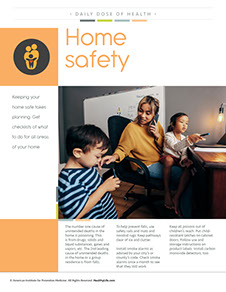
    Mother sitting in an office chair, talking on the phone, with 2 young kids

    Keeping your home safe takes planning. Get checklists of what to do for all areas of your home.

    The number one cause of unintended deaths in the home is poisoning. This is from drugs, solids and liquid substances, gases and vapors, etc. The 2nd leading cause of unintended deaths in the home or a group residence is from falls.

    To help prevent falls, use safety rails and mats and nonskid rugs. Keep pathways clear of ice and clutter.

    Install smoke alarms as advised by your city’s or county’s code. Check smoke alarms once a month to see that they still work.

    Keep all poisons out of children’s reach. Put child-resistant latches on cabinet doors. Follow use and storage instructions on product labels. Install carbon monoxide detectors, too.

    A Year of Health Hints book by the American Institute for Preventive Medicine. www.HealthyLife.com. All rights reserved.

    © American Institute for Preventive Medicine

  • Home Safety Checklist

    Home Safety

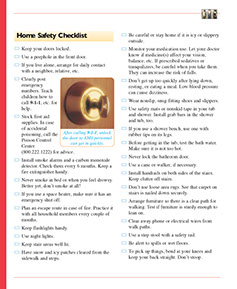
    *  Keep your doors locked.

    *  Use a peephole in the front door.

    *  If you live alone, arrange for daily contact with a neighbor, relative, etc.

    *  Clearly post emergency numbers. Teach children how to call 9-1-1, etc. for help.

    *  Stock first aid supplies. In case of accidental poisoning, call the Poison Control Center (800.222.1222) for advice.

    *  Install smoke alarms and a carbon monoxide detector. Check them every 6 months. Keep a fire extinguisher handy.

    *  Never smoke in bed or when you feel drowsy. Better yet, don’t smoke at all!

    *  If you use a space heater, make sure it has an emergency shut off.

    *  Plan an escape route in case of fire. Practice it with all household members every couple of months.

    *  Keep flashlights handy.

    *  Use night lights.

    *  Keep stair areas well lit.

    *  Have snow and icy patches cleared from the sidewalk and steps.

    *  Be careful or stay home if it is icy or slippery outside.

    *  Monitor your medication use. Let your doctor know if medicine(s) affect your vision, balance, etc. If prescribed sedatives or tranquilizers, be careful when you take them. They can increase the risk of falls.

    *  Don’t get up too quickly after lying down, resting, or eating a meal. Low blood pressure can cause dizziness.

    *  Wear nonslip, snug-fitting shoes and slippers.

    *  Use safety mats or nonskid tape in your tub and shower. Install grab bars in the shower and tub, too.

    *  If you use a shower bench, use one with rubber tips on its legs.

    *  Before getting in the tub, test the bath water. Make sure it is not too hot.

    *  Never lock the bathroom door.

    *  Use a cane or walker, if necessary.

    *  Install handrails on both sides of the stairs. Keep clutter off stairs.

    *  Don’t use loose area rugs. See that carpet on stairs is nailed down securely.

    *  Arrange furniture so there is a clear path for walking. Test if furniture is sturdy enough to lean on.

    *  Clear away phone or electrical wires from walk paths.

    *  Use a step stool with a safety rail.

    *  Be alert to spills or wet floors.

    *  To pick up things, bend at your knees and keep your back straight. Don’t stoop.

    Healthier at Home book by the American Institute for Preventive Medicine. www.HealthyLife.com. All rights reserved.

    © American Institute for Preventive Medicine

  • Home Safe Home

    Home Safety

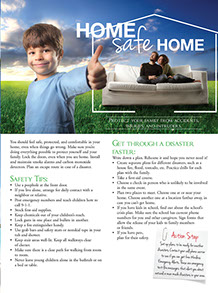
    Protect your family from accidents, injuries, and intruders.

    You should feel safe, protected, and comfortable in your home, even when things go wrong. Make sure you’re doing everything possible to protect yourself and your family. Lock the doors, even when you are home. Install and maintain smoke alarms and carbon monoxide detectors. Plan an escape route in case of a disaster.

    Safety Tips:

    *  Use a peephole at the front door.

    *  If you live alone, arrange for daily contact with a neighbor or relative.

    *  Post emergency numbers and teach children how to call 9-1-1.

    *  Stock first-aid supplies.

    *  Keep chemicals out of your children’s reach.

    *  Lock guns in one place and bullets in another.

    *  Keep a fire extinguisher handy.

    *  Use grab bars and safety mats or nonskid tape in your tub and shower.

    *  Keep stair areas well-lit. Keep all walkways clear  of clutter.

    *  Make sure there is a clear path for walking from room to room.

    *  Never leave young children alone in the bathtub or on a bed or table.

    Ways to get through a disaster faster:

    Write down a plan. Rehearse it and hope you never need it!

    *  Create separate plans for different disasters, such as a house fire, flood, tornado, etc. Practice drills for each plan with the family.

    *  Take a first-aid course.

    *  Choose a check-in person who is unlikely to be involved in the same event.

    *  Plan two places to meet. Choose one at or near your home. Choose another one at a location farther away, in case you can’t get home.

    *  If you have kids in school, find out about the school’s crisis plan. Make sure the school has current phone numbers for you and other caregivers. Sign forms that allow the release of your kids to family members or friends.

    *  If you have pets, plan for their safety.

    Action Step

    Set up plans to be ready for weather disasters. Contact your cell phone carrier to see if you can get free Wireless Emergency Alerts.

    Ways to Well-Being book by the American Institute for Preventive Medicine. www.HealthyLife.com. All rights reserved.

    © American Institute for Preventive Medicine

  • Home Medical Tests

    Medical Exams

    Home medical tests let you check for and monitor health conditions at home.

    Self-Testing Kits

    *  Diagnose when conditions are or are not present. These include kits that test for blood cholesterol level and blood in the stool.

    *  Monitor a chronic condition. These include kits that test for blood sugar levels and blood pressure readings.

    The U.S. Public Health Service and the Food and Drug Administration (FDA) give tips for safe and proper use of self-testing kits. (Each of these does not apply to all tests.)

    *  Don’t buy or use a test kit after the expiration date.

    *  Follow storage directions on the label.

    *  Note special precautions, such as not eating certain foods before testing.

    *  Study the package insert. First, read it through to get a general idea of how to perform the test. Then, go back and review the instructions and diagrams until you fully understand each step.

    *  Know what the test is meant to do and what it doesn’t do. Tests are not always 100% accurate.

    *  Some test results rely on comparing colors. If you’re colorblind, ask someone who is not colorblind to help you read the results.

    *  Follow instructions exactly. Don’t skip a step.

    *  When you collect a urine sample, use a sterile or clean container.

    *  Some steps need to be timed. Use a watch or clock with a second hand.

    *  Note what you should do if the results are positive, negative, or unclear.

    *  If something is not clear, don’t guess. Call the “800” number on the package or call a pharmacist for information.

    *  Keep test kits that have chemicals out of the reach of children. Discard away used test materials as directed.

    Page from the Healthier at Home book by the American Institute for Preventive Medicine. www.HealthyLife.com. All rights reserved.

    © American Institute for Preventive Medicine