Blog

  • Focus On Healthy Ways During Hectic Holiday Days

    Connect With Relatives

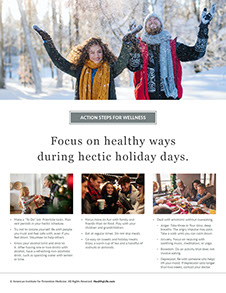
    Couple throwing snow up in the air.

    *  Make a “To Do” list. Prioritize tasks. Plan rest periods in your hectic schedule.

    *  Try not to isolate yourself. Be with people you trust and feel safe with, even if you feel down. Volunteer to help others.

    *  Know your alcohol limit and stick to it. After having one or two drinks with alcohol, have a refreshing non-alcoholic drink, such as sparkling water with lemon or lime.

    *  Focus more on fun with family and friends than on food. Play with your children and grandchildren.

    *  Eat at regular times. Do not skip meals.

    *  Go easy on sweets and holiday treats. Enjoy a warm cup of tea and a handful of walnuts or almonds.

    *  Deal with emotions without overeating.

    –  Anger. Take three or four slow, deep breaths. The angry impulse may pass. Take a walk until you can calm down.

    –  Anxiety. Focus on relaxing with soothing music, meditation, or yoga.

    –  Boredom. Do an activity that does not involve eating.

    –  Depression. Be with someone who helps lift your mood. If depression lasts longer than two weeks, contact your doctor.
    Minding Your Mental Health Book. Published by the American Institute for Preventive Medicine. www.HealthyLife.com. All rights reserved.

    © American Institute for Preventive Medicine
  • Find Happiness In Nature:Rain Or Shine

    Mental Health Care

    Happy women holding colorful umberalla in the rain.

    Focus on nature’s beauty, peacefulness, and soothing sounds.

    *  Go on a nature hike with a family member, friend, or coworker.

    *  In your backyard, cuddle up with a good book on a chair or in a hammock.

    *  Picnic in the park with family and friends. Enjoy your workday lunch in a park.

    *  Take up a nature-based hobby, such as bird watching or nature photography.

    Minding Your Mental Health Book. Published by the American Institute for Preventive Medicine. www.HealthyLife.com. All rights reserved.

    © American Institute for Preventive Medicine

  • Financial Wellness

    Financial Health

    Stacked coins with illustration arrows pointing up with icons of a house, card, credit card, etc...

    Having financial security to meet your needs and enjoy your life is, well, priceless. But if you’re struggling and juggling bills, the stress can make you sick. Your financial well-being is an important part of your overall well-being. Money-related stress can trickle down to affect every area of your life, including your health.

    Making wise financial choices can help you take control of your money, so it doesn’t control you. It’s a small price to pay for peace of mind.

    ays to Well-Being book by the American Institute for Preventive Medicine. www.HealthyLife.com. All rights reserved.

    © American Institute for Preventive Medicine

  • Family Medical Record

    Medical History

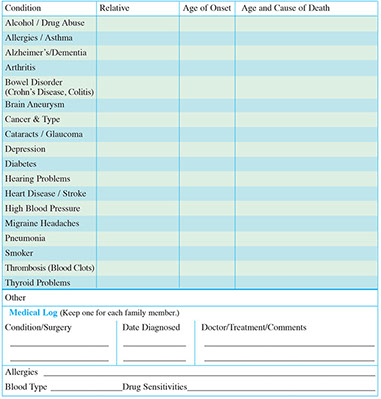
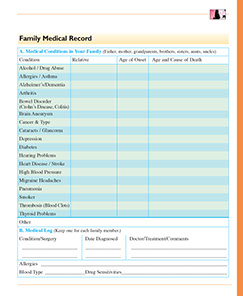
    Family medical record chart.
    Page from the Healthier at Home book by the American Institute for Preventive Medicine. www.HealthyLife.com. All rights reserved

    © American Institute for Preventive Medicine

  • Family Matters 2

    Social Health

    Well-being relates to relatives.

    Your family is where you learn who you are and how to relate to others. It plays a vital role in fulfilling the human need to belong and have close, long-term relationships. Whether you are a child, teen, or adult, family experiences can promote or hinder your well-being.

    Tips to foster family well-being:

    *  Live a healthy lifestyle together.

    – Plan for, shop, and eat healthy foods.

    – Exercise as a family if you can. Or, promote physical activity suited for each family member.

    – Get enough sleep.

    *  Plan to eat at least one meal a day together. Have each person talk about his or her day, such as stating the best part and worst part.

    *  Spend time together. Attend important events for each family member.

    *  Express care and concern. Be available to help each other out. Listen, listen, listen.

    *  Practice good manners. Say, “Thank you” and “You’re welcome.” Make it a practice to send thank you calls, notes, letters, or emails to others for gifts and other acts of kindness.

    *  Express affection. Say, “I love you,” “I care about you,” and “You mean a lot to me.”

    *  Discuss the value of the family as a whole. Encourage individual expression and development.

    *  Define clear, yet flexible roles for family members. Assign family chores.

    *  Keep the house as organized as possible.

    *  Discuss the need to adapt to changes and deal with stressful events.

    *  Seek professional help for problems the family cannot deal with on its own.

    Factors that promote well-being:

    *  Being well cared for and feeling secure

    *  Receiving trust, love, support, and hugs

    *  Spending quality time together

    *  Listening well to each other

    *  Solving problems in a positive way

    *  Positive mood of family members

    *  Satisfaction with job and/or being a parent

    *  Being involved with partner and children

    *  Higher income and/or financial security

    Action Step

    This week, let at least two family members know how much you love them. Visit or call a relative who is alone or would be happy to hear from you.

    ays to Well-Being book by the American Institute for Preventive Medicine. www.HealthyLife.com. All rights reserved.

    © American Institute for Preventive Medicine

  • Make A Date To Plan Your Estate

    Financial Health

    Prepare for the future well-being of your loved ones.

    If you have a will or other estate plan, great! If you are one of 55-70 percent of adults in the U.S. that do not, put it off no longer. State your wishes, now, to give your family peace of mind instead of reasons for family feuding. When making plans, follow your state’s laws.

    Estate plans include:

    *  A will. This document states who you want your assets and property to be transferred to after you die. It also names person(s) you want to raise your children who are under age 18, (if both parents die). Without a will, probate court can decide how to distribute your estate and name a legal guardian for your children. In your will, you name a person (an executor) to carry out the provisions of the will. You can create a simple will online or with a software program. Examples arewww.usalegalforms.comand Nolo’s Quicken WillMaker® Plus (www.nolo.com). Or, use an attorney, especially if you have a family business, a second marriage, property in more than one state, or your assets are complex.

    *  A trust. This holds your assets for your benefit or that of your spouse or children. You need a lawyer to create a trust.

    *  A revocable living trust. This agreement allows you (the grantor) to transfer ownership of your property in a trust to a trustee (often you and your spouse). The trust is in effect while you are living, if you become mentally disabled, and after you die. You choose beneficiaries to transfer ownership of the trust after you die. Assets in the trust are not subject to probate.

    *  Power of attorney. You sign legal documents to name a person to handle your financial decisions if you are no longer able to do this on your own. Without this, your family may fight over your money and possessions, both in and out of court.

    *  Health Care Advance Directives. You can make your health care wishes known through:

    – A living will. This document states your wishes if you can’t state them yourself and you are dying or have a condition from which you are not expected to survive. A Do Not Resuscitate (DNR) can be included.

    – Durable power of attorney for health care. This document names a person who would state your wishes if you can’t make them yourself. You do not have to be dying or be unconscious to have someone speak on your behalf.

    *  Legal protection for pets. This agreement allows you to name a pet guardian and leave funds to take care of your pets needs.

    *  Social media will. This names someone who will follow your wishes to close out or handle your online content, such as email addresses, social media content, and blogs.

    Once you plan your estate, keep it updated. You may want to make changes if you get married, divorce, remarry, or have a child or grandchild.

    Action Step

    Prepare for estate planning. Start with gathering asset documents and account information. Make an appointment with a lawyer. Or use estate planning software or online resources.

    Ways to Well-Being book by the American Institute for Preventive Medicine. www.HealthyLife.com. All rights reserved.

    © American Institute for Preventive Medicine

  • Importance Of An Emergency Room Companion

    Medical Care

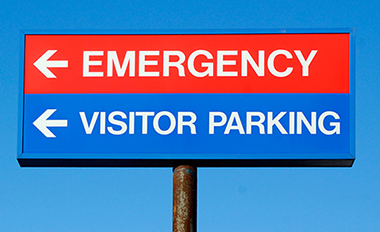
    Image of a sign directing where the emergency room is and visitor parking.

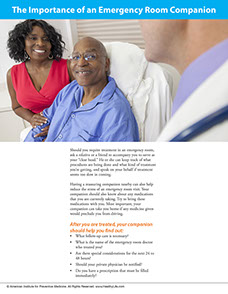
    Should you require treatment in an emergency room, ask a relative or a friend to accompany you to serve as your “clear head.” He or she can keep track of what procedures are being done and what kind of treatment you’re getting, and speak on your behalf if treatment seems too slow in coming.

    Having a reassuring companion nearby can also help reduce the stress of an emergency room visit. Your companion should also know about any medications that you are currently taking. Try to bring these medications with you. Most important, your companion can take you home if any medicine given would preclude you from driving.

    After you are treated, your companion should help you find out:

    *  What follow-up care is necessary?

    *  What is the name of the emergency room doctor who treated you?

    *  Are there special considerations for the next 24 to 48 hours?

    *  Should your private physician be notified?

    *  Do you have a prescription that must be filled immediately?

    Page from A Year of Health Hints book by the American Institute for Preventive Medicine. www.HealthyLife.com. All rights reserved.

    © American Institute for Preventive Medicine