Blog

  • Reduce Environmental Risk Factors For Chronic Diseases

    Personal Safety

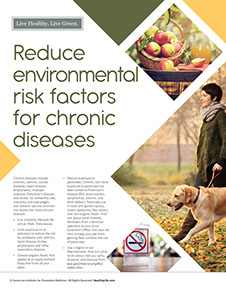
    Women walking dog.

    Chronic diseases include arthritis, asthma, cancer, diabetes, heart disease, emphysema, multiple sclerosis, Parkinson’s disease, and stroke. An unhealthy diet, inactivity and overweight, and tobacco use are common risk factors for many chronic diseases.

    *  Live a healthy lifestyle. Be active. Walk. Rake leaves.

    *  Limit exposure to air pollution to reduce the risk for problems with asthma, heart disease, stroke, emphysema and other respiratory diseases.

    *  Choose organic foods. Pick apples at an apple orchard. Enjoy the fruits of your labor.

    *  Reduce exposure to pesticides. Chronic, low-dose exposure to pesticides has been linked to Parkinson’s disease (PD), brain tumors, lymphomas, asthma, and birth defects. Pesticides are in lawn and garden sprays, insect repellants, flea collars, and non-organic foods. Find out about earth-friendly fertilizers from a fertilizer specialist at your local Extension Office. Ask your vet how to keep your pet from getting fleas without the use of pesticides.

    *  Use a digital or ear thermometer. Find out what to do about mercury spills, disposal, and cleanup fromepa.gov/mercury/spills/index.htm.

    A Year of Health Hints book by the American Institute for Preventive Medicine. www.HealthyLife.com. All rights reserved.

    © American Institute for Preventive Medicine

  • Eating Disorders 4

    Mental Health

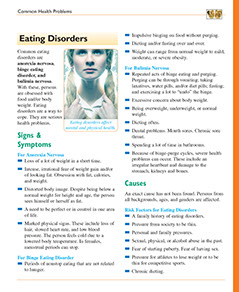
    Common eating disorders are anorexia nervosa, binge eating disorder, and bulimia nervosa. With these, persons are obsessed with food and/or body weight. Eating disorders are a way to cope. They are serious health problems.

    Signs & Symptoms

    For Anorexia Nervosa

    *  Loss of a lot of weight in a short time.

    *  Intense, irrational fear of weight gain and/or of looking fat. Obsession with fat, calories, and weight.

    *  Distorted body image. Despite being below a normal weight for height and age, the person sees himself or herself as fat.

    *  A need to be perfect or in control in one area of life.

    *  Marked physical signs. These include loss of hair, slowed heart rate, and low blood pressure. The person feels cold due to a lowered body temperature. In females, menstrual periods can stop.

    For Binge Eating Disorder

    *  Periods of nonstop eating that are not related to hunger.

    *  Impulsive binging on food without purging.

    *  Dieting and/or fasting over and over.

    *  Weight can range from normal weight to mild, moderate, or severe obesity.

    For Bulimia Nervosa

    *  Repeated acts of binge eating and purging. Purging can be through vomiting; taking laxatives, water pills, and/or diet pills; fasting; and exercising a lot to “undo” the binge.

    *  Excessive concern about body weight.

    *  Being overweight, underweight, or normal weight.

    *  Dieting often.

    *  Dental problems. Mouth sores. Chronic sore throat.

    *  Spending a lot of time in bathrooms.

    *  Because of binge-purge cycles, severe health problems can occur. These include an irregular heartbeat and damage to the stomach, kidneys and bones.

    Causes

    An exact cause has not been found. Persons from all backgrounds, ages, and genders are affected.

    Risk Factors for Eating Disorders

    *  A family history of eating disorders.

    *  Pressure from society to be thin.

    *  Personal and family pressures.

    *  Sexual, physical, or alcohol abuse in the past.

    *  Fear of starting puberty. Fear of having sex.

    *  Pressure for athletes to lose weight or to be thin for competitive sports.

    *  Chronic dieting.

    Treatment

    *  Counseling. This can be individual, family, group, and/or behavioral therapy.

    *  Support groups.

    *  Medication.

    *  Nutrition therapy.

    *  Outpatient treatment programs.

    *  Hospitalization, if needed.

    Questions to Ask

    Self-Care / Prevention

    Eating disorders need professional treatment.

    To Help Prevent an Eating Disorder

    *  Learn to accept yourself and your body. You don’t need to be or look like anyone else. Spend time with people who accept you as you are, not people who focus on “thinness.”

    *  Know that self-esteem does not have to depend on body weight.

    *  Eat nutritious foods. Focus on whole grains, beans, fresh fruits and vegetables, low-fat dairy foods, and low-fat meats.

    *  Commit to a goal of normal eating. Realize that this will take time. It will also take courage to fight fears of gaining weight.

    *  Don’t skip meals. If you do, you are more likely to binge when you eat.

    *  Avoid white flour, sugar and foods high in sugar and fat, such as cakes, cookies, and pastries. Bulimics tend to binge on junk food. The more they eat, the more they want.

    *  Find success in things that you do.

    *  Get regular moderate exercise 3 to 4 times a week. If you exercise more than your doctor advises, do non-exercise activities with friends and family.

    *  Learn as much as you can about eating disorders from books and places that deal with them.

    *  To help their children avoid eating disorders, parents should promote a balance between their child’s competing needs for independence and family involvement.

    To Treat an Eating Disorder

    *  Follow your treatment plan.

    *  Attend counseling sessions and/or support group meetings as scheduled.

    *  Identify feelings before, during, and after you overeat, binge, purge, or restrict food intake. What is it that you are hoping the food will do?

    *  Set small goals that you can easily reach. Congratulate yourself for every success. This is a process. Accept setbacks. Learn from them.

    *  Talk to someone instead of turning to food.

    *  Learn to express your rights. You have the right to say “no” and the right to express your feelings and your opinions. You have the right to ask that your needs are met.

    *  Keep a journal of your progress, feelings, thoughts, etc., but not about what you eat. The journal is just for you, not for others to read or judge. This is a safe place to be honest with yourself. The journal can also help you identify your “triggers” so that you can deal with them in the future.

    *  Don’t let the scale run your life. Better yet, throw out the scale!

    Resources

    Eating Disorders Awareness and Prevention

    202.382.3587

    nationaleatingdisorders.org

    Healthier at Home book by the American Institute for Preventive Medicine. www.HealthyLife.com. All rights reserved.

    © American Institute for Preventive Medicine

  • Eating Disorders 3

    Mental Health

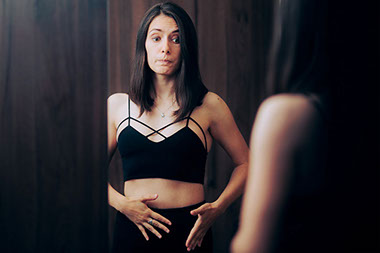
    Women looking at her body in a mirror.

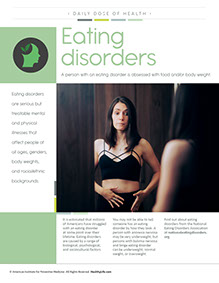
    A person with an eating disorder is obsessed with food and/or body weight.

    Eating disorders are serious but treatable mental and physical illnesses that affect people of all ages, genders, body weights, and racial/ethnic backgrounds.

    It is estimated that millions of Americans have struggled with an eating disorder at some point over their lifetime. Eating disorders are caused by a range of biological, psychological, and sociocultural factors.

    You may not be able to tell someone has an eating disorder by how they look. A person with anorexia nervosa may be very underweight, but persons with bulimia nervosa and binge eating disorder can be underweight, normal weight, or overweight.

    Find out about eating disorders from the National Eating Disorders Association atnationaleatingdisorders.org.

    ays to Well-Being book by the American Institute for Preventive Medicine. www.HealthyLife.com. All rights reserved.

    © American Institute for Preventive Medicine

  • Easy Ways To Childproof Your Home

    Child Safety

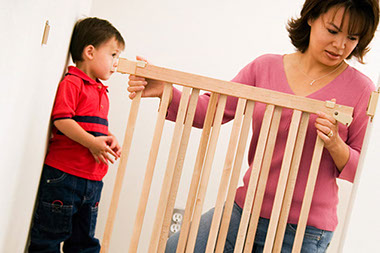
    Image of mom placing a safety gate on stairs.

    Is your home safe for curious children?

    To see your home from a toddler’s point of view, get down on your hands and knees and crawl around. Look for conditions that can lead to burns, falls, electric shock, entrapment, or poisoning. Then take steps to prevent harm. Some suggestions:

    *  Cover all toddler-height electrical outlets with plastic outlet covers.

    *  Install childproof locks on cabinets where household cleaners, chemicals, and other items that could harm children are stored.

    *  To prevent scalding burns, lower the thermostat on the water heater to 120ºF or lower.

    *  Store medicines and alcohol in high, out-of-reach places. Never leave them on a countertop, a table, or other places children can get them.

    *  Toddlers should eat and drink from plastic dishes and cups only.

    *  Don’t place a child’s crib or bed next to a window. An active or curious toddler could accidentally fall out.

    *  Keep all sharp objects like scissors, knives, or pins out of a toddler’s reach.

    A Year of Health Hints book by the American Institute for Preventive Medicine. www.HealthyLife.com. All rights reserved.

    © American Institute for Preventive Medicine

  • Earth-Friendly Ways For Holiday Fun & Safety

    Home Safety

    Father and two young boys sitting on his lap.

    *  Save gas by doing close-to-home outdoor recreation activities, such as skating and making snowmen with your children.

    *  Choose non-toxic toys for children, such as ones made from solid and recycled wood (not pressed wood) and non-toxic paints and finishes. Avoid toys made of PVC plastic; xylene, toluene, or dibutyl phthalate.

    *  Get the lead out! Contact the U.S. Consumer Product Safety Commission (CPSC) atcpsc.govabout recalled toys and other household products that contain lead. Find out how to dispose of them.

    *  Send electronic greeting cards and letters or ones made of recycled paper.

    *  Wrap gifts in recycled paper, the funny papers, a pillow case, etc. Give gift certificates, movie and concert tickets, etc. that do not need to be wrapped.

    *  Instead of using a cut live tree, buy and decorate a large potted house plant. Or use a potted small tree which can be planted outdoors. If you use a live tree, recycle it. Find out how from your local waste department.

    *  If you decorate with lights, turn them off when you can, to save energy and to make the lights last longer.

    *  Use glasses, dishes, and silverware instead of disposable products.

    A Year of Health Hints book by the American Institute for Preventive Medicine. www.HealthyLife.com. All rights reserved.

    © American Institute for Preventive Medicine

  • Be Safe − Drive Safely Checklist

    Personal Safety

    *  Focus on the road when you are driving.

    *  Don’t talk on a cell phone or text message while driving.

    *  Always wear your seatbelt when you drive or ride in cars and trucks.

    *  Wear a helmet when riding on a motorcycle or a bicycle.

    *  Drive sober or with a driver who is.

    *  Discuss, with your care team, if any medication or supplement you take can make it unsafe for you to drive.

    *  Avoid driving at night if you have limited night vision.

    *  Keep emergency supplies in your car or truck. These include:

    – A cell phone

    – A flashlight and flares

    – Blankets

    – Bottled water

    Find out more about safe driving fromwww.safedriving.va.gov/resources/driving.asp

    Other Safety Tips

    *  Wear a medical alert tag to identify health concerns you have. Get one from a drug store or from: MedicAlert Foundation International at 1-888-633-4298 orwww.medicalert.org.

    *  Keep medicines and vitamins in “child-safe” containers and where children cannot reach them.

    *  Never be out of reach of a child in or near the water. Make sure children wear approved flotation devices. Adults should wear these, too.

    *  Lock guns in one place and bullets in another. Make sure children cannot get the keys.

    Resources

    VA National Center for Patient Safety

    www.patientsafety.gov

    National Safety Council

    www.nsc.org

    Health at Home Lifetime book by the American Institute for Preventive Medicine. www.HealthyLife.com. All rights reserved.

    © American Institute for Preventive Medicine

  • A Dozen Rights Every Patient Should Expect

    Medical Care

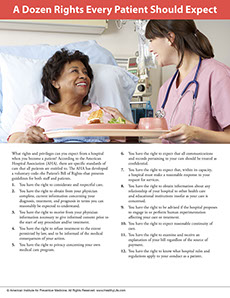
    Image of doctor talking to patient.

    What rights and privileges can you expect from a hospital when you become a patient? According to the American Hospital Association (AHA), there are specific standards of care that all patients are entitled to. The AHA has developed a voluntary code-the Patient’s Bill of Rights-that presents guidelines for both staff and patients.

    1.  You have the right to considerate and respectful care.

    2.  You have the right to obtain from your physician complete, current information concerning your diagnosis, treatment, and prognosis in terms you can reasonably be expected to understand.

    3.  You have the right to receive from your physician information necessary to give informed consent prior to the start of any procedure and/or treatment.

    4.  You have the right to refuse treatment to the extent permitted by law, and to be informed of the medical consequences of your action.

    5.  You have the right to privacy concerning your own medical care program.

    6.  You have the right to expect that all communications and records pertaining to your care should be treated as confidential.

    7.  You have the right to expect that, within its capacity, a hospital must make a reasonable response to your request for services.

    8.  You have the right to obtain information about any relationship of your hospital to other health care and educational institutions insofar as your care is concerned.

    9.  You have the right to be advised if the hospital proposes to engage in or perform human experimentation affecting your care or treatment.

    10. You have the right to expect reasonable continuity of care.

    11. You have the right to examine and receive an explanation of your bill regardless of the source of payment.

    12. You have the right to know what hospital rules and regulations apply to your conduct as a patient.

    Page from A Year of Health Hints book by the American Institute for Preventive Medicine. www.HealthyLife.com. All rights reserved.

    © American Institute for Preventive Medicine

  • Doctor Visit Record

    Medical History

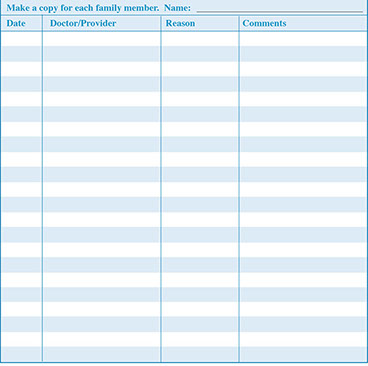
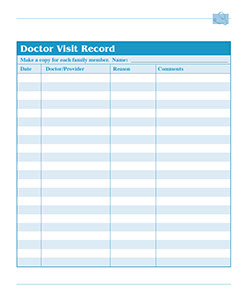
    Doctor visit record chart.
    Page from the Health at Home book by the American Institute for Preventive Medicine. www.HealthyLife.com. All rights reserved

    © American Institute for Preventive Medicine

  • Home Security

    Home Safety

    Do This, Not That

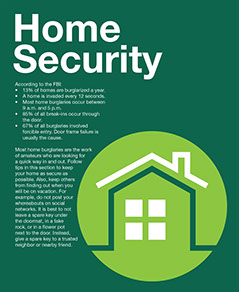
    According to the FBI:

    *  13% of homes are burglarized a year.

    *  A home is invaded every 12 seconds.

    *  Most home burglaries occur between 9 a.m. and 5 p.m.

    *  85% of all break-ins occur through the door.

    *  67% of all burglaries involved forcible entry. Door frame failure is usually the cause.

    Most home burglaries are the work of amateurs who are looking for a quick way in and out. Follow tips in this section to keep your home as secure as possible. Also, keep others from finding out when you will be on vacation. For example, do not post your whereabouts on social networks. It is best to not leave a spare key under the doormat, in a fake rock, or in a flower pot next to the door. Instead, give a spare key to a trusted neighbor or nearby friend.

    General Guidelines

    Safe at Home - Do This, Not That Book. Published by the American Institute for Preventive Medicine. www.HealthyLife.com. All rights reserved.

    © American Institute for Preventive Medicine

  • Make A Fire Escape Plan

    Home Safety

    Image of child with a hard hat on an a drawing of a house.

    Having an escape plan will help you act, not just react if a house fire occurs. Every second counts! According to the National Fire Protection Association (NFPA), families have, on average, less than three minutes from the time the first smoke alarm sounds to escape a fire. Get out first. Then call 911!

    The escape plan should include:

    1.  A map of the floors and rooms in your house and the yard outside of the house. Include where the doors and windows are. Note: You can get a blank grid fromwww.usfa.fema.gov/downloads/pdf/escape_grid.pdf. Or you can use a piece of graph paper or blank paper.

    2.  Two ways that each family member can get out of each room in the house. If you have a two story house, get UL-certified rescue ladders that collapse and keep them near windows on the second floor.

    3.  Names of household members who will get each young child out of the house. This lessens confusion and makes every second count.

    4.  A meeting spot outside of your house that is safe and easy to remember. Examples are on the sidewalk of a certain neighbor’s house or near your curb-side mailbox. Include your outside meeting place on your written plan.

    5.  Post the plan on the refrigerator or place it where all people living in the house can see it.

    Practice Your Escape Plan

    1.  Do this twice a year with everyone who lives in the house, including children and adults who will need help to get out.

    2.  Gather everyone and discuss the escape plan. Tell school-age children that this is like a fire drill at school, but for  your house.

    3.  Have a smoke alarm go off so everyone knows what it sounds like.

    4.  Have each person practice getting out of the house according to the plan. Practice both exit plans.

    5.  Have children practice how to get out on their own in case you cannot help them. Show them how to get low to the floor and crawl along the perimeter of the room to the exit and how to keep their mouths covered.

    6.  Tell your child to feel a closed door with the back of his or her hand before opening it. If the door is hot, tell your child to use the second way out if there is one.

    7.  If you have a rescue ladder, learn how to use it and practice once to make sure it works well. Hold the child in front of you as you back out of the window onto the ladder. Hold the child one rung above you. Keep the child between the ladder and your body as you climb down together.

    8.  Go to your meeting place and call 911!

    9.  Never go back into a house that is on fire. Tell firefighters if anyone or any pets have not yet gotten out.

    10. Remember to practice your fire escape plan every 6 months. Practice once during the day and another time at night.

    Safe at Home - Do This, Not That Book. Published by the American Institute for Preventive Medicine. www.HealthyLife.com. All rights reserved.

    © American Institute for Preventive Medicine