Blog

  • Reduce Outdoor Air Pollution To Breathe Cleaner Air

    Stress Management

    Looking up at a forrest of trees.

    *  Plant trees and other greenery to add oxygen and help lower carbon dioxide in the air. Replace some lawn with shrubs and trees that shade the house to save on cooling and heating costs.

    *  Create a garden and maintain it. Use manual tools for lawn and garden work, if possible. If not, use electric equipment. If you use gas powered equipment, avoid spilling gas at the gas station and when pouring it into the mower.

    *  Combine errands and reduce trips. Limit engine idling.

    *  Drive green to lower emissions of pollutants from your car. Obey the speed limit. Don’t accelerate hard and brake hard. Get regular tune-ups. Keep tires inflated. Open windows and use the vents to cool off before you turn on the air conditioner. When buying a new car, choose a low-polluting vehicle.

    *  Get air conditioners and heat pumps serviced by technicians who are EPA-certified to handle refrigerants. If you buy these items new, choose ones that use non-ozone-depleting refrigerants.

    Page from HealthyLife Weigh book by the American Institute for Preventive Medicine. www.HealthyLife.com. All rights reserved.

    © American Institute for Preventive Medicine

  • Reduce Flight Risks

    Healthy Travel

    Don’t let motion and a long flight ruin your trip.

    Flying can trigger more than anxiety in airplane travelers. Sitting for hours in narrow, cramped seats can cause a decrease in blood flow and poor circulation in the legs. These problems can lead to “economy-class syndrome” which refers to a deep vein thrombosis – a blood clot in the leg. Even if you sit in first class or business class, there are things you can do to help avoid this problem. If your seatmates stare, suggest they join you!

    Image of flying airplane.

    Airplane aerobics:

    *  Tense your feet for five seconds, then relax them. Repeat with each muscle group, including your calves, thighs, buttocks, shoulders, neck, forearms, and hands.

    *  Drop your head forward. Then move it slowly to the right, to the back, then to the left and the front again.

    *  Raise both shoulders. Move them back, then down, and then forward in a circular motion.

    *  Reach toward the ceiling with your right arm and stretch. Repeat with your left arm.

    *  Flex and extend your feet. Spread and then point your toes up and down.

    *  Get up and walk at least once every hour.

    *  Focus on your breathing. Inhale and exhale slowly and deeply. It’ll help you get enough oxygen into your blood so you don’t feel fatigued.

    To deal with motion sickness:

    *  Reserve a seat over one of the wings, if you can.

    *  Avoid sitting in the tail section, which is usually the bumpiest.

    *  Get plenty of rest before you fly.

    *  Avoid drinking alcohol before or during travel.

    *  Take a motion sickness medication, such as Dramamine, 30 minutes before your plane takes off.

    *  Open overhead vents and direct air at your face.

    *  Don’t read while traveling and don’t focus on any other stationary object.

    *  Breathe slowly and deeply.

    Action Step

    Wear loose-fitting clothes, socks, and shoes. If you have cardiovascular disease, talk to your doctor about wearing compression stockings and other advice before you take long flights or travel long distances by car or train.

    Page image from Ways to Well-Being book by the American Institute for Preventive Medicine. www.HealthyLife.com. All rights reserved.

    © American Institute for Preventive Medicine

  • Get Your Recommended Daily Calcium

    Nutrition

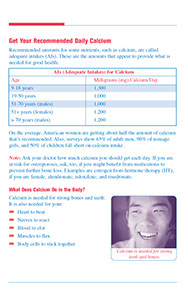
    Recommended amounts for some nutrients, such as calcium, are called adequate intakes (AIs). These are the amounts that appear to provide what is needed for good health.

    Note: Ask your doctor how much calcium you should get each day. If you are at risk for osteoporosis, ask, too, if you might benefit from medications to prevent further bone loss. Examples are estrogen from hormone therapy (HT), if you are female; alendronate; raloxifene; and risedronate.

    What Does Calcium Do in the Body?

    Calcium is needed for strong bones and teeth. It is also needed for your:

    *  Heart to beat

    *  Nerves to react

    *  Blood to clot

    *  Muscles to flex

    *  Body cells to stick together

    Milk, yogurt, cheese, soy milk, tofu, collard greens, and broccoli are good sources of calcium. (See “Calcium Content in Foods” chart.) If you don’t drink milk because you can’t digest the sugar in milk (lactose intolerance), do the following:

    *  Have milk products that already have lactase added to them.

    *  Drink milk fermented by certain bacteria (acidophilus milk), if tolerated.

    *  Take commercial preparations of lactase (which can be added as drops or taken as pills) when you have lactose-containing foods.

    *  Have soy milk and other food products with added calcium.

    Some persons who can’t digest milk sugar (lactose) can tolerate aged cheeses, yogurt with active cultures, and possibly small amounts of dairy foods if eaten with meals and snacks.

    If you can’t tolerate milk products at all, eat nondairy food sources of calcium (soymilk, beans, tofu, broccoli, kale, collard greens, spinach, fish with small bones). Have food items that are fortified with calcium, such as some orange and apple juices and calcium fortified cereal products. (See “Calcium Content in Foods” chart and check food labels.)

    Labels do not list calcium in milligrams (mg), but as a percentage of the daily value (DV). The DV for calcium is based on 1,000 mg of calcium per day. It’s easy to figure out calcium in mg. Just add zero to the % DV. Examples are given in the chart below.

    Calcium Content in Foods

    Calcium Supplements

    (Check with your doctor or dietitian about taking calcium supplements.)

    Calcium supplements should not be used in persons with a history of calcium-containing kidney stones. Supplemental calcium may also worsen chronic constipation and interfere with iron absorption.

    If you do take calcium supplements:

    *  Drink at least 6 to 8 glasses of water per day.

    *  Avoid taking more than 500 to 600 mg at one time. Take calcium with meals.

    *  Avoid bone meal or dolomite. These could contain lead or other toxic metals.

    *  Avoid taking calcium supplements with iron supplements and laxatives. These can reduce calcium absorption.

    There are many forms of calcium supplements. Look for the amount in milligrams of elemental calcium that a source provides. Choose calcium supplements that have calcium carbonate, calcium citrate, and/or calcium gluconate.

    {Note: Beware of marketing claims for “coral calcium” products which promote them to prevent or treat cancer, heart disease, lupus, and multiple sclerosis. The Federal Trade Commission (FTC) has charged some marketers of this with making false and unsubstantiated claims about the product’s health benefits.}

    Should I Take a Vitamin D Supplement If I Take a Calcium Supplement?

    Vitamin D helps the body absorb and use calcium. You can get vitamin D, daily, from vitamin D fortified dairy products. Other food sources are salt-water fish, egg yolks, and liver. You can also get vitamin D from direct exposure to sunlight on your skin. In general, about 15 minutes of direct sunlight per day gives you the amount of vitamin D needed for a day. Persons who are elderly or homebound often do not get adequate sun exposure to get enough vitamin D. Also, during winter, sunlight in the Northern U.S. is not intense enough to let the body build up enough vitamin D. Check with your doctor or health care provider about the need for a vitamin D supplement. Some calcium supplements also contain vitamin D.

    On the average, American women are getting about half the amount of calcium that’s recommended. Also, surveys show 65% of adult men, 90% of teenage girls, and 50% of children fall short on calcium intake.

    How Do I Get My Adequate Intake for Calcium?

    You can get your Adequate Intake (AI) for calcium by having good food sources of calcium and by taking calcium supplements, if necessary.

    Can I Get Too Much Calcium?

    Whether or not you tolerate milk products, if you use calcium supplements, do so wisely. You can easily consume too much calcium with the use of calcium-fortified foods, calcium supplements, and antacids. Long term excessive intakes of calcium might decrease the absorption of other minerals and promote kidney stone formation. Your goal should be to get adequate, rather than, excessive amounts of calcium. Aim to get your Adequate Intake (AI) amount or the amount recommended by your doctor.


    Page from HealthyLife Weigh book by the American Institute for Preventive Medicine. www.HealthyLife.com. All rights reserved.

    © American Institute for Preventive Medicine

  • Recognize Addiction

    Substance Use & Abuse

    How to tell if you have a drinking or drug problem.

    If you are addicted to alcohol or drugs, craving the substance can be as strong as the need for food or water. You are unable to stop using the substance even though it causes or worsens problems for you, family, friends, and coworkers. Your drinking or drug use may put you and others in danger or cause legal problems.

    Signs You Have a Problem:

    Signs depend on the substance. Common ones include:

    *  Your use and tolerance of alcohol or a drug has increased. You need more of the substance to get “high.”

    *  You hide alcohol or drugs at home or at work.

    *  You often carry drugs and/or items such as glass pipes, straws and needles used to take the drugs.

    *  You get withdrawal symptoms when you stop using the substance. Examples are:

    – Anxiety

    – Being very edgy

    – Blackouts

    – Chills or sweating

    – Delirium

    – Depression

    – Feeling “spaced out”

    – Hallucinations

    – Panic

    – Seizures

    – Tremors of the hands or face

    Behavioral Changes:

    *  You develop a pattern of being absent or late for work.

    *  You have mood swings.

    *  You have temper flare-ups.

    *  You keep asking family and friends for money.

    *  You develop a habit of stealing to support your habit.

    *  You become very secretive about your life.

    *  You have a new group of friends who drink a lot or  use drugs.

    *  You have problems dealing with others.

    Action Step

    The first step to recovery is admitting that you have a problem. You may not recognize it at first, but the people around you do. Listen to them. Then ask for help.

    Page from Ways to Well-Being book by the American Institute for Preventive Medicine. www.HealthyLife.com. All rights reserved.

    © American Institute for Preventive Medicine

  • Ready, Set, Goal

    Fitness

    Set short-term & long-term fitness goals.

    If you haven’t exercised for years, the odds that you will run a marathon soon are against you. Not that you can’t do it, if you start training now. However, a better motivator might be to set short-term goals that allow you to build up strength and endurance to get what you ultimately want.

    Ready

    Just saying you want to exercise more isn’t enough. Be specific about how much exercise you want to do, how much time you plan to spend on it, and how you will measure your results.

    Set

    Set a specific long-term goal. For example, “Within six months, I want to compete in a 15-mile walk,” or “In three months, I will be able to walk for 60 minutes a day, six times a week.”

    Next, set the short-term goals that will get you there. For example, walk 15 minutes a day, three times a week, for two weeks. Then increase your walking times and the number of days you walk until you reach your goal.

    Goal

    Before you know it, you’ll feel proud that you reached your short-term goal. And you’ll feel better and have more energy!

    Use SMART tips for setting goals

    *  Specific – Know what, why, and how you are going to accomplish your goals.

    *  Measurable – What tools will you use to measure your successes? Inches lost? Better stamina?

    *  Attainable – Choose goals within your reach. Setting sights too high can become discouraging.

    *  Realistic – Do you have the skills, the ability and an OK from your doctor to reach these goals?

    *  Timely – Set a timeframe for each goal. Some you can achieve in two days. Others will take two weeks or two months.

    Action Step

    As you meet your short-term goals, reward yourself with anything that promotes your progress, such as a new pair of shoes.

    Page image from the Ways to Well-Being book by the American Institute for Preventive Medicine. www.HealthyLife.com. All rights reserved.

    © American Institute for Preventive Medicine

  • Reach For A Rainbow Of Fruits & Veggies

    Nutrition

    Image of various fruits and veggies.

    Pick, buy, and eat nature’s healthy foods.

    Fruits and veggies contain essential vitamins, minerals, antioxidants, and fiber that may help protect you from chronic health problems, including stroke, certain cancers, and heart diseases. Health experts agree that half your daily intake of food should be fruits and veggies. Sadly, studies show that most people don’t eat enough colorful foods from nature.

    Put some color into your meals and snacks.

    Fruits and veggies are nature’s art, but their real beauty comes from what’s inside. The more colorful the foods on your plate, the more beneficial nutrients you will receive. For example:

    *  Lentils, artichokes, and chick peas are high in fiber.

    *  Spinach and asparagus have folate, a B vitamin.

    *  Sweet potatoes, pumpkin, and carrots are rich with Vitamin A.

    *  Strawberries, oranges and tomatoes are high in Vitamin C.

    *  Potatoes, bananas, prunes, dried peaches, and apricots are high in potassium.

    Grab and go tips:

    *  Keep a bowl of fresh fruits on the counter.

    *  Keep cut and ready-to-eat veggies front and center in the fridge. Examples are avocados, bell peppers, broccoli, carrots, cauliflower, celery, cucumbers, and grape or cherry tomatoes.

    *  Buy fresh fruits in season.

    *  Stock fruits that are dried, frozen, and canned (in water or 100% fruit juice).

    *  Choose packaged fruits without added sugars.

    *  Include a tangerine, banana or grapes with lunch.

    *  Add cut-up fruit to tossed salads.

    *  Keep packages of dried fruit in your desk drawer – pineapple, bananas, cherries, figs, dates, cranberries, blueberries, raisins, etc.

    *  Stock the freezer with frozen juice bars (100% juice).

    *   Experiment with different textures, such as crunchy apples, creamy bananas, and juicy oranges.

    Action Step

    Under clean, running water, gently rub fruits to remove dirt, bacteria and chemicals. Produce with nooks and crannies – broccoli, cauliflower, and lettuce – should be soaked for 1 to 2 minutes in clean water.

    Page from Ways to Well-Being book by the American Institute for Preventive Medicine. www.HealthyLife.com. All rights reserved.

    © American Institute for Preventive Medicine

  • Rate Your Aerobics Class

    Fitness

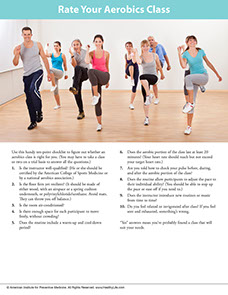
    Image of an aerobic class.

    Use this handy ten-point checklist to figure out whether an aerobics class is right for you. (You may have to take a class or two on a trial basis to answer all the questions.)

    1.  Is the instructor well-qualified? (He or she should be certified by the American College of Sports Medicine or by a national aerobics association.)

    2.  Is the floor firm yet resilient? (It should be made of either wood, with an airspace or a spring cushion underneath, or polyvinylchloride / urethane. Avoid mats. They can throw you off balance.)

    3.  Is the room air-conditioned?

    4.  Is there enough space for each participant to move freely, without crowding?

    5.  Does the routine include a warm-up and cool-down period?

    6.  Does the aerobic portion of the class last at least 20 minutes? (Your heart rate should reach but not exceed your target heart rate.)

    7.  Are you told how to check your pulse before, during, and after the aerobic portion of the class?

    8.  Does the routine allow participants to adjust the pace to their individual ability? (You should be able to step up the pace or ease off if you need to.)

    9.  Does the instructor introduce new routines or music from time to time?

    10. Do you feel relaxed or invigorated after class? If you feel sore and exhausted, something’s wrong.

    “Yes” answers mean you’ve probably found a class that will suit your needs.

    Page image from A Year of Health Hints book by the American Institute for Preventive Medicine. www.HealthyLife.com. All rights reserved.

    © American Institute for Preventive Medicine

  • Quick Guide To Decode Food Labels

    Nutrition

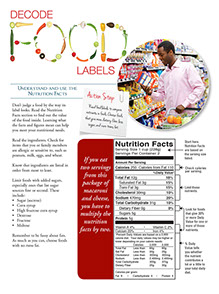
    Understand and use the Nutrition Facts.

    Don’t judge a food by the way its label looks. Read the Nutrition Facts section to find out the value of the food inside. Learning what the facts and figures mean can help you meet your nutritional needs.

    Read the ingredients. Check for items that you or family members are allergic or sensitive to, such as peanuts, milk, eggs, and wheat.

    Know that ingredients are listed in order from most to least.

    Limit foods with added sugars, especially ones that list sugar sources first or second. These include:

    *  Sugar (sucrose)

    *  Corn syrup

    *  High fructose corn syrup

    *  Dextrose

    *  Fructose

    *  Maltose

    Remember to be fussy about fats. As much as you can, choose foods with no trans fat.

    Action Step

    Read food labels to compare nutrients in foods. Choose foods that give more dietary fiber, less sugar, and zero trans fat.

    Page from Ways to Well-Being book by the American Institute for Preventive Medicine. www.HealthyLife.com. All rights reserved.

    © American Institute for Preventive Medicine

  • Quick Chili

    Nutrition

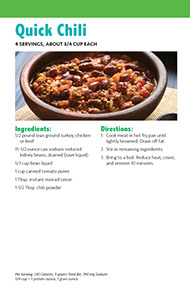
    4 Servings, about 3/4 cup each

    Ingredients:

    1/2 pound lean ground beef

    15-1/2 ounce can kidney beans, drained (save liquid)

    1/3 cup bean liquid

    1 cup “no-salt-added” canned tomato puree

    1 Tbsp. instant minced onion

    1-1/2 Tbsp. chili powder

    Directions:

    1.  Cook beef in hot fry pan until lightly browned. Drain off fat.

    2.  Stir in remaining ingredients.

    3.  Bring to a boil. Reduce heat, cover, and simmer 10 minutes.

    Per Serving:

    Calories – 230

    Total fat – 9 grams

    Sodium – 390 mg

    Page from HealthyLife Weigh Recipe book by the American Institute for Preventive Medicine. www.HealthyLife.com. All rights reserved.

    © American Institute for Preventive Medicine

  • Put Your Menu On A Diet

    Nutrition

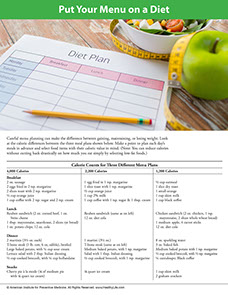
    Careful menu planning can make the difference between gaining, maintaining, or losing weight. Look at the caloric differences between the three meal plans shown below. Make a point to plan each day’s meals in advance and select food items with their caloric value in mind. (Note: You can reduce calories without cutting back drastically on how much you eat simply by selecting low-fat foods.)

    Page from A Year of Health Hints book by the American Institute for Preventive Medicine. www.HealthyLife.com. All rights reserved.

    © American Institute for Preventive Medicine