Blog

  • Prevent In-Flight Ear Pops

    Healthy Travel

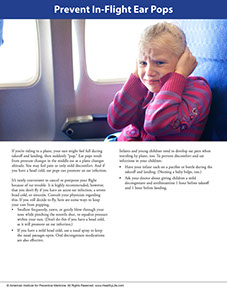
    Image of young girl on plane covering her ears.

    If you’re riding in a plane, your ears might feel full during takeoff and landing, then suddenly “pop.” Ear pops result from pressure changes in the middle ear as a plane changes altitude. You may feel pain or only mild discomfort. And if you have a head cold, ear pops can promote an ear infection.

    It’s rarely convenient to cancel or postpone your flight because of ear trouble. It is highly recommended, however, that you don’t fly if you have an acute ear infection, a severe head cold, or sinusitis. Consult your physician regarding this. If you still decide to fly, here are some ways to keep your ears from popping.

    *  Swallow frequently, yawn, or gently blow through your nose while pinching the nostrils shut, to equalize pressure within your ears. (Don’t do this if you have a head cold, as it will promote an ear infection.)

    *  If you have a mild head cold, use a nasal spray to keep the nasal passages open. Oral decongestant medications are also effective.

    Infants and young children tend to develop ear pain when traveling by plane, too. To prevent discomfort and ear infections in your children:

    *  Have your infant suck on a pacifier or bottle during the takeoff and landing. (Nursing a baby helps, too.)

    *  Ask your doctor about giving children a mild decongestant and antihistamine 1 hour before takeoff and 1 hour before landing.

    Page image from A Year of Health Hints book by the American Institute for Preventive Medicine. www.HealthyLife.com. All rights reserved.

    © American Institute for Preventive Medicine

  • Prevent Burnout

    Stress Management

    Image of women with head in her hands.

    Recognize and treat early signs.

    Burnout isn’t something that happens overnight. It occurs over time from repeated and unresolved frustration or constant pressure to perform or achieve. With burnout, you feel exhausted, worn out, and detached from others. You feel as if you have nothing more to give and simply do not care about anything. Burnout puts your job, your relationships, and your health in jeopardy.

    Ten tips to prevent burnout:

    1.  Set career and personal goals that can be achieved.

    2.  Follow healthy eating and sleeping habits.

    3.  Exercise daily – At least 30 minutes most days of the week.

    4.  Try not to spread yourself too thin. Delegate tasks at work and at home.

    5.  Reduce long work or study hours, if you can. The more you do and the less you rest, the more likely burnout will occur.

    6.  Take regular five to 10 minute relaxation breaks. Take mental breaks from stressful situations, too. Learn to meditate. Practice relaxation techniques.

    7.  Make time for leisure activities that you enjoy and look forward to.

    8.  Get creative with a hobby or activity that has nothing to do with work.

    9.  Manage stress through meditation, yoga, or therapy.

    10. Plan a vacation one or more times a year. Leave your work at home!

    Signs on the road to burnout:

    *  Too much work, not enough relaxation

    *  Feeling as if you have no control over your job

    *  Anger

    *  Fatigue

    *  Sleep problems

    *  Escaping through alcohol, drugs, TV, eating, or gambling

    *  Avoiding making decisions

    *  Negative view of yourself and the world

    Also, some traits increase the risk for burnout. These include the need to be in control, wanting everything to be perfect, and being a workaholic.

    Action Step

    Discuss feelings and problems you are having with your family, friends, and coworkers. Talking helps ease feelings of frustration that can feed burnout. If things do not get better, get professional help.

    Page from Ways to Well-Being book by the American Institute for Preventive Medicine. www.HealthyLife.com. All rights reserved.

    © American Institute for Preventive Medicine

  • Portion Control

    Weight Control

    Size matters.

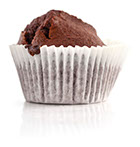
    Image of a small muffin size from 20 years ago.
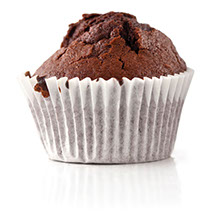
    Image of large muffin served today.

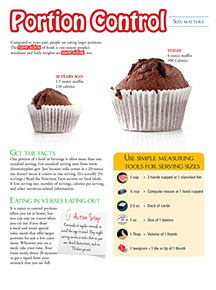
    Compared to years past, people are eating larger portions. The super-sizing of foods is one reason people’s waistlines and body weights are super-sizing , too.

    20 years ago:

    1.5 ounce muffin

    210 calories

    Today:

    4 ounce muffin

    500 Calories

    Get the facts

    One portion of a food or beverage is often more than one standard serving. Get standard serving sizes fromwww.choosemyplate.gov. Just because soda comes in a 20-ounce size doesn’t mean it counts as one serving. (It’s actually 2½ servings.) Read the Nutrition Facts section on food labels. It lists serving size, number of servings, calories per serving, and other nutrition-related information.

    Eating in verses eating out

    It is easier to control portions when you eat at home, but you can stay on course when you eat out if you share a meal and avoid special value meals that offer larger portions for just a few cents more. Wherever you eat a meal, take your time. Your brain needs about 20 minutes to get a signal from your stomach that you are full.

    Use simple measuring tools for serving sizes:

    1 cup = 2 hands cupped or 1 clenched fist

    ½ cup = Computer mouse or 1 hand cupped

    2-3 oz. =  Deck of cards

    1 oz. = Size of 1 domino

    1 Tbsp. = Volume of 1 thumb

    1 teaspoon = 1 die or tip of 1 thumb

    Action Step

    Eat meals at regular intervals to avoid the urge to snack. Buy single-serving snacks or make them on your own. Avoid distractions, such as TV when you eat.

    Page from Ways to Well-Being book by the American Institute for Preventive Medicine. www.HealthyLife.com. All rights reserved.

    © American Institute for Preventive Medicine

  • Pomegranate Fizz

    Nutrition

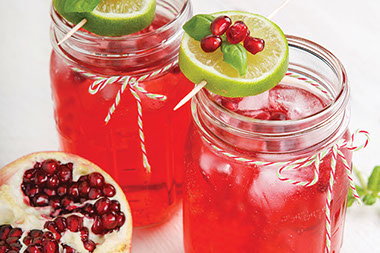
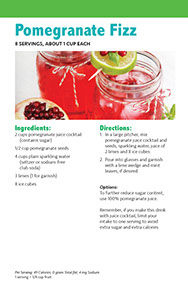
    Pomegranate fizz in jars, ready to drink.

    8 servings, about 1 cup each

    Ingredients:

    2 cups pomegranate juice cocktail (contains sugar)

    1/2 cup pomegranate seeds

    4 cups plain sparkling water (seltzer or sodium-free club soda)

    3 limes (1 for garnish)

    8 ice cubes

    Directions:

    1.  In a large pitcher, mix pomegranate juice cocktail and seeds, sparkling water, juice of 2 limes and 8 ice cubes.

    2.  Pour into glasses and garnish with a lime wedge and mint leaves, if desired.

    Options:

    To further reduce sugar content, use 100% pomegranate juice.

    Remember, if you make this drink with juice cocktail, limit your intake to one serving to avoid extra sugar and extra calories.

    Per Serving:

    Calories – 49

    Total fat – 0 grams

    Sodium – 4 mg

    Page from HealthyLife Weigh Recipe book by the American Institute for Preventive Medicine. www.HealthyLife.com. All rights reserved.

    © American Institute for Preventive Medicine

  • Plane Travel For Those With Special Health Problems

    Healthy Travel

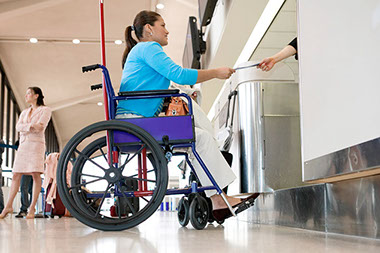
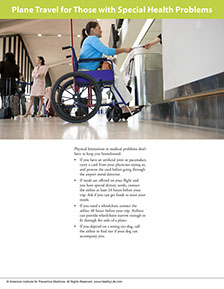
    Women in wheelchair at airport check-in counter.

    Physical limitations or medical problems don’t have to keep you homebound.

    *  If you have an artificial joint or pacemaker, carry a card from your physician saying so, and present the card before going through the airport metal detector.

    *  If meals are offered on your flight and you have special dietary needs, contact the airline at least 24 hours before your trip. Ask if you can get foods to meet your needs.

    *  If you need a wheelchair, contact the airline 48 hours before your trip. Airlines can provide wheelchairs narrow enough to fit through the aisle of a plane.

    *  If you depend on a seeing-eye dog, call the airline to find out if your dog can accompany you.

    Page image from A Year of Health Hints book by the American Institute for Preventive Medicine. www.HealthyLife.com. All rights reserved.

    © American Institute for Preventive Medicine

  • Plan Your Meals

    Nutrition

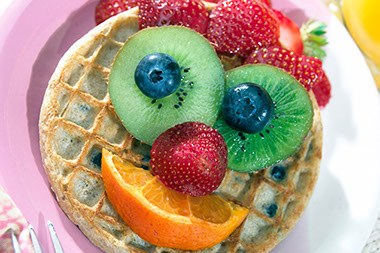
    Image of a face made out of fruit on a waffle.

    Did you know that about 70% of adults in the U.S. wait until 4:00 p.m. to decide what they’ll eat for dinner that day? Planning foods to eat for a day, a week, etc. is very helpful, because it:

    *  Saves time and effort. It means fewer trips to the grocery store. It also helps you make good use of leftovers which can be called “planned overs.”

    *  Saves money. Pre-planned, quick meals can replace more costly convenience items and restaurant meals.

    *  Saves calories. It helps keep you from impulse buying, especially high calorie snacks. It also helps with portion control.

    *  Saves you from eating the same foods over and over again. Eat a variety of foods so you get a variety of nutrients. Variety can also make eating more enjoyable.

    When You Plan Your Meals, Refer to These Items

    *  Your calendar, weekly planner, etc. These can help you know who will be home at mealtimes, whether you are eating out in a restaurant or at a relative’s or friend’s house, if you need to pack lunches, etc.

    *  Your grocery store ads which advertise weekly specials. Buy special items that fit in with your food budget and eating plan. It is not wise to buy ice cream that is “buy one” “get one free.” You’d be better off saving the fat and calories than buying a half-gallon of ice cream. Also, only use manufacturers’ “cents-off” coupons when the item is on your list and works within your eating plan.

    *  Make a grocery list from your menus. This includes the menus you use from this book and menus you plan on your own.

    Plan Breakfast

    Breakfast Is Important!

    *  It “breaks the fast” from sleeping.

    *  It helps give you energy to start your day.

    *  It is a way to get dietary fiber.

    *  It doesn’t take a lot of time.

    What To Eat

    *  When you plan your own breakfast, choose whole grain cereals and breads, fresh fruits, fruit juices, frozen, and canned fruits (in water or its own juice), skim, nonfat, or low-fat milks (regular or soy) and yogurts made from these. Add calorie-free items, such as coffee, tea, seasonings, spices (e.g., cinnamon for hot cereal).

    Breakfast Menu Makeover

    A breakfast of eggs, meat, hash browns, and toast and butter…should be eaten only occasionally. If eaten every day, the calories, fat, and cholesterol add up.

    Plan Lunch

    Suggestions For “Brown Bagging It”

    *  Fresh fruits

    *  Fresh vegetables or vegetable juices

    *  Whole wheat breads

    *  Lean meat, poultry, fish, dry beans, peas, lentils, hard-cooked eggs (especially egg whites), low-fat cheeses (2 to 6 grams of fat per ounce)

    *  Skim milk, low-fat (1%) milk, or nonfat or low-fat yogurt (regular or soy)

    *  Minimal fats, including margarine or salad dressings. Opt for low-fat or fat-free salad dressings, “butter”-type sprinkles and other no fat condiments, such as mustard, ketchup, or fat-free margarines

    Suggestions for Vegetables

    *  Large green salad with a mixture of greens and raw vegetables, such as cucumbers, green pepper, onions and broccoli. These could be “planned overs” from last night’s dinner salad.

    *  Raw vegetables, such as carrot sticks, celery sticks, broccoli, cauliflower, cucumbers, tomato slices, and/or beets. Keep these cut up and ready-to-eat in your refrigerator. They will be easy to grab when making your lunch.

    *  Ready-to-eat vegetables, such as peeled baby carrots; fresh, bagged salads, spinach, etc.

    *  Chopped raw vegetables for sandwich garnishes or stuffed in pita bread

    *  Soup or casserole dishes with vegetables. These could be “planned overs” from last night’s dinner.

    Suggestions for Fruits

    *  Keep fresh fruit in a fruit basket on the table or counter at home. Eat the fruit with the skin, if edible. This adds dietary fiber.

    *  Buy individual fruit cups (packed in water or in fruit juice) or buy larger cans and portion out the fruit in “keep cold” containers.

    Suggestions for Sandwiches

    *  Choose breads with dietary fiber, such as whole-wheat, multi-grain, Boston brown, rye, oatmeal, and pumpernickel.

    *  Choose from many shapes, such as pita (pocket), sub roll, bagel, soft tortilla, rice cakes, and lavash.

    *  Make a sandwich with lettuce leaves in place of bread.

    For Sandwich Fillings, Choose

    *  “Planned over” roast meats, turkey, chicken, or pork loin

    *  Lean deli and pre-packaged meats, such as turkey and chicken breast, or ham

    *  Flaked, cooked fish, or water packed tuna mixed with chopped, cooked, or raw vegetables and plain low-fat or fat-free dressings

    *  Mashed, cooked beans flavored with: A creole sauce made with tomatoes, onions, celery, green peppers

    *  Chopped onion and parsley, garlic powder, rosemary, thyme, and pepper

    *  Chopped cooked lean pork, celery, onions, and plain nonfat yogurt

    *  Low-fat cheeses that list no more than 6 grams of fat per ounce

    Other Bagged Lunch Suggestions

    *  Large salad with greens, chopped vegetables, lean meats, low-fat cheese, beans, such as garbanzo and kidney. Use a nonfat, no-oil, low-fat or regular salad dressing. Use serving sizes allowed in your food budget.

    *  Soup, such as vegetable or reduced fat cream of broccoli, with a whole grain muffin, fruit, and nonfat yogurt.

    *  “Planned overs” from the previous night’s dinner (e.g., lean meat, vegetable, rice, a casserole serving, chili, etc.)

    Plan Dinner

    *  Plan foods that you and your family and/or guests enjoy eating and that can be made in the time you have to prepare the meal.

    *  Choose foods that vary in flavor, color, texture, and temperature. The combination of foods should blend well together and look appealing.

    *  Make efficient use of your kitchen equipment. (For example, make baked potatoes with a roasted entree.)

    *  Focus on entrees that have whole grains and vegetables and less meat. Examples are stir-fry dishes, pasta dishes, chilis, soups, and stews.

    *  Add items to the entree (if they are not already part of it). Examples are potatoes, rice, pasta, couscous, and beans. Opt for whole grain products (bread, pasta, brown rice, etc. instead of white, enriched products), whenever possible.

    Lean (Fresh) Meat Suggestions

    *  Beef – round, sirloin, flank, lean tenderloin

    *  Veal – all trimmed cuts, except commercially ground

    *  Pork – tenderloin, leg (fresh), shoulder (arm or picnic), lean ham

    *  Lamb – leg, arm, loin

    *  Poultry – turkey, chicken, cornish hens

    *  Fish and shellfish – all, except fried

    *  Meat counter pre-portioned items – shish-kebobs or skewers of city chicken

    Meatless Main Dish Suggestions

    *  Dry beans, kidney beans, black beans, pinto beans, peas, lentils, garbonzo beans (chick peas), split peas, and lentils in soups, stews, and pasta sauces

    *  Vegetarian burgers and entrees

    *  Low-fat cheeses

    *  Tofu (soy bean curd)

    Convenience Food Items Suggestions

    *  Frozen dinners – Choose ones with less than 300 calories and less than 1000 mg of sodium.

    *  Frozen entrees – Look for ones with 15 grams of fat or less per serving.

    *  Prepared entrees in the meat section – Examples are pre-roasted, heat and serve chicken or turkey.

    *  Deli pre-cooked items – Choose barbecued chicken, broasted chicken breasts, and baked fish (available at some supermarkets with fish counters, cooked while you shop).

    *  Fast-food items – Choose pizza (without extra cheese and fatty meats); broiled and rotisserie chicken and broiled chicken sandwiches; quarter pound or 2 oz. hamburgers without cheese and mayonnaise; regular or junior sized shaved roast beef sandwiches; broiled and baked fish; soft tacos, burritos, tostadas, and chili; plain baked potatoes and vegetables; salads and salad bar (omit high fat items like regular dressing, creamy dressed salads, such as potato salad, etc.).

    *  Items usually served at breakfast – Have bagels, pancakes, English muffins, juice, fruits, fat-free muffins, cereal, skim and 1% milk, etc.

    Vegetable Suggestions

    Vegetables add color, texture, fiber, vitamins and minerals without adding a lot of calories. Choose good sources of carotene and vitamin C, often.

    Good Sources of Carotene

    (the form of vitamin A found in fruits and vegetables)

    *  Apricots

    *  Broccoli

    *  Cantaloupe

    *  Carrots

    *  Collard greens

    *  Peas

    *  Spinach

    *  Sweet potatoes

    *  Tomatoes

    *  Turnip greens

    *  Winter squash

    Tips for Vegetables

    *  Steam vegetables, cook them in the microwave or in a small amount of water to the “tender-crisp” stage. More nutrients will be retained.

    *  Add herbs, spices, wine, or de-fatted chicken stock to the water when steaming vegetables. These will add flavor.

    *  Use the liquid that the vegetables are cooked in to sauté foods or in soups and stews.

    *  Keep a supply of cut-up vegetables in the refrigerator. Cut vegetables into serving-sized snack pieces when you bring them home from the store. You will be more likely to eat them when they are ready-to-eat. Add them to fast-food meals that you bring home.

    *  Add imitation butter sprinkles or lemon juice and herbs to steamed vegetables instead of butter, margarine, honey, salt, and soy sauce. This will keep down the extra calories, fat, sugar, and sodium.

    Good Sources of Vitamin C

    *  Broccoli

    *  Brussels sprouts

    *  Cabbage

    *  Cantaloupe

    *  Citrus fruits & juices

    *  Strawberries

    *  Cauliflower

    *  Collard greens

    *  Green and red peppers

    *  Kiwi fruit

    *  Peas

    *  Tomatoes

    Plan Snacks

    Snacks can be part of healthy eating. Count them in your daily eating plan, not as “extras.” With planning, you can be prepared for “snack attacks.” This could help keep you from getting high fat, high salt items from vending machines, etc. Keep items that won’t spoil in a desk drawer at work, in your purse, briefcase, locker, etc.

    What to Eat

    *  Free items listed on page 18 and raw vegetables from the vegetable group.

    *  Foods from breakfast, lunch, or dinner menus. For example, save your serving of fruit from lunch and eat it between lunch and dinner.

    *  Any item(s) that total your daily “Extra Calories” budget. Read food labels for information. See the lists below for examples.

    Other Tips

    *  If it is hard for you to avoid eating high fat, high salt and high sugar snacks, don’t buy them. If you have a hard time stopping at one small serving, buy single-serving items.

    *  Eat snacks slowly. Use utensils to eat them.

    *  After you eat your planned snack, drink water and/or brush or floss your teeth.

    Sample 60 Calorie Snacks

    *  1 small apple, orange, or pear

    *  3 cups “light” microwave popcorn

    *  2 Tofutti fudge treat bars

    *  5-6 animal crackers

    *  2 fortune cookies

    *  1 fruit roll snack

    *  2 gingersnaps

    *  24 thin pretzel sticks

    *  1 Jell-O gelatin bar

    *  1 Dole Fruit ‘n Juice bar

    *  1-1/4 cups V-8 juice

    *  1/2 cup sorbet

    *  4 small shrimp

    *  4 ounces “lite” wine

    Sample 90 Calorie Snacks

    *  1 cup nonfat, plain yogurt

    *  1/2 cup fat free ice cream

    *  1/2 cup nonfat frozen yogurt

    *  2 ounces fat-free cheddar cheese

    *  1/2 cup fat-free pudding

    *  1 cup sugar-free yogurt with fruit

    *  1 Rice Krispies Treats bar

    *  1 thin slice banana bread

    *  1 rice cake with 1/2 Tbsp. peanut butter

    *  Low fat fruit smoothie drink

    *  8 ounces sugar-free hot cocoa

    *  4 ounces regular wine or 12 ounces “lite” beer

    Sample 120 Calorie Snacks

    *  1 cup nonfat, plain yogurt + 1/2 cup strawberries

    *  1 ounce dry roasted soy nuts

    *  4 mini Chips Ahoy cookies or 7 mini Oreo cookies

    *  2/3 cup Chex Mix

    *  3 rice cakes or 2 rice cakes with 1/2 Tbsp. peanut butter

    *  6 cups “lite” microwave popcorn

    *  11 animal crackers

    *  2 plain donut holes

    *  12 ounces regular beer

    Behavior Change Tip

    If you don’t have time to make a lunch in the morning, make it the night before. Put “planned overs” in controlled serving sizes in portable containers. Refrigerate items as needed. The next morning, your lunch is ready-to-go.

    Page from HealthyLife Weigh book by the American Institute for Preventive Medicine. www.HealthyLife.com. All rights reserved.

    © American Institute for Preventive Medicine

  • Plan An Anti-Cancer Diet

    Nutrition

    The American Cancer Society estimates that one-third of cancer deaths that occur in the U.S. each year are due to dietary factors, inactivity, and being overweight. It’s hard to say exactly how much changing your diet reduces the risk of cancer, but it’s fair to say that the following steps can help.

    Eat less fat, especially from animal sources.

    These include foods such as beef, pork, butter, cream, sour cream, and cheese. Choose non-fat and low-fat dairy products and other foods low in fat. Replace fat-rich foods with fruits, vegetables, grains, and beans.

    Eat more fruits, vegetables, and whole-grain products like cereal and bread.

    Eat at least 5 servings of fruits and vegetables each day. Fruits and vegetables help protect against some cancers due to the vitamins, minerals, fiber, and plant chemicals they contain. Vary your choices. Foods with whole grains (wheat, rice, oats, and barley) also contain vitamins, minerals, and dietary fiber. Have six to 11 servings of whole-grain breads, cereals, etc. each day.

    Eat fewer cured, grilled, or smoked foods.

    When eaten in excess, these foods may increase the risk of stomach and esophageal cancer. This increase may be due to one or more of the following: nitrites and nitrates they contain; their high fat content; or changes that occur when they’re cooked or processed.

    Limit consumption of alcohol, if you drink at all.

    Combined with cigarette smoking, over-consumption of alcohol has been shown to increase the risk of cancer of the mouth, esophagus, and larynx. Also, alcohol may promote breast cancer regardless of whether you smoke or not. Excessive drinking also contributes to liver cancer. Cancer risk increases with the amount of alcohol consumed. The risk may start to rise having as few as two drinks per day. A drink is defined as 12 ounces of regular beer, 4 to 5 ounces of wine, or 1-1/2 ounces of 80-proof distilled spirits, like vodka or whiskey.

    Be physically active and maintain a desirable weight.

    Obesity is associated with an increased risk of cancers of the colon and rectum, prostate, breast (for women past menopause), endometrium, and kidney. Lose weight if you are overweight. Exercise on a regular basis.

    Page from A Year of Health Hints book by the American Institute for Preventive Medicine. www.HealthyLife.com. All rights reserved.

    © American Institute for Preventive Medicine