Blog

  • Friends Help Friends Through Addiction

    Substance Use & Abuse

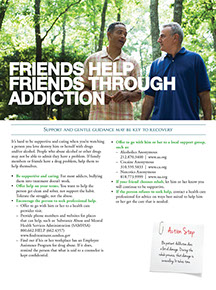
    Image of 2 friends walking and talking.

    Support and gentle guidance may be key to recovery.

    It’s hard to be supportive and caring when you’re watching a person you love destroy him or herself with drugs  and/or alcohol. People who abuse alcohol or other drugs may not be able to admit they have a problem. If family members or friends have a drug problem, help them to help themselves.

    Be supportive and caring.

    For most addicts, bullying them into treatment doesn’t work.

    Offer help on your terms.

    You want to help the person get clean and sober, not support the habit. Tolerate the struggle, not the abuse.

    Encourage the person to seek professional help.

    *  Offer to go with him or her to a health care provider visit.

    *  Provide phone numbers and websites for places that can help, such as: Substance Abuse and Mental Health Services Administration (SAMHSA) – 800.662.HELP (662.4357)www.findtreatment.samhsa.gov

    *  Find out if his or her workplace has an Employee Assistance Program for drug abuse. If it does, remind the person that what is said to a counselor is kept confidential.

    If your friend chooses rehab, let him or her know you will continue to be supportive. If the person refuses to seek help, contact a health care professional for advice on ways best suited to help him or her get the care that is needed.

    Offer to go with him or her to a local support group.

    Alcoholics Anonymous

    212.870.3400

    www.aa.org

    Cocaine Anonymous

    310.559.5833

    www.ca.org

    Narcotics Anonymous

    818.773.9999

    www.na.org

    Action Step

    Be patient. Addiction does a lot of damage. During the rehab process, that damage is unraveling. It takes time.

    Page from Ways to Well-Being book by the American Institute for Preventive Medicine. www.HealthyLife.com. All rights reserved.

    © American Institute for Preventive Medicine

  • Fresh Salsa

    Nutrition

    7 Servings, about 1/2 cup

    Ingredients:

    Juice of 1 lime

    1/2 medium onion, finely chopped

    1 clove garlic, finely minced

    3 Tbsp. cilantro, chopped

    1/8 tsp. oregano, finely crushed

    2 serrano or jalapeno peppers, finely chopped

    6 tomatoes, preferably Roma (or 3 large tomatoes)

    1/8 tsp. salt and 1/8 teaspoon pepper

    1/2 avocado, diced (black skin removed)

    Directions:

    Combine all of the ingredients in a glass bowl. Serve immediately or refrigerate and serve within 4 or 5 hours.

    Per Serving:

    Calories – 45

    Total fat – 5 grams

    Saturated fat – Less than 1 gram

    Sodium – 89 mg

    Page from HealthyLife Weigh Recipe book by the American Institute for Preventive Medicine. www.HealthyLife.com. All rights reserved.

    © American Institute for Preventive Medicine

  • Fresh Cabbage And Tomato Salad

    Nutrition

    8 Servings, 1 cup each

    Ingredients:

    1 small head cabbage, thinly sliced

    2 medium tomatoes, cut in cubes

    1 cup sliced radishes

    1/4 tsp. salt

    2 tsp. olive oil

    2 Tbsp. rice vinegar (or lemon juice)

    1/2 tsp., each, black pepper and red pepper

    2 Tbsp. fresh cilantro, chopped

    Directions:

    In a large bowl, mix together the cabbage, tomatoes, and radishes. In another bowl, mix together the rest of the ingredients and pour over the vegetables.

    Per Serving:

    Calories – 41

    Total fat – 1 gram

    Saturated fat – Less than 1 gram

    Sodium – 88 mg

    Page from HealthyLife Weigh Recipe book by the American Institute for Preventive Medicine. www.HealthyLife.com. All rights reserved.

    © American Institute for Preventive Medicine

  • Footwear And Foot Care For Travelers

    Healthy Travel

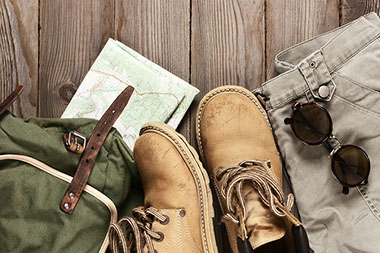
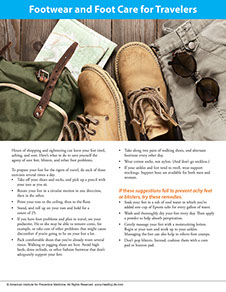
    Image of hiking boots, backpack and map.

    Hours of shopping and sightseeing can leave your feet tired, aching, and sore. Here’s what to do to save yourself the agony of sore feet, blisters, and other foot problems.

    To prepare your feet for the rigors of travel, do each of these exercises several times a day.

    *  Take off your shoes and socks, and pick up a pencil with your toes as you sit.

    *  Rotate your feet in a circular motion in one direction, then in the other.

    *  Point your toes to the ceiling, then to the floor.

    *  Stand, and roll up on your toes and hold for a count of 25.

    *  If you have foot problems and plan to travel, see your podiatrist. He or she may be able to remove corns, for example, or take care of other problems that might cause discomfort if you’re going to be on your feet a lot.

    *  Pack comfortable shoes that you’ve already worn several times. Walking or jogging shoes are best. Avoid high heels, dress oxfords, or other fashion footwear that don’t adequately support your feet.

    *  Take along two pairs of walking shoes, and alternate footwear every other day.

    *  Wear cotton socks, not nylon. (And don’t go sockless.)

    *  If your ankles and feet tend to swell, wear support stockings. Support hose are available for both men and women.

    If these suggestions fail to prevent achy feet or blisters, try these remedies.

    *  Soak your feet in a tub of cool water to which you’ve added one cup of Epsom salts for every gallon of water.

    *  Wash and thoroughly dry your feet every day. Then apply a powder to help absorb perspiration.

    *  Gently massage your feet with a moisturizing lotion. Begin at your toes and work up to your ankles. Massaging the feet can also help to relieve foot cramps.

    *  Don’t pop blisters. Instead, cushion them with a corn pad or bunion pad.

    Page image from A Year of Health Hints book by the American Institute for Preventive Medicine. www.HealthyLife.com. All rights reserved.

    © American Institute for Preventive Medicine

  • Food Items To Focus On

    Nutrition

    Produce & Salad Bar

    Image of a women in grocery store weighing salad from a salad bar.

    *  All fresh fruits

    *  All fresh vegetables (go easy on avocados, they are high in fat)

    *  Nuts and seeds, such as sunflower and pumpkin

    *  All salad bar items that are fresh vegetables (lettuce, celery, carrots, green peppers, spinach, etc.).

    *  Tofu (soy bean curd). This may be in dairy or meat sections of the store.

    Strictly limit: coconut, croutons, salads made with mayonnaise, regular salad dressing. Use small amounts of low-calorie salad dressings. (Better yet, use fat-free and reduced-fat salad dressings.)

    Meat, Poultry, Fish

    Image of a hand picking up a package of meat.

    Look for lean cuts of meat with fat trimmed, such as:

    *  Beef: round, sirloin, tenderloin, ground round, ground sirloin, or extra lean ground beef

    *  Pork: tenderloin, leg (fresh) shoulder (arm or picnic)

    *  Lamb: leg, arm, loin, rib

    *  Veal: all trimmed cuts, except commercially ground

    *  Poultry: chicken, turkey, cornish hens, etc.

    *  All fish, shellfish

    Strictly limit: goose, domestic duck, salt pork, chitterlings

    Delicatessen

    *  Sliced lean meats, such as turkey, ham, chicken, lean beef

    *  Ready-to-eat broiled or rotisserie chicken and turkey breast

    *  Fresh fruit salads

    Strictly limit: mayonnaise-dressed salads, sausage, frankfurters, high-fat luncheon meats, such as bologna, salami, and bacon

    Freezer Section

    Image of the freezer section of a grocery store.

    *  Frozen fruits and vegetables. Buy these frozen loosely in bags so it is easy to make 1 portion.

    *  Juice concentrates

    *  Frozen dinners-preferably ones with less than 300 calories and 1000 mg. of sodium or less/serving

    *  Frozen fish fillets – look for fresh-frozen ones that can be reapportioned when you take them home instead of solid packed ones that you would have to thaw out.

    *  Sugar-free or low calorie frozen treats, such as sugar-free and regular popsicles and fudgesicles, frozen yogurt, lite tofutti, fruit ices, etc.

    Dairy Section

    Image of a women picking up a gallon of milk from the dairy section.

    *  Skim milk, 1/2% low fat milk, buttermilk

    *  Soy milk (with added calcium)

    *  Plain, nonfat yogurt

    *  Low-fat, soft cheeses, like cottage and farmers

    *  Reduced fat and other cheeses labeled no more than 2 to 6 grams fat per ounce

    *  Margarine: soft tub (regular and diet), Benecol® and Take Control® margarines

    *  Orange and other fresh juices (not fruit drinks)

    *  English muffins

    *  Whole wheat, corn, and flour tortillas

    *  Eggs, egg substitute

    Strictly limit: Biscuits, croissants, cream, sour cream, half and half, cheeses other than above, whole milk, 2% low-fat milk, butter

    Breads, Cereals

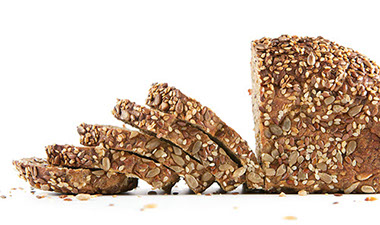
    Image of wheat bread.

    *  Whole wheat bread, regular or lite (40 calories/slice)

    *  Whole wheat and plain dinner rolls

    *  Whole wheat and regular pita breads

    *  English muffins

    *  Bagels (also stocked in freezer section)

    *  Breadsticks

    *  Sandwich buns (“lite” are also available)

    *  Rice cakes

    *  Cereal mixes for cooked cereals: oatmeal, Cream of Wheat, etc.

    *  Ready-to-eat cereals. Look for ones with at least 2 grams of fiber and less than 2 grams of fat per one ounce serving. Limit sugar-sweetened ones.

    Staples

    *  Canned entrees/main dishes (8 grams of fat or less, per 1 cup serving)

    *  Canned fish, such as tuna in water, salmon

    *  Rice, brown or white, barley, bulgar

    *  Pastas, like plain noodles, macaroni, spaghetti

    *  Dried or canned beans and peas like split peas, black-eyed peas, chick peas, kidney beans, lentils, soybeans

    *  Canned fruits packed in water or their own juices

    *  “Old-fashioned” style peanut butter (oil can be seen at the top of the jar)

    *  Low-fat crackers, such as matzos, bread sticks, rye krisp, saltines (with unsalted tops), graham crackers, zwieback

    *  Popcorn (regular or microwave-packaged, if less than 2 grams of fat per serving)

    *  Spices, seasonings, herbs, butter flavor sprinkles, vanilla, other flavor extracts

    *  Salad dressings – “Lite,” “reduced-calorie,” “no oil” or “fat free” varieties

    *  Vinegar

    *  Condiments, such as ketchup, mustard, worcestershire sauce, horseradish, etc. Use small amounts. These are high in sodium.

    *  Reduced-sodium bouillon, unsweetened pickles, canned soups

    *  Flour; whole wheat, all purpose, whole wheat and all purpose combination

    *  Cornstarch

    *  Vegetable cooking sprays

    *  Liquid vegetable oils, such as olive and canola

    *  Coffee, tea, cocoa mixes with nonfat dry milk

    *  Sugar-free gelatin and drink mixes

    *  Wine, dry for cooking

    *  Nonfat dried milk

    *  Canned evaporated skim milk

    *  Bottled water

    Strictly limit: Potato chips and other high fat, high salt snacks, regular canned vegetables (because they are high in salt), and seasonings and foods with monosodium glutamate (MSG).

    Page from HealthyLife Weigh book by the American Institute for Preventive Medicine. www.HealthyLife.com. All rights reserved.

    © American Institute for Preventive Medicine

  • Fitness In Flight

    Healthy Travel

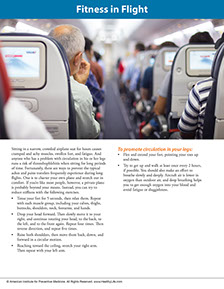
    Passengers aboard an airplane.

    Sitting in a narrow, crowded airplane seat for hours causes cramped and achy muscles, swollen feet, and fatigue. And anyone who has a problem with circulation in his or her legs runs a risk of thrombophlebitis when sitting for long periods of time. Fortunately, there are ways to prevent the typical aches and pains travelers frequently experience during long flights. One is to charter your own plane and stretch out in comfort. If you’re like most people, however, a private plane is probably beyond your means. Instead, you can try to reduce stiffness with the following exercises.

    *  Tense your feet for 5 seconds, then relax them. Repeat with each muscle group, including your calves, thighs, buttocks, shoulders, neck, forearms, and hands.

    *  Drop your head forward. Then slowly move it to your right, and continue rotating your head, to the back, to the left, and to the front again. Repeat four times. Then reverse direction, and repeat five times.

    *  Raise both shoulders, then move them back, down, and forward in a circular motion.

    *  Reaching toward the ceiling, stretch your right arm. Then repeat with your left arm.

    To promote circulation in your legs:

    *  Flex and extend your feet, pointing your toes up and down.

    *  Try to get up and walk at least once every 2 hours, if possible. You should also make an effort to breathe slowly and deeply. Aircraft air is lower in oxygen than outdoor air, and deep breathing helps you to get enough oxygen into your blood and avoid fatigue or sluggishness.

    Page image from A Year of Health Hints book by the American Institute for Preventive Medicine. www.HealthyLife.com. All rights reserved.

    © American Institute for Preventive Medicine

  • Fitness Basics

    Fitness

    When you are fit, you are at a healthy body weight. You have energy. Exercise and a healthy diet are a regular part of your life.

    Fitness has four parts:

    *  Heart and Lung Fitness. This is how well your heart pumps blood and sends oxygen through your body.

    *  Muscle Fitness. This is about your muscle strength and endurance. Muscle strength is how much weight you can lift safely. Endurance is how many times you can lift something or how long you can hold it without getting tired.

    *  Flexibility. This is being able to move your joints easily and without pain through a wide range of motion. This helps you reach, twist, turn, and move things without straining.

    *  Body Make-Up. This is how much of your body is fat and how much is muscle. Too much body fat puts extra strain on your joints and increases your risk for heart disease and other diseases. Too little body fat is not good either.

    Fitness Goals

    To set your goals, consider these points:

    *  Activities you’ve been good at before and things you think you will enjoy doing

    *  Equipment you have or can use

    *  Goals you want to achieve and your current fitness level.

    Ways to Get More Fit

    * Exercise.

    * Recreation, such as golfing, dancing, etc.

    * Active hobbies, such as working in the garden

    * Chores, such as mowing the grass, walking the dog, etc.

    Time to Set Your Goals

    *  Write down your goals. Record the date.

    *  Your goals should be clear and measurable. “To get stronger” is vague. “To advance from 5 to 10 push-ups by the end of the month” is clear.

    *  Make short term goals. Plan what you want to do by the end of the month; not a year from now.

    *  From time to time, review and change your goals.

    Before You Begin an Exercise Program

    Start slowly. Build up gradually. This gives your body time to adjust to exercise. It also helps you avoid soreness and injury. Check with your doctor before you begin an exercise program if:

    *  You have one or more chronic health problems (e.g., heart disease, diabetes, arthritis, etc.).

    *  You are overweight.

    *  You are a man over age 40 or a woman over age 50 and you plan to begin very active physical activity.

    *  You are over age 65 and are not active.

    *  You feel faint or very dizzy at times or you have chest pains.

    *  You take prescription medicine (e.g., high blood pressure pills, etc.).

    *  You are not sure how exercise will affect any physical problem you have.

    Aerobic Exercises

    Aerobic exercise makes the heart get stronger. It also helps your body make natural substances called endorphins that give a natural “high.”

    A. Warm Up

    Spend 5 to 10 minutes doing the activity at a slower pace or stretch all major muscle groups and parts of the body. This includes your:

    *  Head and neck. Shoulders, upper back, arms, and chest

    *  Rib cage, waist, and lower back

    *  Thighs (front and back). Inner thighs.

    *  Calves and Achilles’ tendons, which connect the calf muscles to the backs of the heels. Ankles and feet.

    Extend each body part and hold it for 15 to 30 seconds. This should not cause any pain, but be a flowing, rhythmic motion that raises your heart rate a bit.

    B. Aerobic Activity

    Some popular aerobic activities are walking, bike riding, running, low-impact aerobics, and swimming. To be aerobic, the activity you choose should:

    *  Be steady and nonstop.

    *  Last a minimum of 10 minutes. You can start out for shorter periods of time, many times a day (e.g., do 5 minutes, twice a day). Progress to more minutes each time.

    *  Use large muscles of the lower body (the legs and buttocks).

    *  Result in a heart rate of 60 to 80% of your maximum heart rate.

    *  Allow you to talk without gasping for breath.

    C. Cool Down

    Choose a slower pace of the activity you were doing. If you were walking briskly, walk slowly. Or, stretch for about 5 minutes. Stretch all muscle groups. Stretch to the point of mild tension (not pain or burn). Hold for 10 to 30 seconds. Breathe out when you begin to stretch. Breathe in when the stretch is released.

    Target Heart Rate

    Target heart rate is 60% to 80% of your maximum heart rate (MHR). To find your MHR:

    A. Subtract your age from 220:

    220 – ______ (age)  =  ______ (MHR)

    B. Multiply your MHR   x .60 =

    Multiply your MHR   x .80 =

    C. Your 60-second (target) heart rate should fall somewhere between these two numbers during the aerobic activity.

    Guidelines for Aerobic Activity

    *  Each week, adults should:

    – Do at least 2 hours and 30 minutes of moderate aerobic activity, such as brisk walking or ballroom dancing… OR

    – Do 1 hour and 15 minutes of vigorous aerobic activity, such as jogging, aerobic dancing, and jumping rope… OR

    – A combination of activities from the 2 listed above.

    *  For increased fitness or to lose weight or keep lost weight off, do 5 hours of moderate physical activity or 2 hours and 30 minutes of vigorous aerobic physical activity a week.

    *  Warm up for 5 to 10 minutes before each aerobic session.

    *  Do the aerobic activity for at least 10 minutes at a time.

    *  Slow down at the end, little by little. Then stretch for 5 to 10 minutes.

    Stretch & Strengthen

    Stretching Exercises

    These exercises make your body more flexible. This helps you prevent injury during sports, exercise, and everyday activities. Stretching exercises should be done before and after every strengthening or aerobic workout.

    *  Stretch only to the point of comfort. You should feel mild tension, not pain.

    *  Never bounce.

    *  Breathe slowly and rhythmically.

    *  When women are pregnant, joints loosen. Pregnant women need to be extra careful not to stretch muscles too far.

    Sample Exercises

    A. Shoulder Shrug

    Shrug your shoulders up toward your head. Then lower them. Repeat 4 times. Slowly circle your shoulders forward 8 times and then backward 8 times.

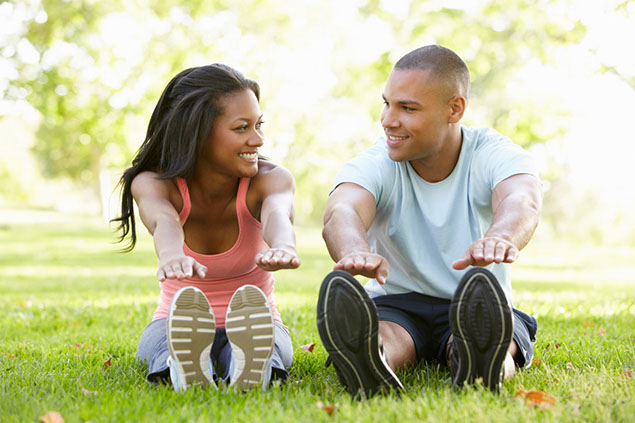
    B. Hamstring Stretch

    Sit on the floor with your right leg straight. Bend your left leg and touch your foot against your straight leg. Stretch forward to touch the toes of your right foot. Hold for 4 counts. Then, do this on the other side.

    Strengthening Exercises

    Benefits of Strength Training

    *  There is less chance of injury.

    *  Your muscles can work longer before getting tired (endurance).

    *  You build muscle. Muscle burns more calories than fat. This occurs even when your body is at rest.

    *  You have more lean tissue and less fat in the body.

    *  You improve your bone density. This helps prevent osteoporosis and fractures.

    *  Your body looks more toned.

    Strengthening Guidelines

    *  Use weights or a stretch band. Try out different ones to find what’s right for you. For strengthening, you should be able to do at least 2 sets and repeat these 8 times. If you can’t, the weight is too heavy. If you can easily do more than 3 sets, and repeat them 12 times, use a heavier weight.

    *  For toning, try to do 2 sets. Repeat 15 to 20 times.

    *  Warm up with 15 repetitions using about half to three-quarters your usual weight.

    *  Give muscles a day to rest in between workouts. If you want to work out every day, do the upper body one day; the lower body the next day.

    *  Move slowly. Don’t jerk the weights up or drop them too fast.

    *  Keep your knees and elbows slightly bent.

    *  Breathe out when you are at the hardest part of the exercise. Breathe in when you return to the starting position. Don’t hold your breath.

    *  Work opposing muscles. For example, after you work the front of the arm (biceps), work the back of the arm (triceps).

    *  Talk to your doctor, health care provider, or a fitness consultant for a complete exercise program.

    Sample Strengthening Exercises

    A. Biceps Curl

    Stand with your knees a bit bent, hip distance apart. Or, sit on the edge of a chair or bench. Hold one weight in each hand with your arms down the front of your thighs. Your forearms should face out. Lift the weight slowly (4 times) until it almost touches your upper arm. Keep your upper arm still. At the top of your movement, tighten the biceps muscles. Hold for 2 counts. Lower the weight to the count of 4.

    B. Triceps Press

    Stand with your knees bent. Keep your feet about hip distance apart. Lean forward a bit with a weight in each hand. Hold them right next to your hips. Bend your elbows. Hold them close to your sides. Don’t move your upper arms or elbows. Extend the weights as high as you can in back to the count of 4. Tighten the triceps to a count of 2. Lower your arms to the count of 4. You can do this with one arm at a time. If you do, rest the other arm on your knee.

    C. Knee Push-Up

    Lie face down on the floor. Rest on your knees and on the palms of your hands, about shoulder width apart. Push up. Keep your body straight from knees to shoulders. Push up and down slowly to counts of 4.

    D. Shoulder Curl-Up

    Lie on your back. Bend your knees. Lift your upper back off the floor with your hands crossed over your shoulders. Lift and lower slowly to counts of 4.

    E. Calf Raises

    Stand with your feet about hip distance apart. Rise onto your toes. Hold for 1 count and lower. Try it on the edge of a step and let your heel drop below your toes for a wider range of motion.

    Prevent Sports Injuries

    *  Ease into any exercise program. Start off easy and build up gradually.

    *  Before you exercise, warm up your muscles with slow easy stretches. Do this for all sports. Don’t bounce.

    *  Don’t overdo it. “No pain, no gain” is not true.

    *  Wear the proper shoes and the right protective gear and clothing for the exercises you do. Items to wear include a helmet, shoulder, knee and wrist pads, a mouth guard, etc.

    *  Don’t run on hard surfaces, such as asphalt and concrete.

    *  Run on flat surfaces instead of uphill. Running uphill aggravates the stress put on the Achilles tendon.

    *  Train in the sport so you learn how to avoid injury. “Weekend athletes” are prone to injury.

    *  Follow the rules that apply to the sport.

    *  Cool down after hard exercise. Do the activity at a slower pace for 5 minutes.

    Treat Sports Injuries

    *  If the injury does not appear serious, use RICE:

    – Rest the injured area for 24 to 48 hours.

    – Ice the area for 10 minutes every 2 hours for the next 48 hours during the times you are not sleeping. (After 48 hours, apply heat. Note: For achilles tendinitis and plantar fasciitis, some sports trainers advise using moist heat, not ice.)

    – Compress the area. Wrap with an elastic bandage. Do not cut off circulation. Remove the bandage every 3 or 4 hours and leave it off for 15 to 20 minutes each time you do so.

    – Elevate the area above heart level, if possible.

    *  If you sprain your finger or hand, remove rings right away. If you don’t and your fingers swell up, the rings may have to be cut off.

    *  Use crutches only when it is too painful to bear weight.

    *  Take an over-the-counter medicine for pain, if needed. Take the medicine your doctor or health care provider prefers you use.

    Note: Many sports medicine providers do not advise taking aspirin-like medicines at first because these can make bleeding and bruising worse.

    Benefits of Fitness

    *  It improves heart function and breathing.

    *  It makes muscles and bones stronger.

    *  It lowers the risk of getting some cancers, heart disease, osteoporosis, and type 2 diabetes.

    *  It lowers cholesterol.

    *  It helps keep blood pressure under control.

    *  It helps to control your weight.

    *  It relieves stress and lowers the risk of depression and anxiety. It helps you sleep better.

    *  It gives you more energy and can improve your job performance.

    *  It improves your sex drive.

    *  It can help you live longer.

    Resources

    American Council on Exercise (ACE)

    888.825.3636

    www.acefitness.org

    Centers for Disease Control and Prevention

    www.cdc.gov/physicalactivity/everyone/guidelines

    Cover image to the Fitness brochure by the American Institute for Preventive Medicine. www.HealthyLife.com. All rights reserved.

    © American Institute for Preventive Medicine

  • Find Your Fitness Personality

    Fitness

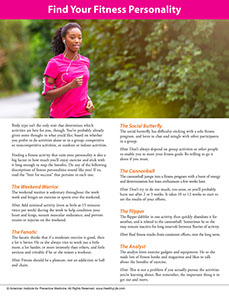
    Body type isn’t the only trait that determines which activities are best for you, though. You’ve probably already given some thought to what you’d like, based on whether you prefer to do activities alone or in a group; competitive or noncompetitive activities, or outdoor or indoor activities.

    Finding a fitness activity that suits your personality is also a big factor in how much you’ll enjoy exercise and stick with it long enough to reap the benefits. Do any of the following descriptions of fitness personalities sound like you? If so, read the “hint for success” that pertains to each one.

    The Weekend Warrior

    The weekend warrior is sedentary throughout the work week and binges on exercise or sports over the weekend. Hint: Add minimal activity (even as little as 15 minutes twice per week) during the week to help condition your heart and lungs, sustain muscular endurance, and prevent strains or injuries on the weekend.

    The Fanatic

    The fanatic thinks that if a moderate exercise is good, then a lot is better. He or she always tries to work out a little more, a lot harder, or more intensely than others, and feels anxious and irritable if he or she misses a workout. Hint: Fitness should be a pleasure, not an addiction or ball and chain.

    The Social Butterfly

    The social butterfly has difficulty sticking with a solo fitness program, and loves to chat and mingle with other participants in a group. Hint: Don’t always depend on group activities or other people to enable you to meet your fitness goals. Be willing to go it alone if you must.

    The Cannonball

    The cannonball jumps into a fitness program with a burst of energy and determination but loses enthusiasm a few weeks later. Hint: Don’t try to do too much, too soon, or you’ll probably burn out after 2 or 3 weeks. It takes 10 to 12 weeks to start to see the results of your efforts.

    The Flipper

    The flipper dabbles in one activity, then quickly abandons it for another, and is related to the cannonball. Sometimes he or she may remain inactive for long intervals between flurries of activity. Hint: Real fitness results from consistent efforts, over the long term.

    The Analyst

    The analyst loves exercise gadgets and equipment. He or she reads lots of fitness books and magazines and likes to talk about the benefits of exercise. Hint: This is not a problem if you actually pursue the activities you’re learning about. But remember, the important thing is to get out and move.

    Page image from A Year of Health Hints book by the American Institute for Preventive Medicine. www.HealthyLife.com. All rights reserved.

    © American Institute for Preventive Medicine

  • Find The Fun In Fitness

    Fitness

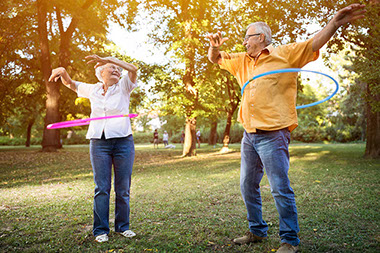
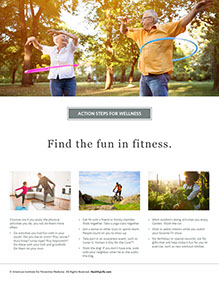
    Older couple hula hooping.

    Chances are if you enjoy the physical activities you do, you will do them more often.

    *  Do activities you had fun with in your youth. Did you like to swim? Play soccer? Hula hoop? Jump rope? Play hopscotch? Do these with your kids and grandkids. Do them on your own.

    *  Get fit with a friend or family member. Walk together. Take a yoga class together.

    *  Join a dance or other class or sports team. People count on you to show up.

    *  Take part in an awareness event, such as Susan G. Komen 3-Day for the Cure™!

    *  Walk the dog! If you don’t have one, walk with your neighbor when he or she walks the dog.

    *  Work outdoors doing activities you enjoy. Garden. Wash the car.

    *  Walk or pedal indoors while you watch your favorite TV show.

    *  For birthdays or special rewards, ask for gifts that will help make it fun for you to exercise, such as new workout clothes.

    Page from HealthyLife Weigh book by the American Institute for Preventive Medicine. www.HealthyLife.com. All rights reserved.

    © American Institute for Preventive Medicine