Weight Control
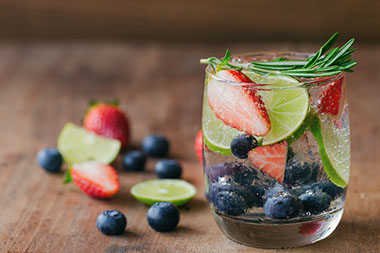
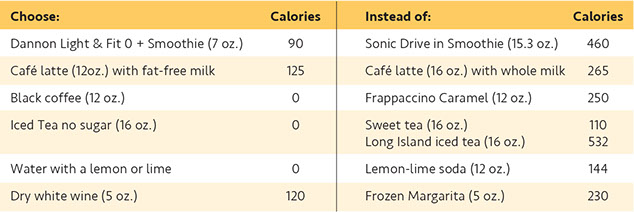
Calories from everything you drink can really add up. Decide how much of your calories you want to spend on drinks.
© American Institute for Preventive Medicine
Weight Control
Calories from everything you drink can really add up. Decide how much of your calories you want to spend on drinks.
© American Institute for Preventive Medicine
Fitness
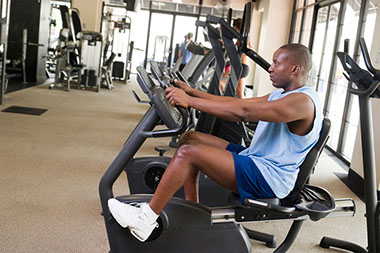
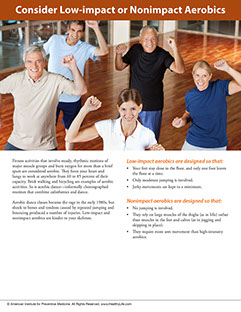
Fitness activities that involve steady, rhythmic motions of major muscle groups and burn oxygen for more than a brief spurt are considered aerobic. They force your heart and lungs to work at anywhere from 60 to 85 percent of their capacity. Brisk walking and bicycling are examples of aerobic activities. So is aerobic dance-informally choreographed routines that combine calisthenics and dance.
Aerobic dance classes became the rage in the early 1980s, but shock to bones and tendons caused by repeated jumping and bouncing produced a number of injuries. Low-impact and nonimpact aerobics are kinder to your skeleton.
Low-impact aerobics are designed so that:
* Your feet stay close to the floor, and only one foot leaves the floor at a time.
* Only moderate jumping is involved.
* Jerky movements are kept to a minimum.
Nonimpact aerobics are designed so that:
* No jumping is involved.
* They rely on large muscles of the thighs (as in lifts) rather than muscles in the feet and calves (as in jogging and skipping in place).
* They require more arm movement than high-intensity aerobics.
© American Institute for Preventive Medicine
Fitness
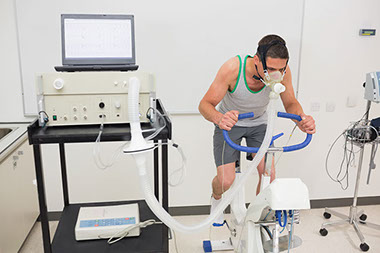
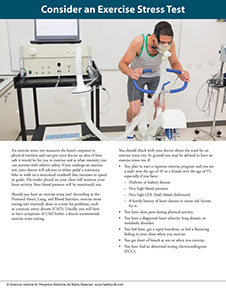
An exercise stress test measures the heart’s response to physical exertion and can give your doctor an idea of how safe it would be for you to exercise and at what intensity you can exercise with relative safety. If you undergo an exercise test, your doctor will ask you to either pedal a stationary bike or walk on a motorized treadmill that increases in speed or grade. Electrodes placed on your chest will monitor your heart activity. Your blood pressure will be monitored, too.
Should you have an exercise stress test? According to the National Heart, Lung, and Blood Institute, exercise stress testing isn’t routinely done to screen for problems, such as coronary artery disease (CAD). Usually, you will have to have symptoms of CAD before a doctor recommends exercise stress testing.
You should check with your doctor about the need for an exercise stress test. In general you may be advised to have an exercise stress test if:
* You plan to start a vigorous exercise program and you are a male over the age of 45 or a female over the age of 55, especially if you have:
– Diabetes or kidney disease.
– Very high blood pressure.
– Very high LDL (bad) blood cholesterol.
– A family history of heart disease or many risk factors for it.
* You have chest pain during physical activity.
* You have a diagnosed heart ailment, lung disease, or metabolic disorder.
* You feel faint, get a rapid heartbeat, or feel a fluttering feeling in your chest when you exercise.
* You get short of breath at rest or when you exercise.
* You have had an abnormal resting electrocardiogram (ECG).
© American Institute for Preventive Medicine
Systematic Stress Management Program
Step 1: Understanding Stress Section
Introduction
Common Symptoms of Distress
Life Events Questionnaire
Types of Stressors
Daily Hassles and Uplifts
Identification of Stressors
Most people have symptoms of distress every day. Many times we accept them as part of a normal day. In order to reduce the wear and tear upon the body, one must first increase awareness. Read over the list that follows. Make a mental note or place a mark next to those items that relate to you — especially when you experience stress. Go back and make a second mark if you experience this symptom frequently. Write in any other symptoms you experience when feeling stressed. It may be wise to discuss those items checked twice with a health professional. While many conditions are stress related, this does not mean that they do not require medical attention to reduce the wear and tear upon the body. At any rate, these symptoms can be wake-up calls to action for increased self-care or medical intervention.
Notice that the symptoms are divided into four groups. This can be helpful when later selecting stress management techniques.
Skeletal Muscles
Physical Symptoms of Distress Involving Skeletal Muscles
1. Tension headaches
2. Frowning
3. Gritting or grinding of teeth
4. Jaw pain
5. Stuttering or stammering
6. Trembling of lips or hands
7. Muscle tenseness, bracing, and aches
8. Neck aches
9. Back pain
10. Aggressive body language
Nervous System
Physical Symptoms of Distress Involving the Autonomic Nervous System
1. Migraine headaches
2. Increased sensitivity to light and sound
3. Lightheadedness, faintness, or dizziness
4. Ringing in ears
5. Enlarged pupils
6. Blushing
7. Dry mouth
8. Problems swallowing
9. Frequent colds or bouts with the flu
10. Hives
11. Rashes
12. “Cold chills,” or “goose bumps”
13. Heartburn, stomach cramping, or nausea
14. Uneven or rapid heartbeat without exercising
15. Difficulty breathing
16. Sudden, suffocating panic, as if you are about to die
17. Heart and chest pain
18. Increased perspiration
19. Night sweats
20. Cold, sweaty hands
21. Painfully cold hands and feet
22. Gaseousness or belching
23. Frequent urination
24. Constipation
25. Nervous diarrhea
26. Lowered sexual desire
27. Difficulty with sexual orgasm
Mental Symptoms of Distress
1. Anxiety, worry, guilt, or nervousness
2. Increased anger and frustration
3. Moodiness
4. Depression
5. Increased or decreased appetite
6. Racing thoughts
7. Nightmares
8. Problems concentrating
9. Trouble learning new information
10. Forgetfulness
11. Disorganization or confusion
12. Difficulty making decisions
13. A sense of being overloaded or overwhelmed by problems
14. More frequent crying
15. Suicidal thoughts
16. Fear of getting close to people
17. Loneliness
Behavioral Symptoms of Distress
1. Inattention to dress or grooming
2. More frequent lateness
3. A more “serious” appearance
4. Unusual behavior
5. Nervous habits, such as finger or foot tapping
6. Rushing around or pacing the floor
7. Increased frustration and irritability
8. Edginess
9. Overreaction to small things
10. Increased number of minor accidents
11. Perfectionism
12. Reduced work efficiency or productivity
13. Lies or excuses to cover up poor work
14. Fast or mumbled speech
15. Defensiveness or suspiciousness
16. Strained communication with others
17. Social withdrawal
18. Constant tiredness
19. Sleep problems
20. Frequent use of over-the-counter drugs
21. Weight gain or loss without diet
22. Increased smoking
23. Recreational drug use
24. Increased alcohol use
25. Gambling or overspending
(Taken from: “The Doctor’s Guide to Instant Stress Relief: A Psychological and Medical System” by Ronald G. Nathan, Ph.D., Albany Medical College, New York, Thomas E. Staats, Ph.D., Louisiana State University School of Medicine in Shreveport, Paul J. Rosch, M.D., The American Institute of Stress, New York.)
© American Institute for Preventive Medicine
Step 1: Understanding Stress
Step 3: Type A & B Behavior Patterns
Step 5: Thinking Differently
Step 7: Communication & Stress
Step 2: Stress Management at Work
Step 4: Biofeedback Training & Relaxation
Step 6: Time Management
Steps to Systematic Stress Management™
RELATED ARTICLES
© American Institute for Preventive Medicine – All Rights Reserved.Disclaimer|www.HealthyLife.com
Fitness
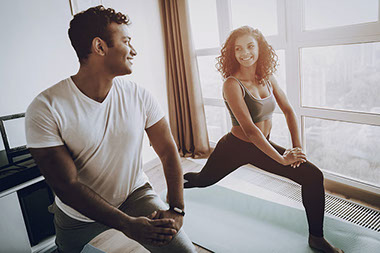
You don’t have to join a gym to get fit. There are lots of ways you can break a sweat, shed pounds and improve your health. Small steps can make a big difference.
* Do leg lifts before you get out of bed.
* Walk the dog. Instead of slowing Fido down, pick up your pace.
* Use exercise equipment as intended, not as a clothes rack.
* Clean the house. That’s right, dust, mop, scrub and vacuum.
* Brainstorm ideas with co-workers while walking.
* Take the stairs instead of the elevator.
* If you must take the elevator, do squats during the ride.
* Do sit ups, pushups, and jumping jacks during TV commercials.
* Take your bike for a spin around the block.
* March while talking on the phone. (Stop if you start panting.)
* Work in your garden, garage, and basement.
* Drink plenty of water.
Action Step:Challenge family to a contest of sit ups or pushups during TV commercials. Try to improve your count each time.

© American Institute for Preventive Medicine
Stress Management

Imagine scraping your nails across a blackboard or biting into a raw lemon. Either thought probably made you cringe-the power of suggestion is that strong. Used correctly, suggestion is yet another effective stress-management tool.
A technique called autogenic training is based on the power of suggestion and was developed many years ago to reduce muscle tension in chronic headache sufferers. Basically, you give yourself a series of verbal commands geared to induce feelings of either heaviness or warmth. “Heaviness” commands promote muscle relaxation; “warmth” commands relax the blood vessels, so blood flows more freely, triggering sensations of warmth. Together, the two sensations promote relaxation. Here’s how it’s done.
1. Choose a quiet environment with no distractions. Dim the lights and wear comfortable clothing. Sit in a comfortable chair and close your eyes.
2. Start with your right arm (if you’re right-handed) or your left arm (if you’re left-handed), and slowly give yourself these verbal cues:
– My arm is heavy. (Repeat three times for each arm.)
– My leg is heavy. (Repeat three times for each leg.)
– Both my arms and legs feel heavy. (Repeat three times.) It might help to visualize small weights attached to your arms and legs.
3. Follow the same sequence for the “warmth” commands:
– My arm is warm. (Repeat three times for each arm.)
– My leg is warm. (Repeat three times for each leg.)
– Both my arms and legs feel warm. (Repeat three times. It might help to imagine your arms and legs submerged in warm bath water or basking in sunlight.)
4. To complete the exercise, take a deep breath and say, “I am calm.”
Note: People with certain medical or psychiatric conditions (like severe depression) shouldn’t practice relaxation without first checking with their physicians.
© American Institute for Preventive Medicine
Nutrition

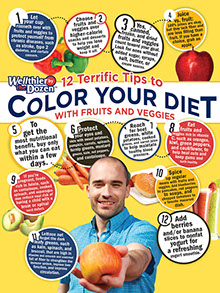
* Let your cup runneth over with fruits and veggies to protect yourself from chronic diseases, such as stroke, type 2 diabetes, and certain cancers.
* Choose fruits and veggies over higher-calorie snacks and desserts to help you lose weight and keep it off.
* Yes, canned, frozen, and dried fruits and veggies count toward your goal. Look for ones without added sugar, syrups, salt, butter, or cream sauces.
* Juice vs. fruit: 100% juices are okay, but they lack fiber and are less filling than fruit. If you have a choice, grab an apple.
* To get the most nutritional benefit, buy only what you can eat within a few days.
* Protect your eyes and skin with sweet potatoes, pumpkin, carrots, spinach, turnip greens, mustard greens, kale, red peppers, and cantaloupe.
* Reach for beet greens, white potatoes, cooked greens, and carrot juice to help maintain healthy blood pressure.
* Eat fruits and veggies rich in vitamin C, such as oranges, kiwi, green peppers, and cauliflower, to help heal cuts and keep gums and teeth healthy.
* If you’re pregnant, foods rich in folate, such as cantaloupe, cooked spinach, and asparagus may reduce your risk of having a child with a brain or spinal cord defect.
* Spice up regular meals with fruits and veggies. Add blueberries to pancakes, red peppers to soups, and chopped tomatoes to a favorite macaroni dish.
* Lettuce not forget the dark leafy greens, such as kale, spinach, and broccoli, that are high in vitamins and minerals and crammed full of fiber to strengthen the immune system, improve liver function, and improve circulation.
* Add berries and/or banana slices to nonfat yogurt for a refreshing yogurt smoothie.
© American Institute for Preventive Medicine
Stress Management
Don’t let somebody else’s problem become your own.
Causes of codependency:
A person is more likely to become codependent if he or she:
* Puts other people’s wants and needs before his or her own
* Is afraid of being hurt or rejected
* Has low self-esteem
* Feels responsible for the other person’s addiction or behavior
Self-help tips:
* Focus on the three C’s:
– You did not Cause the other person’s problem.
– You can’t Control the other person
– You can’t Cure the problem.
* Don’t make excuses for the other person’s behaviors. Accept that he or she has a problem and needs to get professional help.
* Refuse to come to the other person’s aid. That means no more bailing them out of jail or giving them money for drugs or booze. If your loved one is a problem drinker contact Al-Anon and Alateen at 888.4AL-ANON (425.2666) orwww.al-anon.org.
* Get help for verbal, physical and/or sexual abuse. Call the National Domestic Violence Hotline at 800-799-SAFE (7233).
* Take care of your own feelings, desires, and needs.
* Set and stick to limits on what you will and won’t do.
* Find diversions to keep you from obsessing on your loved one’s problem.
Get help.
Most codependents don’t think they have a problem. They see themselves as loving, caring people just trying to help. Counseling may be needed to help them regain a healthy life.
Action Step
Find a meeting for codependents from Co-Dependents Anonymous at 888.444.2359 orwww.coda.org.
© American Institute for Preventive Medicine
Nutrition
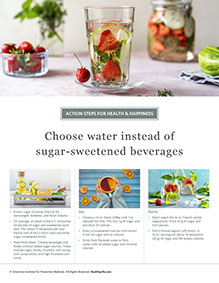
* Excess sugar increases the risk for overweight, diabetes, and heart disease.
* On average, an adult in the U.S. consumes 60 pounds of sugar and sweeteners each year. This about 17 teaspoons per day! Nearly half of this is from soda and other sugar-sweetened drinks.
* Read food labels. Choose beverages and foods without added sugar sources. These include sugar, honey, fructose, corn syrup, corn syrup solids, and high-fructose-corn syrup.
Dos
* Choose a 16 oz. black coffee with 1 oz. reduced fat milk. This has 2 g of sugar and less than 25 calories.
* Enjoy unsweetened iced tea with lemon. It has no sugar and no calories.
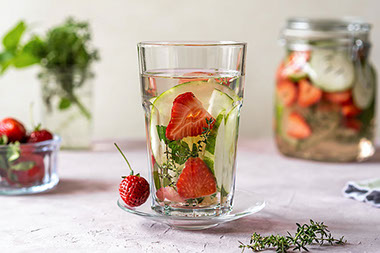
* Drink fruit-flavored water or fizzy water with no added sugar and minimal calories.
Don’ts
* Don’t select the 16 oz. French vanilla cappuccino. It has 42 g of sugar and 320 calories.
* Don’t choose regular soft drinks. A 12-oz. serving has about 10 teaspoons (38 g) of sugar and 150 empty calories.
© American Institute for Preventive Medicine
Nutrition

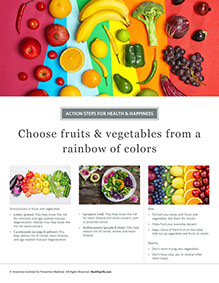
Antioxidants in fruits and vegetables:
*Lutein (green):May help lower the risk for cataracts and age-related macular degeneration. Indoles may help lower the risk for some cancers.
*Carotenoids (orange & yellow):May help reduce risk of cancer, heart disease, and age-related macular degeneration.
*Lycopene (red):May help lower the risk for heart disease and some cancers, such as prostate cancer.
*Anthocyanins (purple & blue):May help reduce risk of cancer, stroke, and heart disease.
Dos
* Fill half your plate with fruits and vegetables. Eat them for snacks.
* Make fruit your everyday dessert.
* Keep a bowl of fresh fruit on the table. Add cut-up vegetables and fruits to salads.
Don’ts
* Don’t resist trying new vegetables.
* Don’t have cake, pie, or cookies after most meals.
© American Institute for Preventive Medicine