Blog

  • Understanding Perimenopause

    MEDICAL NEWS

    Women outside looking out to the distance.

    Before a woman reaches menopause, she first goes through perimenopause. It is a time of adjustment as the body shifts away from the reproductive years. Preparing for these changes allows you to plan how to manage symptoms and find support.

    What is perimenopause?

    Perimenopause is the period of time when a woman’s body is gradually transitioning to menopause. It signals the end of the reproductive years and involves many physical and hormonal changes. When a woman’s period has been absent for a full 12 months, she has reached the end of perimenopause and is in post menopause.

    Every woman’s experience of perimenopause is different. Perimenopause can last for as little as four months to as long as ten years. The average length is about four to eight years. Many women begin perimenopause in their mid-forties though it can begin as late as their mid-fifties or as early as their mid-thirties.

    Symptoms

    *  Irregular or skipped periods

    *  Heavier or lighter periods

    *  Needing to urinate more frequently

    *  Hot flashes

    *  Vaginal dryness

    *  Difficulty sleeping

    *  Mood changes

    *  Changes in sexual desire

    *  PMS-like symptoms

    *  Trouble concentrating

    *  Headaches

    Manage Symptoms

    *  Eat a healthy, balanced diet with plenty of fruits, vegetables, and whole grains.

    *  Exercise regularly and include weight training at least two days a week to protect bone health.

    *  Watch for hot flash triggers such as alcohol or coffee.

    *  Establish healthy sleep habits.

    *  Seek ways to reduce stress, such as meditation, tai chi, or yoga.

    Treatment

    If symptoms are severe, your doctor may recommend additional treatment such as:

    *  Antidepressants to stabilize mood

    *  Low-dose birth control for irregular or heavy periods

    *  Hormone therapy to manage symptoms

    *  OTC or prescription medicine to address vaginal dryness or painful sex

    Pregnant during perimenopause

    Fertility naturally declines during perimenopause; however, it is still possible to conceive. The ovaries release fewer eggs, and fertility hormones gradually decrease, causing periods to become irregular. But, as long as you continue to have periods, it means you are still ovulating, and pregnancy is possible.
    © American Institute for Preventive Medicine
  • Stroke Faq’s

    MEDICAL NEWS

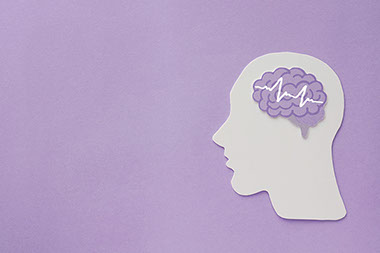
    Purple background with paper cut out of head and brain.

    A stroke occurs when oxygen flow to the brain is disrupted. Within minutes of a stroke, brain cells begin to die from lack of oxygen. As more cells die, parts of the brain become damaged and may no longer function properly.

    Three main types of strokes

    *  Ischemic stroke is caused by a blockage in the blood vessels of the brain. It is the most common type of stroke.

    *  Transient ischemic stroke (TIA), also known as a mini-stroke, is a type of ischemic stroke in which blood flow is blocked for only a few minutes. TIA’s are often a warning sign that a more severe stroke may occur.

    *  Hemorrhagic stroke is caused by a blood vessel in the brain leaking blood or bursting. The buildup of blood puts pressure on brain cells, which causes damage.

    Signs & Symptoms

    *  Numbness or weakness in the face, limbs, or body on one side

    *  Sudden vision trouble

    *  Confusion and difficulty speaking

    *  Severe headache

    *  Dizziness and trouble with balance or walking

    Early identification of a stroke is essential to minimize harm to the brain. Every minute is critical for getting fast and effective treatment.

    Knowing the warning signs of a stroke means you can quickly seek medical help. Getting medical attention within the first few hours of a stroke ensures the best possible outcome and recovery. If you suspect a stroke, call 911 right away.

    Effects of a stroke

    The brain controls many essential body functions, including movement, speech, breathing, digestion, memories, and emotions. The damage caused by a stroke can lead to long-term disability or even death.

    The exact impact of a stroke depends on the area of the brain affected, the length of time between the start of the stroke and treatment, and any underlying conditions.

    Possible side effects of a stroke include:

    *  Weakness or paralysis on one or both sides of the body

    *  Difficulty forming or understanding speech

    *  Impairment of memory, concentration, thinking, and judgment

    *  Trouble chewing or swallowing

    *  Bladder and bowel control issues

    *  Depression

    © American Institute for Preventive Medicine
  • Start A Walking Group

    BE FIT

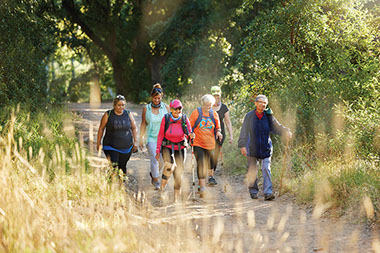
    Group of friends walking on a trail.

    Walking is hands down one of the best forms of exercise. Walking with a group is a great strategy to keep you motivated. And what better way to get involved in a walking group than to start one yourself!

    1. Identify target members. Do you want to invite the general public, only close friends, or people in your neighborhood? Know who you want to join.

    2. Choose a time. Based on who you plan to invite, pick a regular time slot and schedule about 60-75 minutes.

    3. Plan a route (and a backup). A good walking route is free, safe, well-maintained, and near your home or work. Also, select a backup indoor location, such as a mall or walking track, for when the weather is poor.

    4. Spread the word. Reach out to your target members with flyers, social media, phone calls, or emails. Aim for between 5 and 15 members.

    © American Institute for Preventive Medicine
  • Rucking For Beginners

    BE FIT

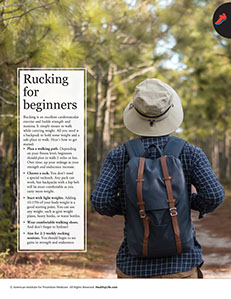
    Rucking is an excellent cardiovascular exercise and builds strength and stamina. It simply means to walk while carrying weight. All you need is a backpack to hold some weight and a safe place to walk. Here’s how to get started:

    *  Plan a walking path. Depending on your fitness level, beginners should plan to walk 2 miles or less. Over time, up your mileage as your strength and endurance increase.

    *  Choose a sack. You don’t need a special rucksack. Any pack can work, but backpacks with a hip belt will be most comfortable as you carry more weight.

    *  Start with light weights. Adding 10-15% of your body weight is a good starting point. You can use any weight, such as gym weight plates, heavy books, or water bottles.

    *  Wear comfortable walking shoes. And don’t forget to hydrate!

    *  Aim for 2-3 weekly rucking sessions. You should begin to see gains in strength and endurance.

    © American Institute for Preventive Medicine
  • Refinancing Pros & Cons

    FINANCIAL HEALTH

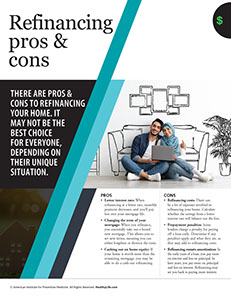
    Couple sitting on floor with laptop.

    There are pros & cons to refinancing your home. It may not be the best choice for everyone, depending on their unique situation.

    Pros

    *  Lower interest rate: When refinancing at a lower rate, monthly payment decreases, and you’ll pay less over your mortgage life.

    *  Changing the term of your mortgage: When you refinance, you essentially take out a brand new mortgage. This allows you to set new terms, meaning you can either lengthen or shorten the term.

    *  Cashing out on home equity: If your home is worth more than the remaining mortgage, you may be able to do a cash-out refinancing.

    Cons

    *  Refinancing costs: There can be a lot of expenses involved in refinancing your home. Calculate whether the savings from a lower interest rate will balance out the fees.

    *  Prepayment penalties: Some lenders charge a penalty for paying off a loan early. Determine if any penalties apply and what they are, as that may add to refinancing costs.

    *  Refinancing restarts amortization: In the early years of a loan, you pay more on interest and less on principal. In later years, you pay more on principal and less on interest. Refinancing may set you back to paying more interest.

    © American Institute for Preventive Medicine

  • Garden Barley Soup

    HEALTHY EATING

    Garden barley soup in bowl.

    Ingredients

    *  46 ounces tomato juice

    *  1 can beef broth  (10.5 ounces)

    *  1 cup hulled barley

    *  1 tablespoon Worcestershire sauce

    *  1 bay leaf

    *  1/2 teaspoon crushed thyme

    *  1/4 teaspoon salt

    *  2 cups zucchini, chopped

    *  1 medium tomato, chopped

    *  1/2 cup green pepper, chopped

    Note: Using sodium-reduced tomato juice and beef broth or leaving out the added salt would significantly reduce the sodium content.

    Directions

    1.  In a Dutch oven or stock pot, combine tomato juice, beef broth, barley, and seasonings. Bring to a boil over high heat.

    2.  Reduce heat to low, cover, and simmer for 40 minutes.

    3.  Add zucchini, tomato, and green pepper. Return heat to high and bring to a boil.

    4.  Reduce heat to low, cover, and simmer for 15-20 minutes or until vegetables and barley are tender.

    If using a pressure cooker: Combine all ingredients except the vegetables and cook on the soup cycle of the pressure cooker, then release the pressure, add the vegetables and cook on saute until the vegetables are tender.

    Nutritional Information: Servings 6

    Per serving: 170 calories, 1 g total fat, 0 g saturated fat, 1122 mg sodium, 40 g carbohydrates, 6 g dietary fiber, and 6 g protein

    © American Institute for Preventive Medicine
  • Add Barley To Your Diet

    HEALTHY EATING

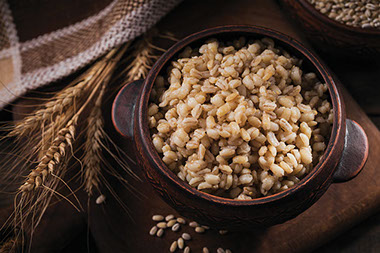
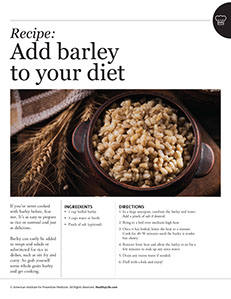
    Bowl of cooked barley.

    If you’ve never cooked with barley before, fear not. It’s as easy to prepare as rice or oatmeal and just as delicious.

    Barley can easily be added to soups and salads or substituted for rice in dishes, such as stir fry and curry. So grab yourself some whole grain barley and get cooking.

    Ingredients

    *  1 cup hulled barley

    *  3 cups water or broth

    *  Pinch of salt (optional)

    Directions

    1.  In a large saucepan, combine the barley and water. Add a pinch of salt if desired.

    2.  Bring to a boil over medium-high heat.

    3.  Once it has boiled, lower the heat to a simmer. Cook for 40-50 minutes until the barley is tender but chewy.

    4.  Remove from heat and allow the barley to sit for a few minutes to soak up any extra water.

    5.  Drain any excess water if needed.

    6.  Fluff with a fork and enjoy!

    © American Institute for Preventive Medicine

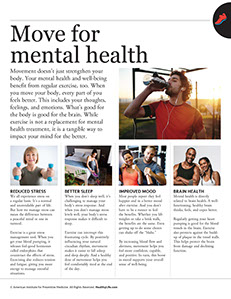
  • Move For Mental Health

    BE FIT

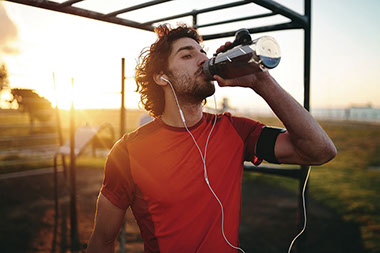
    Man in workout clothes, drinking water with headphones on.

    Movement doesn’t just strengthen your body. Your mental health and well-being benefit from regular exercise, too. When you move your body, every part of you feels better. This includes your thoughts, feelings, and emotions. What’s good for the body is good for the brain. While exercise is not a replacement for mental health treatment, it is a tangible way to impact your mind for the better.

    Reduced stress

    We all experience stress on a regular basis. It’s a normal and unavoidable part of life. But how we manage stress can mean the difference between a peaceful mind or one in turmoil.

    Exercise is a great stress management tool. When you get your blood pumping, it releases feel-good hormones called endorphins that counteract the effects of stress. Exercising also reduces tension and fatigue, giving you more energy to manage stressful situations.

    Better sleep

    When you don’t sleep well, it’s challenging to manage your body’s stress response. And when you don’t manage stress levels well, your body’s stress response makes it difficult to sleep.

    Exercise can interrupt this frustrating cycle. By positively influencing your natural circadian rhythm, movement makes it easier to fall asleep and sleep deeply. And a healthy dose of movement helps you feel comfortably tired at the end of the day.

    Improved mood

    Most people report they feel happier and in a better mood after exercise. And you don’t have to be a runner to feel the benefits. Whether you lift weights or take a brisk walk, the benefits are the same. Even getting up to do some chores can shake off the “blahs.”

    By increasing blood flow and alertness, movement helps you feel more confident, capable, and positive. In turn, this boost in mood supports your overall sense of well-being.

    Brain Health

    Mental health is directly related to brain health. A well-functioning, healthy brain thinks, feels, and copes better.

    Regularly getting your heart pumping is good for the blood vessels in the brain. Exercise also protects against the build-up of plaque in the vessel walls. This helps protect the brain from damage and declining function.

    © American Institute for Preventive Medicine