Blog

  • Food For The Brain

    HEALTHY EATING

    Women in kitchen with fresh food on counter.

    Mental health may seem like it’s all about thoughts and feelings, but your diet plays a role in how your brain functions. Your food choices may contribute to declining mental health. On the flip side, a quality diet may help manage mental health struggles. For optimal mental health, what you eat matters.

    Good nutrition helps

    A wealth of research supports the benefits of a whole-food, plant-based diet for optimal health. This applies to mental health, too. When you choose a plant-based diet, your brain works at its best. A quality diet:

    *  Provides necessary nutrients for normal brain function

    *  Supports the health of the gut microbiome, which connects to the brain and influences mood

    *  Promotes resilience to stress

    *  Provides consistent energy to feel alert and productive

    *  Supplies essential nutrients to produce hormones and neurotransmitters that influence how you feel

    Poor nutrition can hurt

    The average Western diet is high in saturated fats, added sugars, and processed foods. These foods negatively impact your health and, over time, increase your risk of chronic diseases, including mental health conditions. Too much poor-quality food and too little nutritious food is bad for your brain. Poor diet:

    *  Promotes a chronic inflammatory state in the body

    *  Contributes to oxidative stress in the brain

    *  Worsens mood disorders

    *  Disrupts the balance of mood-boosting hormones

    *  Increases appetite and food cravings

    Good nutrition for your brain

    In a plant-based diet, fruits, vegetables, whole grains, nuts, seeds, beans, and lentils should form the base of your meals. Lean animal foods such as chicken, fish, eggs, and low-fat dairy provide healthy protein in small portions.

    Try these tips to eat well for your brain:

    *  Begin your day with a high-fiber bowl of oatmeal or other whole grain with fruit.

    *  Snack on raw vegetables, fruit, or a small handful of nuts or seeds.

    *  Choose healthy oils when cooking, such as olive and avocado oil.

    *  Limit sugary beverages and choose plain or flavored water most often.

    *  Add dark leafy greens to salads, soups, smoothies, and entrees for a boost of nutrients.

    © American Institute for Preventive Medicine
  • Explore Your Family History

    FAMILY LIFE

    Old black and white photos on table next to camera, laptop, old photo album.

    Learning about your ancestors & where they came from can be very rewarding. If you want to uncover your family history, there are easy ways to get started tracing your roots.

    Start recording

    Begin by starting a written record, or using an online tool to fill in the parts of your family tree you know about. A few online tools include:

    *  Family Tree Builder (free)

    *  RootsMagic (costs)

    *  Ancestry (costs)

    *  MyHeritage (costs)

    Involve relatives

    Once you’ve maxed out your own knowledge, ask family to fill in the gaps. It’s also worthwhile to find out if any family members have attempted to trace the family genealogy before. Keep track of this information:

    *  First and last names

    *  Date and place of birth

    *  Location of family homes

    *  Occupation, education, military service, etc.

    Go online

    Dig into the various websites that collect and store geological information. Using what you know already about your family tree, you can learn a wealth of information by tapping into these resources:

    *familysearch.org– This has one of the most comprehensive catalogs and is a good first step.

    *ancestry.com

    *archives.com

    © American Institute for Preventive Medicine
  • Exercise For Free

    BE FIT

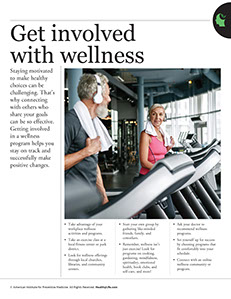
    Group of older friends walking through the park.

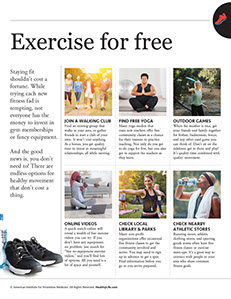
    Staying fit shouldn’t cost a fortune. While trying each new fitness fad is tempting, not everyone has the money to invest in gym memberships or fancy equipment.

    And the good news is, you don’t need to! There are endless options for healthy movement that don’t cost a thing.

    Join a walking club

    Find an existing group that walks in your area, or gather friends to start a club of your own. It won’t cost anything. As a bonus, you get quality time to invest in meaningful relationships, all while moving.

    Find free yoga

    Many yoga studios that train new teachers offer free community classes as a chance for their trainees to practice teaching. Not only do you get to do yoga for free, but you also get to support the teachers as they learn.

    Outdoor games

    When the weather is nice, get your friends and family together for frisbee, badminton, bocce, and any other yard game you can think of. Don’t sit on the sidelines; get in there and play! It’s quality time combined with quality movement.

    Online videos

    A quick search online will reveal a wealth of free exercise videos you can try. If you don’t have any equipment, no problem; just search for “free no-equipment exercise videos,” and you’ll find lots of options. All you need is a bit of space and yourself.

    Check local library & parks

    Many non-profit organizations offer occasional free fitness classes to get the community involved and active. You may need to sign up in advance to get a spot. Find information before you go so you arrive prepared.

    Check nearby athletic stores

    Running stores, athletic clothing stores, and sporting goods stores often have free fitness classes or exercise meet-ups. It’s a great way to connect with people in your area who share common fitness goals.

    © American Institute for Preventive Medicine

  • Do A Skin Self-Exam

    SELF-CARE CORNER

    Man looking at himself in mirror.

    The skin is the largest organ of the body. Yet, it is easy to overlook what is literally right in front of you when you look in the mirror every day.

    Regularly examining your skin, including the hard-to-reach places, gives you early notice that you should visit a dermatologist. Catching concerns early makes diagnosis and treatment easier and more effective.

    Common conditions

    Few people have flawless skin. It’s normal to experience skin issues, and the risk of skin disease increases with age. Common dermatological concerns you may experience include:

    *  Acne

    *  Psoriasis

    *  Eczema

    *  Rosacea

    *  Skin cancer

    *  Nail fungus

    *  Hair loss

    *  Wrinkles and other cosmetic skin concerns

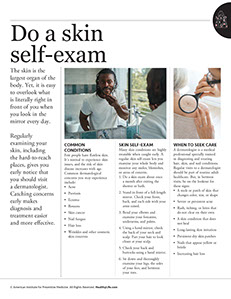
    Skin Self-exam

    Many skin conditions are highly treatable when caught early. A regular skin self-exam lets you examine your whole body and monitor any moles, blemishes, or areas of concern.

    1.  Do a skin exam about once a month after exiting the shower or bath.

    2.  Stand in front of a full-length mirror. Check your front, back, and each side with your arms raised.

    3.  Bend your elbows and examine your forearms, underarms, and palms.

    4.  Using a hand mirror, check the back of your neck and scalp. Part your hair to look closer at your scalp.

    5.  Check your back and buttocks using a hand mirror.

    6.  Sit down and thoroughly examine your legs, the soles of your feet, and between your toes.

    When to seek care

    A dermatologist is a medical professional specially trained in diagnosing and treating hair, skin, and nail conditions. Regular visits to a dermatologist should be part of routine adult healthcare. But, in between visits, be on the lookout for these signs:

    *  A mole or patch of skin that changes color, size, or shape

    *  Severe or persistent acne

    *  Rash, itching, or hives that do not clear on their own

    *  A skin condition that does not heal

    *  Long-lasting skin irritation

    *   Persistent dry skin patches

    *  Nails that appear yellow or brittle

    *  Increasing hair loss

    © American Institute for Preventive Medicine

  • Cold Weather Exercise

    BE FIT

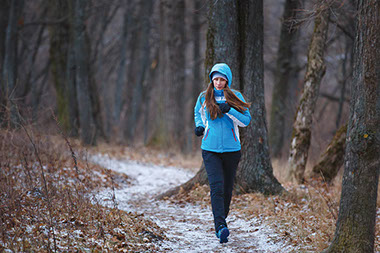
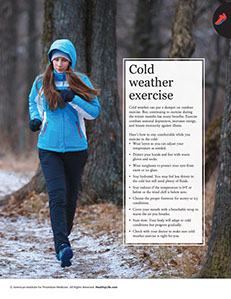
    Cold weather can put a damper on outdoor exercise. But, continuing to exercise during the winter months has many benefits. Exercise combats seasonal depression, increases energy, and boosts immunity against illness.

    Here’s how to stay comfortable while you exercise in the cold:

    *  Wear layers so you can adjust your temperature as needed.

    *  Protect your hands and feet with warm gloves and socks.

    *  Wear sunglasses to protect your eyes from snow or ice glare.

    *  Stay hydrated. You may feel less thirsty in the cold but still need plenty of fluids.

    *  Stay indoors if the temperature is 0ºF or below or the wind chill is below zero.

    *  Choose the proper footwear for snowy or icy conditions.

    *  Cover your mouth with a breathable wrap to warm the air you breathe.

    *  Start slow. Your body will adapt to cold conditions but progress gradually.

    *  Check with your doctor to make sure cold-weather exercise is right for you.

    © American Institute for Preventive Medicine

  • Bring On The Barley

    HEALTHY EATING

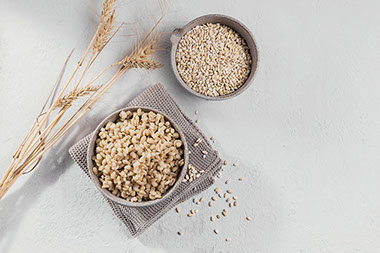
    Two bowls filled with barley, one cooked, one raw.

    In its whole-grain form, barley is packed with a wealth of beneficial nutrients. Known for its nutty flavor and slightly chewy texture, it makes a great addition to soups, salads, and many other dishes.

    What’s in it

    *Fiber:One-quarter cup of uncooked, whole-grain barley (3/4 cup cooked) has 8 grams of fiber.

    *Beta-glucan:One of the unique fiber types in barley, beta-glucan, has been shown to lower blood LDL-cholesterol levels by aiding cholesterol excretion from the body.

    *Antioxidants:Contains many vitamins, minerals, and phytochemicals. Vitamin E and lignans are two antioxidants in whole-grain barley.

    *Minerals:It provides a good source of iron, selenium, copper, and magnesium.

    Health benefits

    A diet high in whole grains, such as barley, is widely recognized as beneficial to health. It may:

    *  Reduce the risk of heart disease

    *  Support healthy digestion

    *  Aid in weight management and weight loss

    *  Reduce the risk of type 2 diabetes

    *  Lower chronic inflammation

    *  Decrease the risk of cancer

    *  Support bone health

    Types of barley

    To get the health benefits of eating barley, you need to eat the whole-grain form. When a grain is refined, the bran and germ are stripped away, removing some key nutritional value, including its fiber.

    Barley comes in several forms, some of which are whole and some refined. Choose a whole-grain version!

    Whole grain barley

    *  Hulled barley

    *  Hulled barley grits

    *  Hulled barley flakes

    *  Whole grain barley flour

    Refined barley

    *  Pearl barley

    *  Quick pearl barley

    © American Institute for Preventive Medicine

  • Boost Your Exercise With Caffeine

    BE FIT

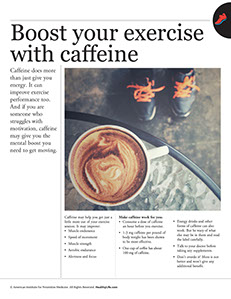
    Caffeine does more than just give you energy. It can improve exercise performance too. And if you are someone who struggles with motivation, caffeine may give you the mental boost you need to get moving.

    Caffeine may help you get just a little more out of your exercise session. It may improve:

    *  Muscle endurance

    *  Speed of movement

    *  Muscle strength

    *  Aerobic endurance

    *  Alertness and focus

    Make caffeine work for you:

    *  Consume a dose of caffeine an hour before you exercise.

    *  1-3 mg caffeine per pound of body weight has been shown to be most effective.

    *  One cup of coffee has about 100 mg of caffeine.

    *  Energy drinks and other forms of caffeine can also work. But be wary of what else may be in them and read the label carefully.

    *  Talk to your doctor before taking any supplements.

    *  Don’t overdo it! More is not better and won’t give any additional benefit.

    © American Institute for Preventive Medicine
  • 10 Minutes Of Fitness

    BE FIT

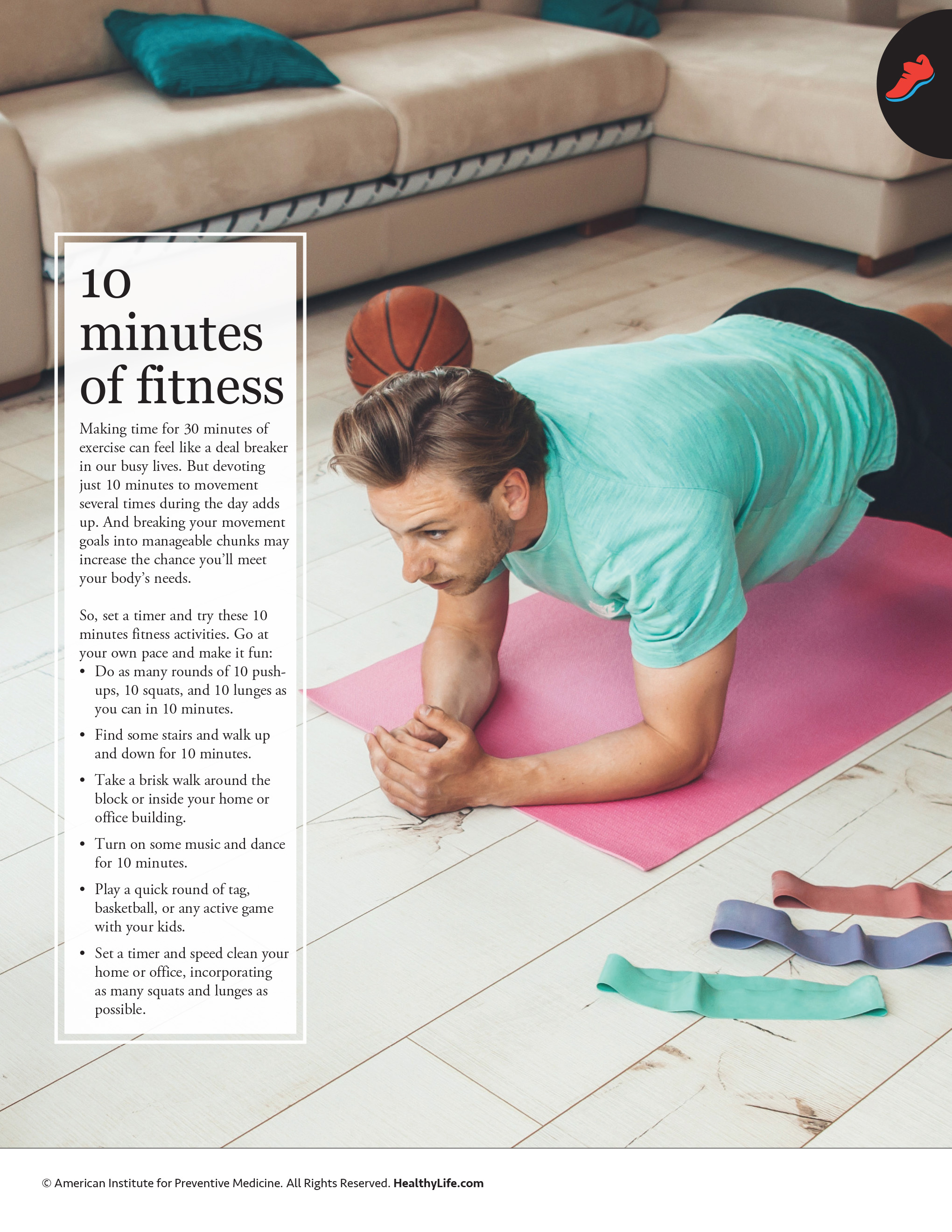
    Man working out at home.

    Making time for 30 minutes of exercise can feel like a deal breaker in our busy lives. But devoting just 10 minutes to movement several times during the day adds up. And breaking your movement goals into manageable chunks may increase the chance you’ll meet your body’s needs.

    So, set a timer and try these 10 minutes fitness activities. Go at your own pace and make it fun:

    *  Do as many rounds of 10 push-ups, 10 squats, and 10 lunges as you can in 10 minutes.

    *  Find some stairs and walk up and down for 10 minutes.

    *  Take a brisk walk around the block or inside your home or office building.

    *  Turn on some music and dance for 10 minutes.

    *  Play a quick round of tag, basketball, or any active game with your kids.

    *  Set a timer and speed clean your home or office, incorporating as many squats and lunges as possible.

    © American Institute for Preventive Medicine