Blog

  • Quick Facts About Sodium

    HEALTHY EATING

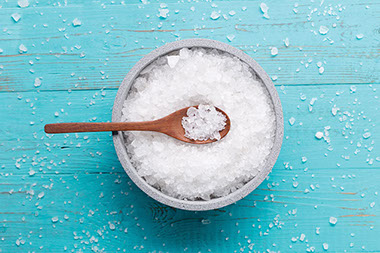
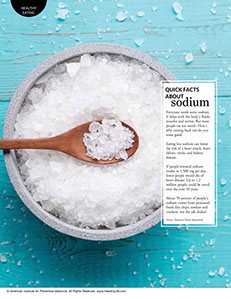
    A bowl filled with salt and a wooden spoon.

    Everyone needs some sodium. It helps with the body’s fluids, muscles and nerves. But most people eat too much. Here’s why cutting back can do you some good:

    Eating less sodium can lower the risk of a heart attack, heart failure, stroke and kidney disease.

    If people lowered sodium intake to 1,500 mg per day, fewer people would die of heart disease. Up to 1.2 million people could be saved over the next 10 years.

    About 70 percent of people’s sodium comes from processed foods like chips, cookies and crackers, not the salt shaker!

    Source: American Heart Association

    © American Institute for Preventive Medicine

  • Quick & Easy Grain Bowls

    HEALTHY EATING

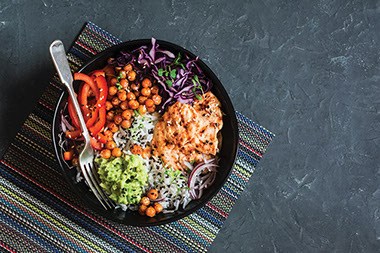
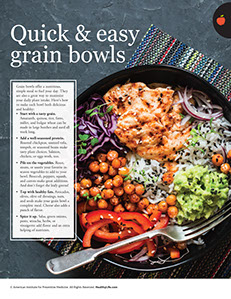
    Homemade grain bowl.

    Grain bowls offer a nutritious, simple meal to fuel your day. They are also a great way to maximize your daily plant intake. Here’s how to make each bowl both delicious and healthy:

    *Start with a tasty grain.Amaranth, quinoa, rice, farro, millet, and bulgur wheat can be made in large batches and used all week long.

    *Add a well-seasoned protein.Roasted chickpeas, sauteed tofu, tempeh, or seasoned beans make tasty plant choices. Salmon, chicken, or eggs work, too.

    *Pile on the vegetables.Roast, steam, or sautée your favorite in-season vegetables to add to your bowl. Broccoli, peppers, squash, and carrots make great additions. And don’t forget the leafy greens!

    *Top with healthy fats.Avocados, olives, olive oil dressings, nuts, and seeds make your grain bowl a complete meal. Cheese also adds a punch of flavor.

    *Spice it up.Salsa, green onions, pesto, sriracha, herbs, or vinaigrette add flavor and an extra helping of nutrients.

    © American Institute for Preventive Medicine

  • Questions About A1C Answered

    MEDICAL NEWS

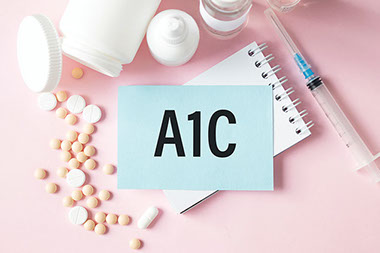
    Paper with A1C printed along with pills and syringe.

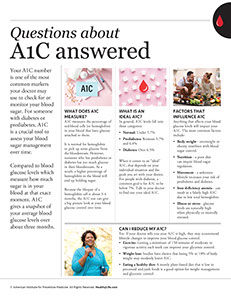
    Your A1C number is one of the most common markers your doctor may use to check for or monitor your blood sugar. For someone with diabetes or prediabetes, A1C is a crucial tool to assess your blood sugar management over time.

    Compared to blood glucose levels which measure how much sugar is in your blood at that exact moment, A1C gives a snapshot of your average blood glucose levels over about three months.

    What does A1C measure?

    A1C measures the percentage of red blood cells (or hemoglobin) in your blood that have glucose attached to them.

    It is normal for hemoglobin to pick up some glucose from the bloodstream. However, someone who has prediabetes or diabetes has too much glucose in their bloodstream. As a result, a higher percentage of hemoglobin in the blood will end up holding sugar.

    Because the lifespan of a hemoglobin cell is about 3-4 months, the A1C test can give a big picture look at your blood glucose control over time.

    What is an ideal A1C?

    In general, A1C levels fall into three categories:

    *  Normal: Under 5.7%

    *  Prediabetes: Between 5.7% and 6.4%

    *  Diabetes: Over 6.5%

    When it comes to an “ideal” A1C, that depends on your individual situation and the goals you set with your doctor. For people with diabetes, a common goal is for A1C to be below 7%. Talk to your doctor to find out your ideal A1C.

    Factors that influence A1C

    Anything that affects your blood glucose levels will impact your A1C. The most common factors include:

    *  Body weight – overweight or obesity interferes with blood sugar control.

    *  Nutrition – a poor diet can impair blood sugar regulation.

    *  Movement – a sedentary lifestyle increases your risk of prediabetes and diabetes.

    *  Iron deficiency anemia – can result in a falsely high A1C due to low total hemoglobin.

    *  Illness or stress – glucose levels are naturally high when physically or mentally stressed.

    Can I reduce my A1C?

    Yes. If your doctor tells you your A1C is high, they may recommend lifestyle changes to improve your blood glucose control.

    *  Exercise: Getting a minimum of 150 minutes of moderate to vigorous activity each week can improve your glycemic control.

    *  Weight loss: Studies have shown that losing 5% to 10% of body weight may modestly lower A1C.

    *  Eating a healthy diet: A mostly plant-based diet that is low in processed and junk foods is a good option for weight management and glycemic control.
    © American Institute for Preventive Medicine

  • Questions About Metabolism

    MEDICAL NEWS

    Women flexing arm while holding a fork in the other hand, with the word "Metabolism".

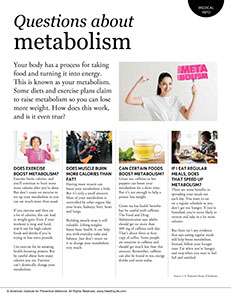
    Your body has a process for taking food and turning it into energy. This is known as your metabolism. Some diets and exercise plans claim to raise metabolism so you can lose more weight. How does this work, and is it even true?

    Does exercise boost metabolism?

    Exercise burns calories, and you’ll continue to burn some more calories after you’re done. But don’t count on exercise to rev up your metabolism so you can eat much more than usual.

    If you exercise and then eat a lot of calories, this can lead to weight gain. Even if your workout is long and hard, watch out for high-calorie foods and drinks if you’re trying to lose extra pounds.

    Use exercise for its amazing health-boosting powers. But be careful about how many calories you eat. Exercise can’t drastically change your metabolism.

    Does muscle burn more calories than fat?

    Having more muscle can boost your metabolism a little. But it’s only a small amount. Most of your metabolism is controlled by other organs like your brain, kidneys, liver, heart and lungs. Building muscle mass is still valuable. Lifting weights boost bone health. It can help you with everyday tasks and balance. Just don’t count on it to change your metabolism very much.

    Can certain foods boost metabolism?

    Green tea, caffeine or hot peppers can boost your metabolism for a short time. But it’s not enough to help a person lose weight.

    Green tea has health benefits but be careful with caffeine. The Food and Drug Administration says adults should get no more than 400 mg of caffeine each day. That’s about three or four cups of coffee. Some people are sensitive to caffeine and should get much less than this amount. Remember, caffeine can also be found in tea, energy drinks and some sodas.

    If I eat regular meals, does that speed up metabolism?

    There are some benefits to spreading your meals out each day. You want to eat on a regular schedule so you don’t get too hungry. If you’re famished, you’re more likely to overeat and take in a lot more calories.

    But there isn’t any evidence that says eating regular meals will help boost metabolism. Instead, follow your hunger cues. Eat when you’re hungry and stop when you start to feel full and satisfied.

    Source: U.S. National Library of Medicine

    © American Institute for Preventive Medicine

  • Q & A Blood Donation

    WELL-BEING

    Close up of hands holding a piece of paper shaped as a blood drop.

    Every day, people need life-saving blood transfusions. These transfusions are possible because people donate their blood. Despite the need for donated blood, many people are afraid to donate. They may have fears about the process, needles or even their own health. Get the facts about blood donation so you can make an informed decision.

    More than 4 million lives are saved each year because of blood donations.

    Q: Is blood donation safe?

    A: Yes. Each donation uses a new, sterile needle that is thrown away after one use. You may also be given a quick health check to be sure you’re healthy enough to donate. This may include taking your temperature, blood pressure and pulse.

    Q: What if I don’t like needles?

    A: Many people have a fear of needles. But blood donation is a quick process that can help save up to three lives. Facing your fears can mean the world to another person. Try listening to relaxing music, deep breathing or reading a book during your donation. Drinking fluids before donating will make donation easier and faster.

    Q: Will I faint afterward?

    A: Some people feel lightheaded after donating blood. But most people feel fine afterward. If this concerns you, you can have a few extra minutes to sit or lie down. You can also lower the risk of this happening by eating a healthy meal before your donation and drinking at least 16 ounces of water. When you feel well enough, slowly sit up. Blood donation only takes about 1/10th of the blood from your body. Your body replaces this lost blood quickly.

    Q: Don’t they only need rare blood types?

    A: Sometimes there is a public appeal for certain blood types. But all blood types are needed and valuable. If you don’t know your blood type, you can find out after your donation.

    If you have any health conditions, you can ask your doctor whether blood donation is right for you.

    Source: American Heart Association

    © American Institute for Preventive Medicine

  • Q&A: Diversity In The Workplace

    WORK LIFE

    A diverse group of co-workers sitting around at the office.

    Every workplace is part of a broader community of people. As such, it should reflect the diversity around it. A more diverse workplace benefits both the company and its employees.

    What is diversity?

    The practice of involving people from a variety of backgrounds, including race, gender, ethnicity, sexual orientation, religion, and disability.

    Why does it matter?

    To be effective, a workplace should reflect the diversity of its clients, local community, and broader society. When people from different backgrounds work together, they are ideally placed to provide efficient and equitable service.

    How does it benefit a company?

    Establishing policies that value diversity creates a corporate environment that promotes collaboration, innovation, and new perspectives.

    How does it help employees?

    Working in a diverse, inclusive environment allows each employee to rise to their full potential and maximize their skills. Diverse companies build on the unique strengths of each individual.

    © American Institute for Preventive Medicine

  • Protect Your Pet From Toxins

    WELL-BEING

    Dog on 2 legs on the counter with food.

    Many substances that are safe for people may be toxic to pets. To care for your pet’s health, be aware of these hidden dangers.

    *  Over-the-counter and prescription medications can be highly toxic to animals. Store them in sturdy containers that cannot be chewed through.

    *  Prescription animal medications are made to be tasty. Keep them well out of reach.

    *  Certain foods, such as chocolate, grapes, onions, and garlic, are toxic to pets.

    *  Products intended to kill rodents are particularly dangerous to pets. Choose pet-safe traps instead of chemicals.

    *  Paint, glue and cleaning products are toxic. Curious pets may mistake them for food. Keep these products safely stored and out of their reach.

    *  Bug spray and foggers are poisonous to pets. Because they have smaller bodies, it takes less of a product to cause problems.

    *  Certain house and garden plants may be toxic or irritating when consumed, depending on your pet. Check online to find out what plants are safe.

    © American Institute for Preventive Medicine

  • Pros & Cons Of Beef

    HEALTHY EATING

    Two pieces of beef with garnish.

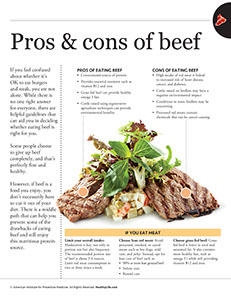
    If you feel confused about whether it’s OK to eat burgers and steak, you are not alone. While there is no one right answer for everyone, there are helpful guidelines that can aid you in deciding whether eating beef is right for you.

    Some people choose to give up beef completely, and that’s perfectly fine and healthy.

    However, if beef is a food you enjoy, you don’t necessarily have to cut it out of your diet. There is a middle path that can help you prevent some of the drawbacks of eating beef and still enjoy this nutritious protein source.

    Pros of eating beef

    *  Concentrated source of protein

    *  Provides essential nutrients such as vitamin B12 and iron

    *  Grass-fed beef can provide healthy omega 3 fats

    *  Cattle raised using regenerative agriculture techniques can provide environmental benefits

    Cons of eating beef

    *  High intake of red meat is linked to increased risk of heart disease, cancer, and diabetes.

    *  Cattle raised on feedlots may have a negative environmental impact

    *  Conditions in some feedlots may be concerning

    *  Processed red meats contain chemicals that can be cancer-causing

    If you eat meat

    Limit your overall intake: Moderation is key, not only in portion size but also frequency. The recommended portion size of beef is about 3-4 ounces. Limit red meat consumption to two or three times a week.

    Choose lean red meat: Avoid processed, smoked, or cured meats such as hot dogs, cold cuts, and jerky. Instead, opt for lean cuts of beef such as:

    *  90% or more lean ground beef

    *  Sirloin cuts

    *  Round cuts

    Choose grass-fed beef: Grass-fed beef is lower in total and saturated fat. It also contains more healthy fats, such as omega 3’s while still providing vitamin B12 and iron.

    Source: Centers for Disease Control and Prevention

    © American Institute for Preventive Medicine

  • Prevention Is Key: Hpv & Cervical Cancer

    MEDICAL NEWS

    Image of 4 female doctors.

    Most cases of cervical cancer are caused by a virus known as HPV. More than 79 million people in the U.S. have HPV.

    Screening tests can detect HPV and cervical cancer, and the HPV vaccine can prevent it. Still, the American Cancer society says more than 13,000 new cases of invasive cervical cancer were diagnosed in 2018. Plus, more than 4,000 women died from this cancer.

    It’s time to learn more about treating, preventing and screening for this cancer so more lives can be saved.

    What is HPV?

    Human papilloma virus, or HPV, is a common virus. It is spread through sexual contact.

    There are different types of HPV. Sometimes, the body is able to get rid of the HPV infection on its own. But, this doesn’t always happen.

    Some types of HPV cause genital warts. Others cause changes in the cervix that can turn into cancer if not treated early.

    Get tested, get treated

    At one time, cervical cancer was a leading cause of cancer deaths for American women. But, when the Pap test was developed, cervical cancer deaths dropped significantly.

    A Pap screening test can find changes in the cervix before they become cancer. It can also find cervical cancer early. This means the cancer can be treated when it’s easier to cure. Ask your doctor about how often you should get a Pap test. Sometimes, the cells from a Pap test are also tested for HPV.

    A Pap test is usually done during a pelvic exam. The doctor uses a swab to get some cells from the cervix. The cells are sent to a lab and tested for cancer and/or HPV.

    A shot for cancer

    Today, there is a vaccine that may prevent cervical cancer. The HPV vaccine can prevent infection and provide immunity against many types of HPV.

    Clinical trials show the HPV vaccine provides almost  100 percent protection against cervical changes that can lead to cancer and genital warts.

    Ask your doctor about the HPV vaccine for yourself or your kids. The vaccines can be given to kids as young as 9. Both boys and girls can benefit from the HPV vaccine because HPV can also cause cancers of the penis, anus and throat.

    Sources: American Cancer Society, Centers for Disease Control and Prevention, National Cervical Cancer Coalition

    © American Institute for Preventive Medicine