Tag: awareness

  • Sepsis: Be Aware Of This Deadly Condition

    MEDICAL NEWS

    Image of sick women in bed.

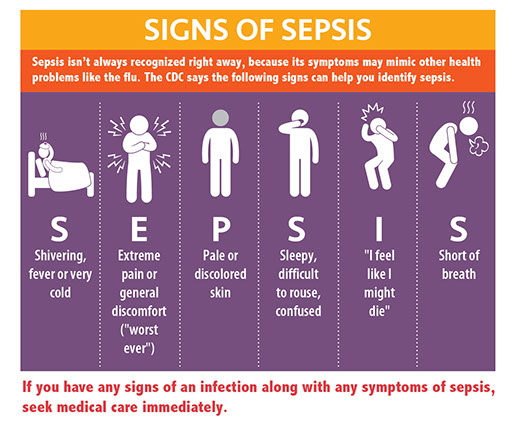
    Sepsis is among the top causes of disease-related death in our country, killing about 200,000 people each year. Actress Patty Duke’s recent death from sepsis brought more attention to this dangerous disease. It’s important to know the signs of sepsis so you can seek emergency medical care for this serious condition. Early treatment can save lives.

    Sepsis is a strong and harmful reaction of the body’s immune system. It can be triggered by common infections, such as pneumonia, a urinary tract infection, or even a minor infection like a cut or scrape, if it becomes infected and the infection spreads.

    Most of the time, these infections don’t cause sepsis. But when sepsis does occur, it can cause a dangerous drop in blood pressure, resulting in organ failure and death. It tends to affect the very young, the elderly or those with weakened immune systems.

    Influenza vaccines and pneumococcal vaccines may help prevent sepsis. Consider getting these vaccines to reduce your risk.

    © American Institute for Preventive Medicine

  • Lessen Environmental Connections To Cancer

    Cancer

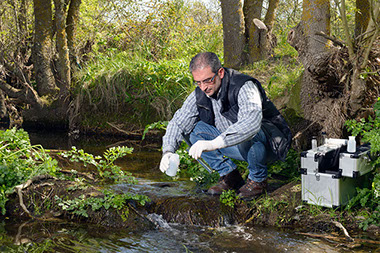
    Man collecting water samples from a water creek.

    *  Don’t smoke. Avoid secondhand smoke.

    *  Get your house tested for radon – the number 2 cause of lung cancer after smoking. You can buy a radon test kit from a hardware store.

    *  Take harmful waste products, such as empty aerosol cans; leftover paint, paint chips and thinners; and unused fertilizers and pesticides to a local hazardous waste drop-off site. Search for one near you atearth911.org.

    *  Restrict the use of pesticides, which are all toxic to some degree. Use nontoxic products to treat and maintain your lawn. Find ways to greenscape your lawn and yard fromepa.gov.

    *  Wear sunscreen (SPF of 30 or higher) and clothing to protect your skin from harmful UV rays.

    *  Get to and stay at a healthy weight. Eat plenty of plant-based foods: vegetables, fruit, whole grains, beans, lentils, nuts, and seeds. Avoid or limit alcohol to 1 drink a day (women and over 65) or 2 drinks a day (men).

    Health at Home Lifetime book by the American Institute for Preventive Medicine. www.HealthyLife.com. All rights reserved.

    © American Institute for Preventive Medicine

  • Breast Cancer Awareness

    SELF-CARE CORNER

    Image of a group of women wearing pink shirts, smiling with thumbs up.

    During the month of October, many organizations, groups and individuals across the world increase awareness of breast cancer and raise funds to research the disease and find a cure.

    Breast cancer is the second most common kind of cancer in women. About 1 in 8 women born today in the United States will get breast cancer at some point. The good news is that many women can survive breast cancer if it’s found and treated early.

    *  If you are a woman age 40 to 49, talk with your doctor about when to start getting mammograms and how often to get them.

    *  If you are a woman age 50 to 74, be sure to get a mammogram every 2 years. You may also choose to get them more often.

    Risk factors for breast cancer in women include:

    *  Increasing age

    *  Changes in BRCA1, BRCA2, and other cancer genes

    *  Personal history of breast cancer or a mother or sister has or had breast cancer

    *  Dense breast tissue (shown on a mammogram)

    *  Certain abnormal breast changes that are not cancer. These changes are found during a breast biopsy.

    *  Radiation therapy to the chest before age 30

    *  Never giving birth or having a first full-term pregnancy after age 30. Never breast-fed  a baby.

    *  Being obese or overweight after menopause

    *  Hormone therapy (estrogen plus progestin) after menopause

    *  Alcohol-the more used, the greater the risk.

    *  Lack of physical activity throughout life

    Talk to a doctor about your risk for breast cancer, especially if a close family member of yours had breast or ovarian cancer. Your doctor can help you decide when and how often to get mammograms.

    FYI

    The third week of October is Male Breast Cancer Awareness Week. Though rare, men can get breast cancer too. For men, the lifetime risk of being diagnosed with breast cancer is about 1 in 1,000. Yearly, about 450 men in the U.S. die from breast cancer. Men should look for and report a lump or other change in a breast to their doctors.

    © American Institute for Preventive Medicine

  • Prostate Cancer

    Cancer

    Man sitting looking up and sideways.

    This cancer is rare in men younger than 40, but the risk of having prostate cancer rises after age 50.

    Men aged 50 to 69 years should discuss the benefits and risks of prostate cancer screening with their doctors. African American men and those with a family history of prostate cancer should do this starting at age 40.

    When present, symptoms of prostate cancer include:

    *  Passing urine often or having a hard time passing urine

    *  Pain and burning when you pass urine, have an erection, or ejaculate. Pain in the hips, pelvis, ribs, or spine

    *  Blood in the urine

    Let your doctor know if you have any of these symptoms, which can be the same ones for other prostate problems.

    Health at Home Lifetime book by the American Institute for Preventive Medicine. www.HealthyLife.com. All rights reserved.

    © American Institute for Preventive Medicine

  • Busting The Myths About Breast Cancer

    MEDICAL NEWS

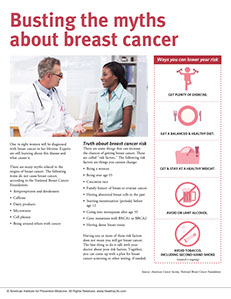
    Image of doctor and patient.

    One in eight women will be diagnosed with breast cancer in her lifetime. Experts are still learning about this disease and what causes it.

    There are many myths related to the origins of breast cancer. The following items do not cause breast cancer, according to the National Breast Cancer Foundation:

    *  Antiperspirants and deodorants

    *  Caffeine

    *  Dairy products

    *  Microwaves

    *  Cell phones

    *  Being around others with cancer

    Truth about breast cancer risk

    There are some things that can increase the chances of getting breast cancer. These are called “risk factors.” The following risk factors are things you cannot change:

    *  Being a woman

    *  Being over age 55

    *  Caucasian race

    *  Family history of breast or ovarian cancer

    *  Having abnormal breast cells in the past

    *  Starting menstruation (periods) before age 12

    *  Going into menopause after age 55

    *  Gene mutations with BRCA1 or BRCA2

    *  Having dense breast tissue

    Having one or more of these risk factors does not mean you will get breast cancer. The best thing to do is talk with your doctor about your risk factors. Together, you can come up with a plan for breast cancer screening or other testing, if needed.

    Ways you can lower your risk

    *  Get plenty of exercise.

    *  Eat a balanced & healthy diet.

    *  Get & stay at a healthy weight.

    *  Avoid or limit alcohol.

    *  Avoid tobacco, including second-hand smoke (research is ongoing)

    Sources: American Cancer Society, National Breast Cancer Foundation

    © American Institute for Preventive Medicine

  • Start A Conversation About Domestic Violence

    FAMILY LIFE

    Image of female looking downwards.

    Everyone knows a victim of domestic violence, but most people don’t know what to do to help.

    “If someone comes to you and tells you they’re a victim of domestic violence, the most important thing you can do is offer your support without judgment,” said Vicky Dinges, vice president of corporate responsibility at Allstate. “There are 1,300 deaths and two million injuries related to domestic violence each year. Odds are we all know someone who’s in an abusive relationship. Knowing how to help might just save a life.”

    Here are some easy ways to start a conversation:

    *Offer support without judgment or criticism.There are a lot of reasons why victims may stay in an abusive relationship, and many reasons why they may also leave and return to the relationship multiple times. Let them know it’s not their fault and that they are not alone.

    *Don’t be afraid to tell them that you’re concerned for their safety.Help your friend or family member recognize the abuse while acknowledging that they are in a very difficult and dangerous situation.

    *Avoid confrontations.There are many reasons why people experiencing abuse don’t reach out to family and friends. It’s important to recognize when they are ready to talk about their experiences while still offering support.

    *Encourage them to get help.Suggest ways they can get additional support. Help them look into available resources, such as the National Domestic Violence Hotline number – 800-799-SAFE (7233) or website atwww.thehotline.org. This resource also finds local support groups and provides information on staying safe.

    © American Institute for Preventive Medicine

  • Identify Disordered Eating

    Healthylife® Weigh

    Part 5

    Sad young women.

    Disordered eating can be hard on your body and your mind. Follow the guidelines in this book to develop a realistic, patient approach to managing weight. Be self-kind, not   self-critical.

    Eating Disorders

    If you are concerned that you may have an eating disorder (e.g., anorexia nervosa, bulimia nervosa, or a binge eating disorder), contact your doctor immediately, as these are serious medical conditions. You can also find more information here:

    National Eating Disorders Association (NEDA)

    www.nationaleatingdisorders.org

    Helpline: 800-931-2237

    National Institute of Mental Health

    www.nimh.nih.gov/health/topics/eating-disorders/index.shtml

    © American Institute for Preventive Medicine

  • State Fair Food. How Unhealthy?

    HEALTHY EATING

    Image of state fair food booths.

    State fair food booths are famous for deep-frying most anything-even butter. It’s not unusual for a single serving to hit 500 or even 1,000 calories, with dozens of grams of fat.

    As unlikely as it may sound, it is possible to get a taste of a state fair without overindulging, says Dr. Donald Hensrud, a Mayo Clinic specialist in nutrition and preventive medicine.

    *  Give yourself a good start and eat something healthy before you go. Have some fruit to start the day or a salad before you go in the afternoon.

    *  Work off the extra calories through walking, which is easy to do at the fair.

    *  Burn off extra calories by getting in an extra workout or two, before or after the fair.

    *  Decide ahead of time how much and what you’ll indulge in. If you have a plan, you’re less likely to overeat. Turkey legs on the midway or dairy barn homemade ice cream? Pick one and plan ahead.

    *  Split portions with family or friends. This will not only help decrease calorie intake, but also lets you enjoy more tastes and may help to save money.

    *  Drink plenty of water to stay hydrated and aid the digestive process. Stay away from non-diet soda. It’s loaded with calories and sugar and has no nutritional benefit. Drink water instead.

    *  Don’t panic if you overindulge. Return to your normal eating routine the next day.

    © American Institute for Preventive Medicine