Tag: Connect with Relatives

  • Make A New Thanksgiving Tradition

    FAMILY LIFE

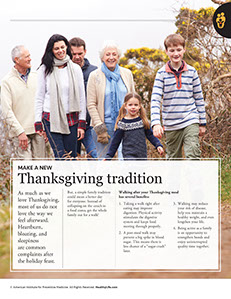
    Family walking along a trail.

    As much as we love Thanksgiving, most of us do not love the way we feel afterward. Heartburn, bloating, and sleepiness are common complaints after the holiday feast.

    But, a simple family tradition could mean a better day for everyone. Instead of collapsing on the couch in a food coma, get the whole family out for a walk!

    Walking after your Thanksgiving meal has several benefits:

    1.  Taking a walk right after eating may improve digestion. Physical activity stimulates the digestive system and keeps food moving through properly.

    2.  A post-meal walk may prevent a big spike in blood sugar. This means there is less chance of a “sugar-crash” later.

    3.  Walking may reduce your risk of disease, help you maintain a healthy weight, and even lengthen your life.

    4.  Being active as a family is an opportunity to strengthen bonds and enjoy uninterrupted quality time together.

    © American Institute for Preventive Medicine

  • The Family That Plays Together Stays Together

    FAMILY LIFE

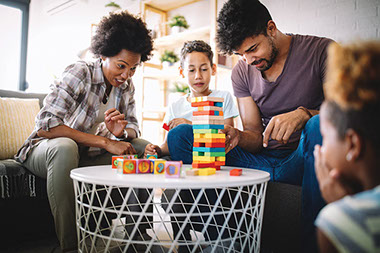
    Family playing Jenga.

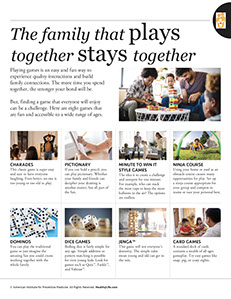
    Playing games is an easy and fun way to experience quality interactions and build family connections. The more time you spend together, the stronger your bond will be. But, finding a game that everyone will enjoy can be a challenge. Here are eight games that are fun and accessible to a wide range of ages.

    Charades

    This classic game is super easy and sure to have everyone laughing. Even better, no one is too young or too old to play.

    Pictionary

    If you can hold a pencil, you can play pictionary. Whether your family and friends can decipher your drawing is another matter, but all part of the fun.

    Minute to win it style games

    The idea is to create a challenge and compete for one minute. For example, who can stack the most cups or keep the most balloons in the air? The options are endless.

    Ninja course

    Using your home or yard as an obstacle course creates many opportunities for play. Set up a ninja course appropriate for your group and compete in teams or race your personal best.

    Dominos

    You can play the traditional game or just imagine the amazing fun you could create working together with the whole family.

    Dice games

    Rolling dice is fairly simple for any age. Simple addition or pattern matching is possible for even young kids. Look for games such as Quix™, Farkle™, and Yahtzee™.

    Jenga™

    This game will test everyone’s dexterity. The simple rules mean young and old can get in the mix.

    Card games

    A standard deck of cards contains a wealth of all-ages gameplay. Try easy games like snap, pig, or crazy eights.

    © American Institute for Preventive Medicine

  • Explore Your Family History

    FAMILY LIFE

    Old black and white photos on table next to camera, laptop, old photo album.

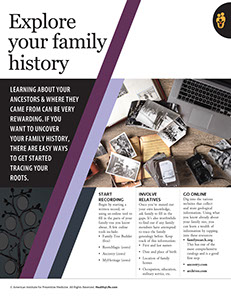
    Learning about your ancestors & where they came from can be very rewarding. If you want to uncover your family history, there are easy ways to get started tracing your roots.

    Start recording

    Begin by starting a written record, or using an online tool to fill in the parts of your family tree you know about. A few online tools include:

    *  Family Tree Builder (free)

    *  RootsMagic (costs)

    *  Ancestry (costs)

    *  MyHeritage (costs)

    Involve relatives

    Once you’ve maxed out your own knowledge, ask family to fill in the gaps. It’s also worthwhile to find out if any family members have attempted to trace the family genealogy before. Keep track of this information:

    *  First and last names

    *  Date and place of birth

    *  Location of family homes

    *  Occupation, education, military service, etc.

    Go online

    Dig into the various websites that collect and store geological information. Using what you know already about your family tree, you can learn a wealth of information by tapping into these resources:

    *familysearch.org– This has one of the most comprehensive catalogs and is a good first step.

    *ancestry.com

    *archives.com

    © American Institute for Preventive Medicine

  • Family Matters 2

    Social Health

    Well-being relates to relatives.

    Your family is where you learn who you are and how to relate to others. It plays a vital role in fulfilling the human need to belong and have close, long-term relationships. Whether you are a child, teen, or adult, family experiences can promote or hinder your well-being.

    Tips to foster family well-being:

    *  Live a healthy lifestyle together.

    – Plan for, shop, and eat healthy foods.

    – Exercise as a family if you can. Or, promote physical activity suited for each family member.

    – Get enough sleep.

    *  Plan to eat at least one meal a day together. Have each person talk about his or her day, such as stating the best part and worst part.

    *  Spend time together. Attend important events for each family member.

    *  Express care and concern. Be available to help each other out. Listen, listen, listen.

    *  Practice good manners. Say, “Thank you” and “You’re welcome.” Make it a practice to send thank you calls, notes, letters, or emails to others for gifts and other acts of kindness.

    *  Express affection. Say, “I love you,” “I care about you,” and “You mean a lot to me.”

    *  Discuss the value of the family as a whole. Encourage individual expression and development.

    *  Define clear, yet flexible roles for family members. Assign family chores.

    *  Keep the house as organized as possible.

    *  Discuss the need to adapt to changes and deal with stressful events.

    *  Seek professional help for problems the family cannot deal with on its own.

    Factors that promote well-being:

    *  Being well cared for and feeling secure

    *  Receiving trust, love, support, and hugs

    *  Spending quality time together

    *  Listening well to each other

    *  Solving problems in a positive way

    *  Positive mood of family members

    *  Satisfaction with job and/or being a parent

    *  Being involved with partner and children

    *  Higher income and/or financial security

    Action Step

    This week, let at least two family members know how much you love them. Visit or call a relative who is alone or would be happy to hear from you.

    ays to Well-Being book by the American Institute for Preventive Medicine. www.HealthyLife.com. All rights reserved.

    © American Institute for Preventive Medicine

  • Plan For Happiness During The Holidays

    Connect With Relatives

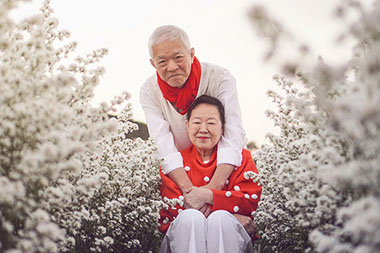
    Couple enjoying the outdoors.

    If holidays are sad due to a lost loved one, plan to be with other people.

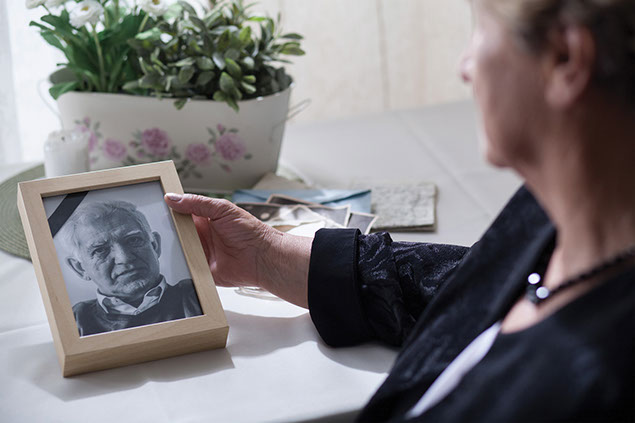
    For many people, holiday times are too hectic and tiring to be enjoyable. For others, living alone or with memories of a lost loved one brings sadness.

    *  Schedule activities you enjoy, but take time to unwind.

    *  Keep from over planning, hosting, and attending too many events.

    *  Lower expectations of having a perfect holiday. Focus on family traditions that are enjoyable, but realistic.

    *  Talk to someone you trust if you are having sad feelings.

    Minding Your Mental Health Book. Published by the American Institute for Preventive Medicine. www.HealthyLife.com. All rights reserved.

    © American Institute for Preventive Medicine

  • Build A Strong Family Foundation

    FAMILY LIFE

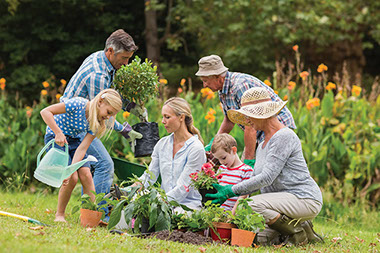
    Family gardening together.

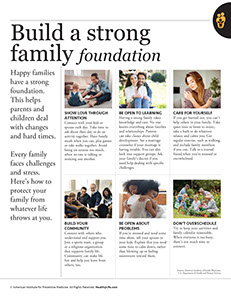
    Happy families have a strong foundation. This helps parents and children deal with changes and hard times. Every family faces challenges and stress. Here’s how to protect your family from whatever life throws at you.

    Show love through attention

    Connect with your kids or spouse each day. Take time to ask about their day or do an activity together. Have family meals when you can, play games or take walks together. Avoid being on screens too much, when no one is talking or noticing one another.

    Be open to learning

    Having a strong family takes knowledge and care. No one knows everything about families and relationships. Parents can take classes about child development. See a marriage counselor if your marriage is having trouble. You can also look into support groups. Ask your family’s doctor if you need help dealing with specific challenges.

    Care for yourself

    If you get burned out, you can’t help others in your family. Take quiet time to listen to music, take a bath or do whatever relaxes and calms you. Get regular exercise, such as walking, and include family members if you can. Talk to a trusted friend when you’re stressed or overwhelmed.

    Build your community

    Connect with others who understand and support you. Join a sports team, a group or a religious organization that supports family life. Community can make life fun and help you learn from others, too.

    Be open about problems

    If you’re stressed and need some time alone, tell your spouse or your kids. Explain that you need some time to calm down, rather than blowing up or feeling resentment toward them.

    Don’t overschedule

    Try to keep your activities and family calendar reasonable. When everyone is too busy, there’s not much time to connect.

    Sources: American Academy of Family Physicians, U.S. Department of Health and Human Services

    © American Institute for Preventive Medicine

  • Create A Family Mission Statement

    FAMILY LIFE

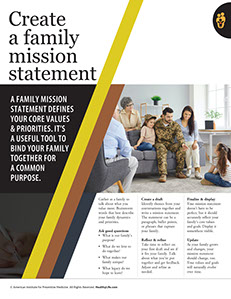
    Family sitting together talking.

    A family mission statement defines your core values & priorities. It’s a useful tool to bind your family together for a common purpose.

    Gather as a family to talk about what you value most. Brainstorm words that best describe your family dynamics and priorities.

    Ask good questions

    *  What is our family’s purpose?

    *  What do we love to do together?

    *  What makes our family unique?

    *  What legacy do we hope to leave?

    Create a draft

    Identify themes from your conversations together and write a mission statement. The statement can be a paragraph, bullet points, or phrases that capture your family.

    Reflect & refine

    Take time to reflect on your first draft and see if it fits your family. Talk about what you’ve put together and get feedback. Adjust and refine as needed.

    Finalize & display

    Your mission statement doesn’t have to be perfect, but it should accurately reflect your family’s core values and goals. Display it somewhere visible.

    Update

    As your family grows and changes, your mission statement should change, too. Your values and goals will naturally evolve over time.

    © American Institute for Preventive Medicine

  • Fun Ways To Reduce Family Stress

    SUCCESS OVER STRESS

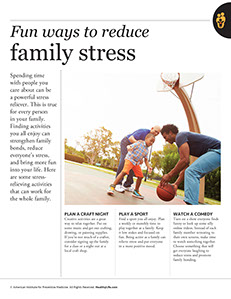
    Grandfather, father, and young son playing basketball.

    Spending time with people you care about can be a powerful stress reliever. This is true for every person in your family. Finding activities you all enjoy can strengthen family bonds, reduce everyone’s stress, and bring more fun into your life. Here are some stress-relieving activities that can work for the whole family.

    Plan a craft night

    Creative activities are a great way to relax together. Put on some music and get out crafting, drawing, or painting supplies. If you’re not much of a crafter, consider signing up the family for a class or a night out at a local craft shop.

    Play a sport

    Find a sport you all enjoy. Plan a weekly or monthly time to play together as a family. Keep it low stakes and focused on fun. Being active as a family can relieve stress and put everyone in a more positive mood.

    Watch a comedy

    Turn on a show everyone finds funny or look up some silly online videos. Instead of each family member retreating to their own screens, make time to watch something together. Choose something that will get everyone laughing to reduce stress and promote family bonding.

    © American Institute for Preventive Medicine

  • 6 Ways To Be A Good Houseguest

    FAMILY LIFE

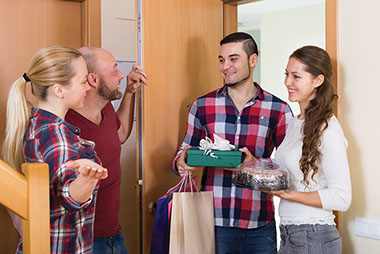
    Image of houseguest entering home with dessert.

    Each year, millions of Americans travel and visit friends and family members for the holidays. And with so many overnight visits this time of year, being a courteous houseguest is a skill that may come in handy. If you’re staying with a friend or family member, remember these tips:

    *Make plans well in advance.Don’t expect family members to drop everything at the last minute for your visit. Give them several weeks notice of when you will be coming (if possible) and don’t arrive earlier or stay longer than planned.

    *Consider a small gift.A bouquet of fresh flowers, a book, or an attractive fruit bowl are good host gifts to consider.

    *  Pay attention to house rules. Are there shoes by the door? Then you should take yours off when you enter.

    *Offer to pitch in.Ask if you can pick up some groceries at the store, or offer to pay for meals when going out.

    *Clean up after yourself.Don’t expect the host to do it all. Help clear the table after meals and wash dishes. The day of your departure, strip the sheets off the bed and offer to throw them in the laundry. Wipe off the bathroom counters after you use them. Put things back where you found them.

    *Send a note afterward.When you return home, send a short but sincere thank you note to your host.

    Source: The Emily Post Institute

    © American Institute for Preventive Medicine

  • Create Family Ties

    FAMILY LIFE

    Image of three generational family.

    Families who spend time together as a cohesive unit are more likely to survive a crisis, such as an illness or job loss than those with poor coping skills.

    According to the CDC, good communication between parents and children is important for developing positive relationships.

    *  Teach active listening skills. Pay attention to what others say. Ask questions if you don’t understand what your spouse or children are trying to tell you.

    *  Hold regular family meetings to present complaints and set mutual goals and plans.

    *  Celebrate birthdays, holidays and other special occasions together.

    *  Learn the value of compromise.

    *  Be flexible. This is especially important if one parent returns to work or if one wage earner loses his or her job.

    *  Allow for individual strengths and interests. Don’t compare brothers and sisters. Allow family members to have “their own space.”

    © American Institute for Preventive Medicine