Tag: Healthy Travel

  • The Abcs Of Traveling With Children

    Healthy Travel

    Image of kids hanging around a camp site.

    Traveling with children can be very trying-you try to keep them from getting tired, bored, hungry, sick, or lost. Here are a few strategies to help you succeed.

    *  Make sure your child has had all immunizations required or recommended for travel.

    *  Have each child wear an identification tag that includes his or her name, plus your name and home address, phone number where you can be reached, and where you’ll be staying. In airports, add the name of your airline, flights, and departure times. The identification tag should be placed inside (not on the outside) of the child’s garments. Tell your child what to do if he or she gets lost.

    *  Take along a child-strength painkiller, motion sickness medication, cold preparations, an antibiotic, and Pedalyte (a medicine that replaces essential body minerals lost due to vomiting and diarrhea).

    *  Dress your child in loose, comfortable travel clothing and shoes.

    *  According to the American Academy of Pediatrics, all children need their own seats on airplanes and children younger than age 2 or weighing less than 40 pounds should be fastened in child restraint seats on an airplane. Parents should choose safety seats that are labeled for use on aircraft.

    *  On long automobile trips, stop every 2 hours and walk around with your child. When flying or traveling by train, take your child for a walk around the coach or cabin.

    *  Help prevent your child from getting motion sickness. Children between the ages of 2 and 12 are more prone to motion sickness than toddlers or teens.

    *  If your child will be flying unaccompanied by an adult, make arrangements with the airline for an adult to escort the child off the plane.

    *  Avoid introducing a young child to a lot of unfamiliar foods away from home.

    *  When traveling in developing countries, repeatedly remind your child about food and beverage safety.

    *  For more information on safe air travel for children, contact the FAA at 1.866.TELL.FAA (835.5322) orwww.faa.gov.
    Page image from A Year of Health Hints book by the American Institute for Preventive Medicine. www.HealthyLife.com. All rights reserved.

    © American Institute for Preventive Medicine
  • Travel Hints For Retirees On The Go

    Healthy Travel

    Image of retired couple traveling.

    Some of the most avid travelers are in their fifties, sixties, and seventies. Yet people in this age group are susceptible to certain health problems. To minimize your risk of health trouble away from home, take these precautions.

    *  Before confirming your reservations, be sure the itinerary is not too demanding for you or your traveling companions.

    *  Visit your doctor and dentist before your trip. Schedule your appointments far enough in advance to allow time to take care of any health problems that need to be resolved before departure.

    *  If you’re being treated for an ongoing medical condition, carry copies of your medical records when you travel in case you become ill.

    *  Get adequate sleep before and during your trip. Fatigue aggravates existing medical conditions and reduces resistance to illness.

    *  Pace yourself, and take time to rest once or twice a day.

    *  Medicare recipients who need supplemental travel health insurance for travel outside the United States should contact the American Association of Retired Persons (AARP) Insurance Division at 1.800.523.5800 orwww.aarphealthcare.comfor further information.

    Page image from A Year of Health Hints book by the American Institute for Preventive Medicine. www.HealthyLife.com. All rights reserved.

    © American Institute for Preventive Medicine
  • Check Your Health Insurance Coverage

    Healthy Travel

    Image of Health Insurance form on tablet.

    Don’t assume that your medical insurance policy covers medical care you receive outside the United States. To protect yourself against unforeseen-and perhaps costly-medical charges, take these steps.

    *  Check with your insurance carrier to see if you’re covered when abroad, or if they offer health insurance for travelers.

    *  If your insurance doesn’t fully cover you away from home, you may be able to purchase traveler’s health insurance through a major credit card company.

    *  If you’re traveling with a package tour that offers a health insurance option, consider purchasing it.

    *  Find out if your policy places any restrictions on coverage. Some insurance companies do not cover chronic illness, complications during the third trimester of pregnancy, or sports-related injuries.

    Some plans also cover the cost of returning home in case of an emergency.

    Page image from A Year of Health Hints book by the American Institute for Preventive Medicine. www.HealthyLife.com. All rights reserved.

    © American Institute for Preventive Medicine

  • Traveling

    Healthy Travel

    Smiling women standing in front of the Leaning Tower of Pisa, holding a camera.

    The best of travel plans can be ruined if you get sick or aren’t able to deal with health problems on your trip. Discuss your travel plans with your doctor.

    Make sure to take enough medicines you need for the whole trip.

    Depending on your destination, this may include insect repellant, sunscreen (SPF 30 or higher), hand sanitizer (60% alcohol or higher), and face masks.

    Find out if and what your health insurance covers if you need medical care during your trip. You may consider purchasing additional travel health insurance. Find out where to go for care, if needed.

    Certain vaccines may be required by some countries before you visit them. Find out if and what vaccines are required for places that you plan to travel from the CDC Travelers’ Health Web site atcdc.gov/travel.

    Page from HealthyLife Weigh book by the American Institute for Preventive Medicine. www.HealthyLife.com. All rights reserved.

    © American Institute for Preventive Medicine
  • Destination: Healthy Vacation

    Healthy Travel

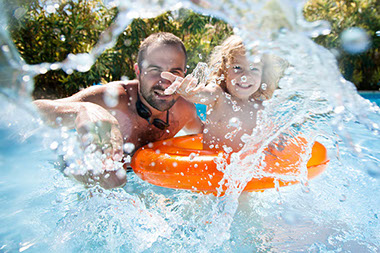
    Image of father and child playing in the pool.

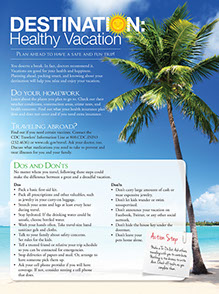
    Plan ahead to have a safe and fun trip!

    You deserve a break. In fact, doctors recommend it. Vacations are good for your health and happiness. Planning ahead, packing smart, and knowing about your destination will help you relax and enjoy.

    Do your homework.

    Learn about the places you plan to go to. Check out their weather conditions, construction areas, crime rates, and health concerns. Find out what your health insurance plan does and does not cover and if you need extra insurance. No matter where you travel, following these steps could make the difference between a great and a dreadful vacation.

    Dos

    *  Pack a basic first-aid kit.

    *  Pack all prescriptions and other valuables, such as jewelry in your carry-on luggage.

    *  Stretch your arms and legs at least every hour during travel.

    *  Stay hydrated. If the drinking water could be unsafe, choose bottled water.

    *  Wash your hands often. Take travel-size hand sanitizer gels and cloths.

    *  Talk to your family about safety concerns. Set rules for the kids.

    *  Tell a trusted friend or relative your trip schedule so you can be contacted for emergencies.

    *  Stop deliveries of papers and mail. Or, arrange to have someone pick them up.

    *  Ask your cell phone provider if you will have coverage. If not, consider renting a cell phone that does.

    Don’ts

    *  Don’t carry large amounts of cash or wear expensive jewelry.

    *  Don’t let kids wander or swim unsupervised.

    *  Don’t announce your vacation on Facebook, Twitter, or any other social network.

    *  Don’t hide the house key under the doormat.

    *  Don’t leave your pets home alone.

    Traveling abroad?

    Find out if you need certain vaccines. Contact the CDC Travelers’ Information Line at 800.CDC.INFO (232.4636) orwww.cdc.gov/travel. Ask your doctor, too. Discuss what medications you need to take to prevent and treat illnesses for you and your family.

    Action Step

    Make a To-Do list. Ask others traveling with you to contribute. Nothing is too obvious to write down. Check off tasks as you complete them.

    Page image from Ways to Well-Being book by the American Institute for Preventive Medicine. www.HealthyLife.com. All rights reserved.

    © American Institute for Preventive Medicine

  • What To Do If Turista Strikes

    Healthy Travel

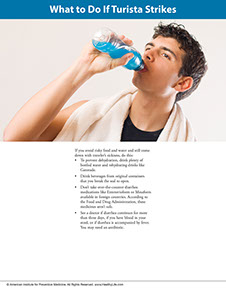
    Image of man rehydrating with liquids.

    If you avoid risky food and water and still come down with traveler’s sickness, do this:

    *  To prevent dehydration, drink plenty of bottled water and rehydrating drinks like Gatorade.

    *  Drink beverages from original containers that you break the seal to open.

    *  Don’t take over-the-counter diarrhea medications like Enterovioform or Mesaform available in foreign countries. According to the Food and Drug Administration, these medicines aren’t safe.

    *  See a doctor if diarrhea continues for more than three days, if you have blood in your stool, or if diarrhea is accompanied by fever. You may need an antibiotic.

    Page image from A Year of Health Hints book by the American Institute for Preventive Medicine. www.HealthyLife.com. All rights reserved.

    © American Institute for Preventive Medicine
  • Destination: Fun

    Healthy Travel

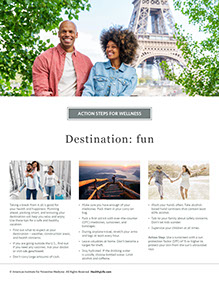
    Couple smiling, sitting in front of eiffel tower.

    Taking a break from it all is good for your health and happiness. Planning ahead, packing smart, and knowing your destination will help you relax and enjoy. Use these tips for a safe and healthy vacation.

    *  Find out what to expect at your destination – weather, construction areas, and health concerns.

    *  If you are going outside the U.S., find out if you need any vaccines. Ask your doctor or visitcdc.gov/travel.

    *  Don’t carry large amounts of cash.

    *  Make sure you have enough of your medicines. Pack them in your carry-on bag.

    *  Pack a first-aid kit with over-the-counter (OTC) medicines, sunscreen, and bandages.

    *  During airplane travel, stretch your arms and legs at least every hour.

    *  Leave valuables at home. Don’t become a target for theft.

    *  Stay hydrated. If the drinking water is unsafe, choose bottled water. Limit alcohol and caffeine.

    *  Wash your hands often. Take alcohol-based hand sanitizers that contain least 60% alcohol.

    *  Talk to your family about safety concerns. Don’t let kids wander.

    *  Supervise your children at all times.

    Action Step:Use a sunscreen with a sun protection factor (SPF) of 15 or higher to protect your skin from the sun’s ultraviolet rays.

    Page from HealthyLife Weigh book by the American Institute for Preventive Medicine. www.HealthyLife.com. All rights reserved.

    © American Institute for Preventive Medicine
  • Your Pre-Vacation Checklist

    Healthy Travel

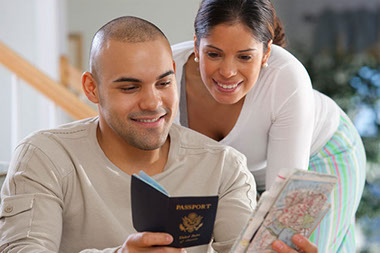
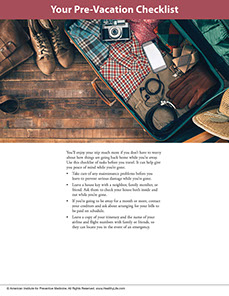
    Image of couple looking at passport and map.

    You’ll enjoy your trip much more if you don’t have to worry about how things are going back home while you’re away. Use this checklist of tasks before you travel. It can help give you peace of mind while you’re gone.

    *  Take care of any maintenance problems before you leave to prevent serious damage while you’re gone.

    *  Leave a house key with a neighbor, family member, or friend. Ask them to check your house both inside and out while you’re gone.

    *  If you’re going to be away for a month or more, contact your creditors and ask about arranging for your bills to be paid on schedule.

    *  Leave a copy of your itinerary and the name of your airline and flight numbers with family or friends, so they can locate you in the event of an emergency.

    Page image from A Year of Health Hints book by the American Institute for Preventive Medicine. www.HealthyLife.com. All rights reserved.

    © American Institute for Preventive Medicine
  • Eat, Drink, And Be Wary

    Healthy Travel

    Image of couple eating at a resturant.

    It’s been said that travel expands the mind and loosens the bowels. One-third of visitors to developing countries suffer from travel sickness, or turista. This includes diarrhea, cramps, fatigue, and sometimes fever and nausea. Food and water contaminated with bacteria are usually to blame. Here’s what to do.

    *  If you plan to travel outside the United States, check with the local tourist board to find out if the water is safe for foreign visitors to drink.  Often, natives who are used to the local water can drink it with no ill effects, but outsiders experience nausea or diarrhea (or both).

    *  If you know or suspect the water is unsafe, drink and brush your teeth with bottled water that has a sealed cap. The same goes for making ice cubes, washing fruits and vegetables, or cooking.

    *  Carry an immersion coil so you can boil your water. Boil the water for at least 10 minutes, and allow it to cool before you use it.

    *  If you can’t boil your water, use purifying tablets, such as Halazone or Potable Aqua tablets, which you can buy at most drugstores and many sporting goods stores.

    *  Drink beverages served in original bottles, cans, etc. Don’t use ice made from tap water.

    *  Don’t eat raw fruits or vegetables (including salad). The exception: fresh fruit you peel yourself.

    *  Don’t order undercooked meat. Beef, pork, chicken, and fish should be cooked thoroughly.

    *  Don’t eat raw or undercooked shellfish.

    *  Avoid smorgasbords and buffet meals, where food is often left out for long periods of time, giving disease-causing microbes plenty of time to grow.

    *  Avoid unpasteurized milk and cheeses in countries outside the United States and western Europe.

    *  If your choice of safe foods is severely limited, take a daily multiple vitamin and mineral capsule to supply the nutrients you may be missing out on.

    Ask your doctor about taking diarrhea medicine with you. Ask what  product you should take and in what doses. (Note: Don’t take Pepto-Bismol if you’re allergic to aspirin. Don’t give Pepto-Bismol to anyone under age 19. Like aspirin, it contains salicylate.)

    Page image from A Year of Health Hints book by the American Institute for Preventive Medicine. www.HealthyLife.com. All rights reserved.

    © American Institute for Preventive Medicine

  • Fitness In Flight

    Healthy Travel

    Passengers aboard an airplane.

    Sitting in a narrow, crowded airplane seat for hours causes cramped and achy muscles, swollen feet, and fatigue. And anyone who has a problem with circulation in his or her legs runs a risk of thrombophlebitis when sitting for long periods of time. Fortunately, there are ways to prevent the typical aches and pains travelers frequently experience during long flights. One is to charter your own plane and stretch out in comfort. If you’re like most people, however, a private plane is probably beyond your means. Instead, you can try to reduce stiffness with the following exercises.

    *  Tense your feet for 5 seconds, then relax them. Repeat with each muscle group, including your calves, thighs, buttocks, shoulders, neck, forearms, and hands.

    *  Drop your head forward. Then slowly move it to your right, and continue rotating your head, to the back, to the left, and to the front again. Repeat four times. Then reverse direction, and repeat five times.

    *  Raise both shoulders, then move them back, down, and forward in a circular motion.

    *  Reaching toward the ceiling, stretch your right arm. Then repeat with your left arm.

    To promote circulation in your legs:

    *  Flex and extend your feet, pointing your toes up and down.

    *  Try to get up and walk at least once every 2 hours, if possible. You should also make an effort to breathe slowly and deeply. Aircraft air is lower in oxygen than outdoor air, and deep breathing helps you to get enough oxygen into your blood and avoid fatigue or sluggishness.

    Page image from A Year of Health Hints book by the American Institute for Preventive Medicine. www.HealthyLife.com. All rights reserved.

    © American Institute for Preventive Medicine