Home Safety
General Home Safety
Food Safety
Home Security
Prepare for Disasters
Prevent Choking, Suffocation, & Drowning
Prevent Falls
© American Institute for Preventive Medicine


Home Safety
General Home Safety
Food Safety
Home Security
Prepare for Disasters
Prevent Choking, Suffocation, & Drowning
Prevent Falls
© American Institute for Preventive Medicine


Home Safety

Few things are more terrifying than having your clothes catch fire. Teach your children and everyone else in your family this simple, lifesaving technique, known as stop, drop, and roll.
Stop. Your natural inclination may be to run. But motion only fans the flames.
Drop. Get to the ground, cover your face with your hands, and keep your face as far from the flames as possible. (If a blanket, rug, or coat is handy, use it to smother the flames. But doing so should never delay stop, drop, and roll.)
Roll. Roll back and forth, again and again, until the flames go out.
Home Safety

Keeping your home safe takes planning. Get checklists of what to do for all areas of your home.
The number one cause of unintended deaths in the home is poisoning. This is from drugs, solids and liquid substances, gases and vapors, etc. The 2nd leading cause of unintended deaths in the home or a group residence is from falls.
To help prevent falls, use safety rails and mats and nonskid rugs. Keep pathways clear of ice and clutter.
Install smoke alarms as advised by your city’s or county’s code. Check smoke alarms once a month to see that they still work.
Keep all poisons out of children’s reach. Put child-resistant latches on cabinet doors. Follow use and storage instructions on product labels. Install carbon monoxide detectors, too.
Home Safety

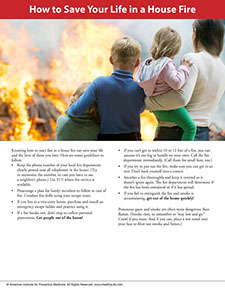
Knowing how to react fast in a house fire can save your life and the lives of those you love. Here are some guidelines to follow.
* Keep the phone number of your local fire department clearly posted near all telephones in the house. (Try to memorize the number, in case you have to use a neighbor’s phone.) Use 911! where the service is available.
* Prearrange a plan for family members to follow in case of fire. Conduct fire drills using your escape route.
* If you live in a two-story house, purchase and install an emergency escape ladder and practice using it.
* If a fire breaks out, don’t stop to collect personal possessions. Get people out of the house!
* If you can’t get to within 10 to 12 feet of a fire, you can assume it’s too big to handle on your own. Call the fire department immediately. (Call them for small fires, too.)
* If you try to put out the fire, make sure you can get to an exit. Don’t back yourself into a corner.
* Smother a fire thoroughly and keep it covered so it doesn’t ignite again. The fire department will determine if the fire has been contained or if it has spread.
* If you fail to extinguish the fire and smoke is accumulating, get out of the house quickly!
Poisonous gases and smoke are often more dangerous than flames. (Smoke rises, so remember to “stay low and go.” Crawl if you must. And if you can, place a wet towel over your face to filter out smoke and fumes.)
WELL-BEING

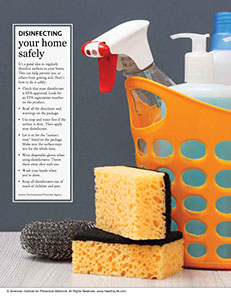
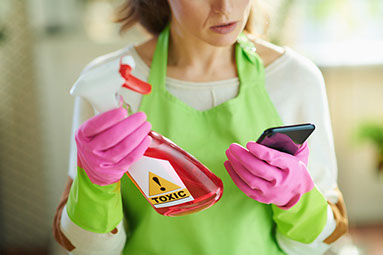
It’s a good idea to regularly disinfect surfaces in your home. This can help prevent you or others from getting sick. Here’s how to do it safely:
* Check that your disinfectant is EPA-approved. Look for an EPA registration number on the product.
* Read all the directions and warnings on the package.
* Use soap and water first if the surface is dirty. Then apply your disinfectant.
* Let it sit for the “contact time” listed on the package. Make sure the surface stays wet for the whole time.
* Wear disposable gloves when using disinfectants. Throw them away after each use.
* Wash your hands when you’re done.
* Keep all disinfectants out of reach of children and pets.
Source: Environmental Protection Agency
Home Safety

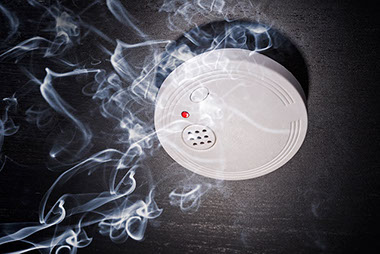
Smoke detectors save lives. But if a smoke detector is placed in the wrong spot or not maintained, it may be useless in a fire.
To install and maintain smoke detectors:
* Install at least one smoke detector on each level of your house. Best locations are in hallways and just outside bedroom doors.
* As an added safety measure, install two types of smoke detectors. The photoelectric cell variety detects smoldering fires, and the ionization type detects hot, flaming fires. Check for a UL (Underwriters Laboratory) emblem on the label to be sure the detectors you buy meet industry standards. And make sure they each come with a warranty, in case they’re defective.
* Affix detectors on the ceiling or high on an interior wall, because smoke and heat rise.
* Once a month, check the detectors to make sure the batteries still work. Most detectors have a test button. If you push the button and hear a beep, the batteries are good. If you hear a chirping sound, the batteries need to be replaced. (To be safe, you should replace the batteries annually, whether the malfunction signal goes off or not. To help you remember, choose an annual holiday, like New Year’s Day, as replacement time.)
* To make sure the sensing chamber works, you should also test the device with a lit match or candle.
* Be sure the alarm rings loudly enough to alert your family.
* Most smoke detectors last three to five years. Replace as needed.
WELL-BEING

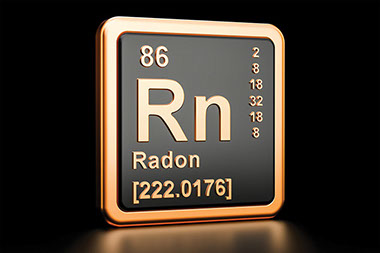
Radon can get into your home and cause serious health problems. But you can take steps to remove this dangerous gas that you can’t see, taste or smell.
Radon is a natural radioactive gas. When uranium breaks down in the soil, it makes radon. Then, radon can seep into a home’s foundation, causing health problems for the people who live there.
Why is radon harmful?
When you breathe in radon, its natural radioactive particles can get trapped in your lungs. Radon is a leading cause of lung cancer in non-smokers. If you smoke and breathe radon, your risk of lung cancer is especially high.
How do I know if I have radon?
The only way to know if a home has radon is through a radon test. You can buy radon tests at hardware stores or online. Your local health department may sell them.
Radon tests are easy to use. Usually, you let the test stay in your basement or the lowest point in your house for a few days. When the test is complete, you mail it in. The testing company sends you the results.
If your test results say your radon level is 4pCi/L or higher, take a second test to be sure. If the average between the two tests is 4pCi/L or higher, you need to fix the problem. You can do this with radon removal, also called radon mitigation.
How do I get rid of radon?
Removing radon from a home requires special skills and tools. Choose a qualified radon mitigation contractor to fix your home.
Ask your state radon office for names. Many states require radon professionals to be licensed, certified or registered for your added safety.
New homes aren’t safe
No matter how old or new your home, radon can get in. It seeps in through foundation seams, joints and cracks. It can also get in through a sump pump or drain located in the basement.
If you’re buying a home, make sure the home has been tested for radon or that it has a radon mitigation system in place.
Source: Environmental Protection Agency
Home Safety
Harmful drugs could be right under your nose.
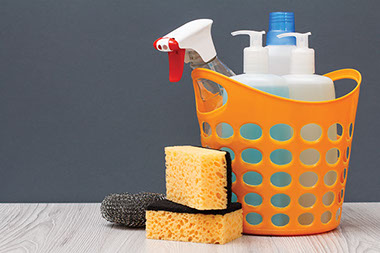
Spray paint, gasoline, glue, hair spray, and cleaning products become drugs when their vapors are inhaled on purpose to get “high.” Inhalants are easy to get and are among the most popular and deadly substances that teens abuse.
The highs and lows
At first, the effects of sniffing or snorting fumes are like drinking alcohol. But feeling giddy and less inhibited lasts only a few minutes. Continued use of the inhalant is needed to feel “high” longer. Breathing in chemical fumes replaces oxygen in the lungs. As a result, repeated use can cause:
* Death (even from one session of repeated use of the inhalant)
* Liver, kidney, and bone marrow problems
* Heart rhythm problems and heart failure
* Headaches
* Dizziness
* Confusion
* Delusions
Also, the use of inhalants over time can cause health problems that cannot be reversed:
* Hearing loss
* Problems with learning and memory
* Muscle spasms
Signs of inhalant use:
* Chemical smell on clothing or breath
* Drunk, dazed, or dizzy look
* Slurred speech
* Sores around the nose or mouth
* Paint or other chemical stains on fingers
* Empty spray paint bottles or rags hidden in closets
If you suspect that a family member is using inhalants, get medical help without delay.
Action Step
Talk to your kids about the dangers of inhalants. Find out more fromwww.inhalants.drugabuse.gov.
WELL-BEING

Spring marks the beginning of the growing season in many parts of the country. To ensure a successful garden, now is the time to prepare for the season ahead.
The garden tasks you need to do in early spring will vary depending on your growing zone. Colder climates will just be getting started, while warmer parts of the country may already be enjoying garden bounty.
For those of us just thawing out, here are the spring gardening tasks that will set you up for success:
* Weed and mulch. Early spring is a key time to get ahead of the weeds and put down a thick layer of protective mulch.
* Plant bare-root trees, shrubs, and roses. These should go in before temperatures get too warm.
* Fertilize spring bulbs.
* Trim back grasses and perennials to make way for new growth.
* Prepare vegetable beds for early spring seeds. Apply a layer of compost and turn the soil over.
* Plant cold-weather vegetable seeds such as lettuce, radish, and kale.
Home Safety

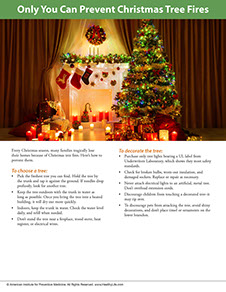
Every Christmas season, many families tragically lose their homes because of Christmas tree fires. Here’s how to prevent them.
To choose a tree:
* Pick the freshest tree you can find. Hold the tree by the trunk and tap it against the ground. If needles drop profusely, look for another tree.
* Keep the tree outdoors with the trunk in water as long as possible. Once you bring the tree into a heated building, it will dry out more quickly.
* Indoors, keep the trunk in water. Check the water level daily, and refill when needed.
* Don’t stand the tree near a fireplace, wood stove, heat register, or electrical wires.
To decorate the tree:
* Purchase only tree lights bearing a UL label from Underwriters Laboratory, which shows they meet safety standards.
* Check for broken bulbs, worn-out insulation, and damaged sockets. Replace or repair as necessary.
* Never attach electrical lights to an artificial, metal tree. Don’t overload extension cords.
* Discourage children from touching a decorated tree-it may tip over.
* To discourage pets from attacking the tree, avoid shiny decorations, and don’t place tinsel or ornaments on the lower branches.