Tag: planning

  • Traveling

    Healthy Travel

    Smiling women standing in front of the Leaning Tower of Pisa, holding a camera.

    The best of travel plans can be ruined if you get sick or aren’t able to deal with health problems on your trip. Discuss your travel plans with your doctor.

    Make sure to take enough medicines you need for the whole trip.

    Depending on your destination, this may include insect repellant, sunscreen (SPF 30 or higher), hand sanitizer (60% alcohol or higher), and face masks.

    Find out if and what your health insurance covers if you need medical care during your trip. You may consider purchasing additional travel health insurance. Find out where to go for care, if needed.

    Certain vaccines may be required by some countries before you visit them. Find out if and what vaccines are required for places that you plan to travel from the CDC Travelers’ Health Web site atcdc.gov/travel.

    Page from HealthyLife Weigh book by the American Institute for Preventive Medicine. www.HealthyLife.com. All rights reserved.

    © American Institute for Preventive Medicine

  • Your Pre-Vacation Checklist

    Healthy Travel

    Image of couple looking at passport and map.

    You’ll enjoy your trip much more if you don’t have to worry about how things are going back home while you’re away. Use this checklist of tasks before you travel. It can help give you peace of mind while you’re gone.

    *  Take care of any maintenance problems before you leave to prevent serious damage while you’re gone.

    *  Leave a house key with a neighbor, family member, or friend. Ask them to check your house both inside and out while you’re gone.

    *  If you’re going to be away for a month or more, contact your creditors and ask about arranging for your bills to be paid on schedule.

    *  Leave a copy of your itinerary and the name of your airline and flight numbers with family or friends, so they can locate you in the event of an emergency.

    Page image from A Year of Health Hints book by the American Institute for Preventive Medicine. www.HealthyLife.com. All rights reserved.

    © American Institute for Preventive Medicine

  • Avoid Holiday Debt

    Financial Health

    Small, mini shopping cart with 2 ornaments inside cart.

    Give yourself a present. Keep holiday spending within your means.

    *  Set a limit on what you will spend.

    *  Make a list before you shop.

    *  Buy from stores that offer layaway plans.

    *  Avoid impulse buying. Leave your credit cards at home.

    *  Shop less – in stores, online, and while watching TV.

    *  At family gatherings, discuss ways you can all spend less on gifts. Make a resolution to start a monthly savings account to use for holiday spending.

    *  Comparison shop. Check out prices online and in-store ads. Use coupons for items on your list.

    *  Pay with cash or a debit card.

    *  Don’t go overboard, even during sales. You’ll save 100 percent on items that you don’t need.

    *  Don’t charge more than you can pay off when your balance is due.

    ays to Well-Being book by the American Institute for Preventive Medicine. www.HealthyLife.com. All rights reserved.

    © American Institute for Preventive Medicine

  • Home Safe Home

    Home Safety

    Protect your family from accidents, injuries, and intruders.

    You should feel safe, protected, and comfortable in your home, even when things go wrong. Make sure you’re doing everything possible to protect yourself and your family. Lock the doors, even when you are home. Install and maintain smoke alarms and carbon monoxide detectors. Plan an escape route in case of a disaster.

    Safety Tips:

    *  Use a peephole at the front door.

    *  If you live alone, arrange for daily contact with a neighbor or relative.

    *  Post emergency numbers and teach children how to call 9-1-1.

    *  Stock first-aid supplies.

    *  Keep chemicals out of your children’s reach.

    *  Lock guns in one place and bullets in another.

    *  Keep a fire extinguisher handy.

    *  Use grab bars and safety mats or nonskid tape in your tub and shower.

    *  Keep stair areas well-lit. Keep all walkways clear  of clutter.

    *  Make sure there is a clear path for walking from room to room.

    *  Never leave young children alone in the bathtub or on a bed or table.

    Ways to get through a disaster faster:

    Write down a plan. Rehearse it and hope you never need it!

    *  Create separate plans for different disasters, such as a house fire, flood, tornado, etc. Practice drills for each plan with the family.

    *  Take a first-aid course.

    *  Choose a check-in person who is unlikely to be involved in the same event.

    *  Plan two places to meet. Choose one at or near your home. Choose another one at a location farther away, in case you can’t get home.

    *  If you have kids in school, find out about the school’s crisis plan. Make sure the school has current phone numbers for you and other caregivers. Sign forms that allow the release of your kids to family members or friends.

    *  If you have pets, plan for their safety.

    Action Step

    Set up plans to be ready for weather disasters. Contact your cell phone carrier to see if you can get free Wireless Emergency Alerts.

    Ways to Well-Being book by the American Institute for Preventive Medicine. www.HealthyLife.com. All rights reserved.

    © American Institute for Preventive Medicine

  • Plan For Happiness During The Holidays

    Connect With Relatives

    Couple enjoying the outdoors.

    If holidays are sad due to a lost loved one, plan to be with other people.

    For many people, holiday times are too hectic and tiring to be enjoyable. For others, living alone or with memories of a lost loved one brings sadness.

    *  Schedule activities you enjoy, but take time to unwind.

    *  Keep from over planning, hosting, and attending too many events.

    *  Lower expectations of having a perfect holiday. Focus on family traditions that are enjoyable, but realistic.

    *  Talk to someone you trust if you are having sad feelings.

    Minding Your Mental Health Book. Published by the American Institute for Preventive Medicine. www.HealthyLife.com. All rights reserved.

    © American Institute for Preventive Medicine

  • Planning For Health Care Coverage

    Medical Care

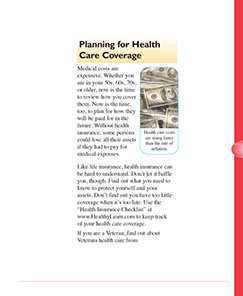
    Image of couple talking to a health care agent.

    Medical costs are expensive. Whether you are in your 50s, 60s, 70s, or older, now is the time to review how you cover them. Now is the time, too, to plan for how they will be paid for in the future. Without health insurance, some persons could lose all their assets if they had to pay for medical expenses.

    Like life insurance, health insurance can be hard to understand. Don’t let it baffle you, though. Find out what you need to know to protect yourself and your assets. Don’t find out you have too little coverage when it’s too late. Use the “Health Insurance Checklist” to keep track of your health care coverage.

    If you are a Veteran, find out about Veterans health care from

    Page from the Health at Home Lifetime book by the American Institute for Preventive Medicine. www.HealthyLife.com. All rights reserved.

    © American Institute for Preventive Medicine

  • Use Your Benefits Before The Year Runs Out

    Medical Care

    Smiling female doctor.

    *  Schedule office visits, tests, and exams that you need, but have not yet had this year, especially if they are covered expenses or if you have met your deductible.

    *  If you have a flexible spending account (FSA), make sure to use it all by the yearly deadline date. You lose what you do not spend. Find out what your FSA covers. You may be able to use it for:

    –  Over-the-counter medications

    –  Contact lenses and solution

    –  Batteries for hearing aids

    –  A quit tobacco program

    *  Put timing for medical expenses on your side. For example, if the expected costs for dental care exceed your yearly limit, get as many visits this month that this year’s limit will cover. Schedule the rest for the beginning of next year when a new year of dental coverage begins.

    A Year of Health Hints book by the American Institute for Preventive Medicine. www.HealthyLife.com. All rights reserved.

    © American Institute for Preventive Medicine

  • Caring For Family From Afar

    FAMILY LIFE

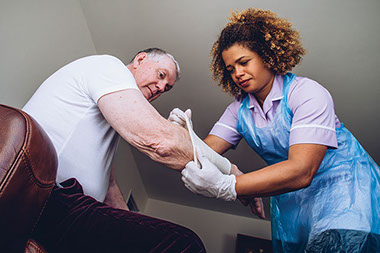
    Nurse helping patient at home.

    Anyone, anywhere can help care for a loved one. You don’t have to live in the same town, or even the same state. If you live far away from an older relative, you may wonder how you can help. Long-distance caregiving is possible.

    Before you start

    Does your loved one already have a primary caregiver? Talk to that person about how you can help. It’s usually best to coordinate your efforts with the person who sees your loved one most often.

    If they don’t yet have a caregiver but need one, you can help with that too. Talk to other family members and discuss the options. You may be able to help with finding and hiring a nurse or aide if family members can’t do it.

    Even if you can’t visit often, know that your visits are valuable. It’s time to not only catch up, but to take on some caregiving duties. Maybe you can give the primary caregiver a break while you are there. You can also find out what kinds of things you can do to help when you’re away.

    Options for helping out

    Some ideas for helping your long-distance loved one include:

    *  Helping them manage their finances or bill paying, which often can be done online

    *  Arranging for in-home care such as home health or nursing aides

    *  Ordering medical equipment that they need

    *  Making calls to the pharmacy for medication when they need it

    *  Researching skilled nursing or assisted living facilities

    *  Calling them often to check in and provide emotional support

    *  Contacting their insurance company if there are questions about coverage

    *  Keeping other family members informed about their health and needs

    *  Creating paperwork for an emergency that lists their health conditions and medicines they take

    Finding local resources

    There may be many resources close to home that can help your relative. You can get started online with these websites:

    *  Eldercare Locator:www.eldercare.acl.gov

    *  National Institute on Aging:www.nia.nih.gov

    *  Family Caregiver Alliance:www.caregiver.org

    Source: National Institute on Aging

    © American Institute for Preventive Medicine

  • Create A Family Mission Statement

    FAMILY LIFE

    Family sitting together talking.

    A family mission statement defines your core values & priorities. It’s a useful tool to bind your family together for a common purpose.

    Gather as a family to talk about what you value most. Brainstorm words that best describe your family dynamics and priorities.

    Ask good questions

    *  What is our family’s purpose?

    *  What do we love to do together?

    *  What makes our family unique?

    *  What legacy do we hope to leave?

    Create a draft

    Identify themes from your conversations together and write a mission statement. The statement can be a paragraph, bullet points, or phrases that capture your family.

    Reflect & refine

    Take time to reflect on your first draft and see if it fits your family. Talk about what you’ve put together and get feedback. Adjust and refine as needed.

    Finalize & display

    Your mission statement doesn’t have to be perfect, but it should accurately reflect your family’s core values and goals. Display it somewhere visible.

    Update

    As your family grows and changes, your mission statement should change, too. Your values and goals will naturally evolve over time.

    © American Institute for Preventive Medicine

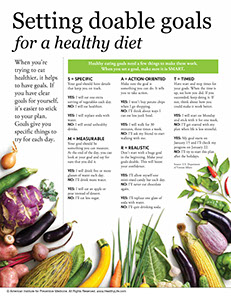
  • Setting Doable Goals For A Healthy Diet

    HEALTHY EATING

    A variety of vegetables.

    When you’re trying to eat healthier, it helps to have goals. If you have clear goals for yourself, it’s easier to stick to your plan. Goals give you specific things to try for each day.

    Healthy eating goals need a few things to make them work. When you set a goal, make sure it is SMART.

    S = Specific

    Your goal should have details that keep you on track.

    Yes: I will eat one extra serving of vegetables each day.

    No: I will eat healthier.

    Yes: I will replace soda with water.

    No: I will avoid unhealthy drinks.

    M = Measurable

    Your goal should be something you can measure. At the end of the day, you can look at your goal and say for sure that you did it.

    Yes: I will drink five or more glasses of water each day.

    No: I’ll drink more water.

    Yes: I will eat an apple or pear instead of dessert.

    No: I’ll eat less sugar.

    A = Action-oriented

    Make sure the goal is something you can do. It tells you to take action.

    Yes: I won’t buy potato chips when I go shopping.

    No: I’ll think about ways I can eat less junk food.

    Yes: I will walk for 30 minutes, three times a week.

    No: I’ll ask my friend to start walking with me.

    R = Realistic

    Don’t start with a huge goal in the beginning. Make your goals doable. This will boost your confidence.

    Yes: I’ll allow myself one mini-sized candy bar each day.

    No: I’ll never eat chocolate again.

    Yes: I’ll replace one glass of soda with water.

    No: I’ll quit drinking soda.

    T = Timed

    Have start and stop times for your goals. When the time is up, see how you did. If you succeeded, keep doing it. If not, think about how you could make it work better.

    Yes: I will start on Monday and stick with it for one week.

    No: I’ll get started with my plan when life is less stressful.

    Yes: My goal starts on January 15 and I’ll check my progress on January 22.

    No: I’ll try to start this plan after the holidays.

    Source: U.S. Department of Veteran Affairs

    © American Institute for Preventive Medicine