Tag: safety

  • The Abcs Of Traveling With Children

    Healthy Travel

    Image of kids hanging around a camp site.

    Traveling with children can be very trying-you try to keep them from getting tired, bored, hungry, sick, or lost. Here are a few strategies to help you succeed.

    *  Make sure your child has had all immunizations required or recommended for travel.

    *  Have each child wear an identification tag that includes his or her name, plus your name and home address, phone number where you can be reached, and where you’ll be staying. In airports, add the name of your airline, flights, and departure times. The identification tag should be placed inside (not on the outside) of the child’s garments. Tell your child what to do if he or she gets lost.

    *  Take along a child-strength painkiller, motion sickness medication, cold preparations, an antibiotic, and Pedalyte (a medicine that replaces essential body minerals lost due to vomiting and diarrhea).

    *  Dress your child in loose, comfortable travel clothing and shoes.

    *  According to the American Academy of Pediatrics, all children need their own seats on airplanes and children younger than age 2 or weighing less than 40 pounds should be fastened in child restraint seats on an airplane. Parents should choose safety seats that are labeled for use on aircraft.

    *  On long automobile trips, stop every 2 hours and walk around with your child. When flying or traveling by train, take your child for a walk around the coach or cabin.

    *  Help prevent your child from getting motion sickness. Children between the ages of 2 and 12 are more prone to motion sickness than toddlers or teens.

    *  If your child will be flying unaccompanied by an adult, make arrangements with the airline for an adult to escort the child off the plane.

    *  Avoid introducing a young child to a lot of unfamiliar foods away from home.

    *  When traveling in developing countries, repeatedly remind your child about food and beverage safety.

    *  For more information on safe air travel for children, contact the FAA at 1.866.TELL.FAA (835.5322) orwww.faa.gov.

    Page image from A Year of Health Hints book by the American Institute for Preventive Medicine. www.HealthyLife.com. All rights reserved.

    © American Institute for Preventive Medicine

  • Home Safety Checklist

    Home Safety

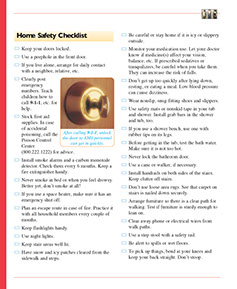
    *  Keep your doors locked.

    *  Use a peephole in the front door.

    *  If you live alone, arrange for daily contact with a neighbor, relative, etc.

    *  Clearly post emergency numbers. Teach children how to call 9-1-1, etc. for help.

    *  Stock first aid supplies. In case of accidental poisoning, call the Poison Control Center (800.222.1222) for advice.

    *  Install smoke alarms and a carbon monoxide detector. Check them every 6 months. Keep a fire extinguisher handy.

    *  Never smoke in bed or when you feel drowsy. Better yet, don’t smoke at all!

    *  If you use a space heater, make sure it has an emergency shut off.

    *  Plan an escape route in case of fire. Practice it with all household members every couple of months.

    *  Keep flashlights handy.

    *  Use night lights.

    *  Keep stair areas well lit.

    *  Have snow and icy patches cleared from the sidewalk and steps.

    *  Be careful or stay home if it is icy or slippery outside.

    *  Monitor your medication use. Let your doctor know if medicine(s) affect your vision, balance, etc. If prescribed sedatives or tranquilizers, be careful when you take them. They can increase the risk of falls.

    *  Don’t get up too quickly after lying down, resting, or eating a meal. Low blood pressure can cause dizziness.

    *  Wear nonslip, snug-fitting shoes and slippers.

    *  Use safety mats or nonskid tape in your tub and shower. Install grab bars in the shower and tub, too.

    *  If you use a shower bench, use one with rubber tips on its legs.

    *  Before getting in the tub, test the bath water. Make sure it is not too hot.

    *  Never lock the bathroom door.

    *  Use a cane or walker, if necessary.

    *  Install handrails on both sides of the stairs. Keep clutter off stairs.

    *  Don’t use loose area rugs. See that carpet on stairs is nailed down securely.

    *  Arrange furniture so there is a clear path for walking. Test if furniture is sturdy enough to lean on.

    *  Clear away phone or electrical wires from walk paths.

    *  Use a step stool with a safety rail.

    *  Be alert to spills or wet floors.

    *  To pick up things, bend at your knees and keep your back straight. Don’t stoop.
    Healthier at Home book by the American Institute for Preventive Medicine. www.HealthyLife.com. All rights reserved.

    © American Institute for Preventive Medicine
  • Avoid Injury

    Healthylife® Weigh

    Part 5

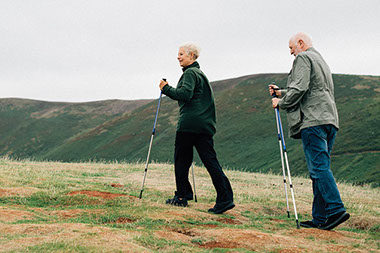
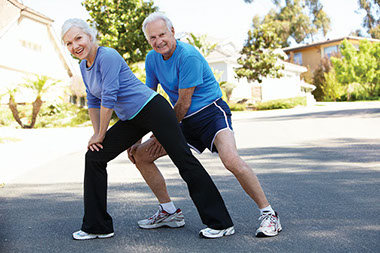
    Senior couple streching before workout.

    Learn how to do an exercise before you try it. Watch someone demonstrate it, either in person or in a video. If possible, do the exercise with someone who can correct poor form.

    Warm up before moderate or intense exercise. Start slowly. You should gradually start breathing harder and feel your heart rate increasing.

    Cool down after moderate or intense exercise. Cool down slowly. Do the activity that you were doing (e.g., walking, biking), but more slowly.

    Possible Cool Down

    *  Brisk walking: Walk around slowly

    *  Swimming: Walk in shallow end of pool

    *  Cycling: Cycle slowly on flat surface or walk

    *  Aerobics: Walk or stretch slowly

    © American Institute for Preventive Medicine

  • National Safety Month

    WELL-BEING

    Image of worder wearing proper hard-hat and protective eye glasses.

    Each June, the National Safety Council celebrates National Safety Month. This year’s theme is “Safety: It takes all of us.” Join the Council and thousands of organizations across the country to reduce the risk of these key safety issues:

    Week 1: Prevent prescription drug abuse

    *  Ask your doctor about the risk of addiction when he or she advises prescription painkillers. Take these medicines only as prescribed.

    *  If you suspect a co-worker is abusing prescription drugs, contact your Employee Assistance Program or Human Resources. Signs of abusing these drugs include:

    –  Lack of focus or attention

    –  Poor judgment

    –  Missing work often

    Week 2: Stop slips, trips and falls

    *  Follow your workplace’s safety guidelines.

    *  Keep walkways and stairs free from clutter, water and other falling hazards.

    *  At home, use grab bars and safety mats in your tub and shower and next to the toilet.

    Week 3: Be aware of your surroundings

    *  Scan your area for potential hazards.

    *  Follow workplace safety rules for storing objects securely and safe use of machines.

    *  Pay attention at all times. Do not get distracted when working or when you walk, especially when using your cell phone.

    Week 4: Put an end to distracted driving

    When you are driving, focus on the road. Do not use your smartphone or cell phone for texting or talking. Hands-free talking does not make driving safer. Your mind is still sidetracked.

    *  The National Safety Council suggests that you change your voicemail greeting to something like: “Hi, you’ve reached (insert your name). I’m either away from my phone or I’m driving. Please leave a message.”

    *  Avoid other distractions, too. Examples are eating, talking to passengers, grooming, reading (including maps) and adjusting a radio, CD player, or MP3 player.

    Bonus week: Summer safety

    *  Limit exposure to the sun, especially between 10 a.m. and 4 p.m. Wear a broad-spectrum sunscreen with a sun protection factor (SPF) of 15 or higher, as directed. Wear a wide-brimmed hat and sunglasses that wrap around and block both UVA and UVB rays.

    *  Follow directions to use outdoor tools and the lawn mower safely.

    *  Drink plenty of water to help prevent heat-related problems.

    © American Institute for Preventive Medicine
  • When Petting Pets Causes Disease

    SELF-CARE CORNER

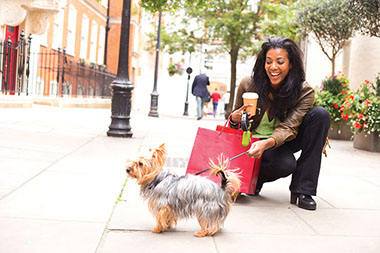
    Image of women with her dog.

    Salmonella, E. coli, and roundworms are among the nearly 20 different diseases that people most commonly get from their pets, said Jason Stull, assistant professor of veterinary preventive medicine at Ohio State. Infants, the elderly, pregnant women, and people with limited immune function are most at risk for animal-borne, or zoonotic, diseases.

    Since different species of pets-dogs, cats, rodents, birds, fish, reptiles, and amphibians-carry different types of diseases and at different stages of life, Stull and his colleagues suggest that families talk to both their doctor and veterinarian about what pet is the safest choice for their family.

    Here are some safe tips for pet ownership:

    *  Wear protective gloves to clean aquariums and cages and to remove feces.

    *  Wash hands after pet contact.

    *  Don’t let your pets lick your face.

    *  Cover playground sandboxes when not in use (cats love them).

    *  Avoid contact with higher risk animals such as reptiles, amphibians, and exotic animals.

    *  Regularly clean and disinfect animal cages, feeding areas, and bedding.

    *  Put litter boxes away from areas where food is eaten and prepared.

    *  Schedule regular veterinary visits.

    © American Institute for Preventive Medicine
  • Keep Food Safe

    Healthylife® Weigh

    Part 3

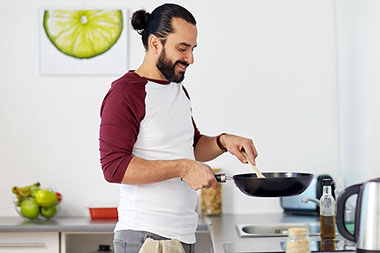
    Man with frying pan cooking food at home.

    *  Freezing: Keep freezer temperature at or below 0°F. Keep frozen foods in airtight containers.

    *  Refrigerator: Keep refrigerator temperature at or below 40°F. Store foods made from animal products in a drawer or in the back of the refrigerator, where it is cooler.

    *  Thawing: Thaw food on the bottom shelf of the refrigerator. Or, submerge the sealed container in cold water. Or, use the defrost settings on your microwave. Never thaw food on the counter.

    Heat to Safe Temperatures

    Use a food thermometer to make sure foods are safe to eat.

    *  145ºF: Fish, roasts, steaks, chops (beef, pork, veal, and lamb)

    *  160ºF: Egg dishes and ground meats (beef, veal, and lamb)

    *  165ºF: Stuffing, all poultry, casseroles, reheated leftovers

    Simple Cooking Methods

    When you cook vegetables, do so quickly and in little water. Some vitamins, like vitamin C, are lost when soaked in water or overcooked.

    Microwave: Place chopped vegetables in a microwave-safe dish with a lid. Or, use plastic wrap with a few holes poked for venting. Add 2 Tbsp. of water, or enough to cover the bottom of the dish. Microwave on high for 5 minutes. Check firmness. Add time to reach desired softness.

    Stove Top: Add 1 to 2 inches of water to a pot. Add vegetables. Simmer until tender, checking vegetables often after the first 5 minutes. Greens will cook faster, so check these after 2 minutes.

    Oven: Preheat oven to 450ºF. Coat a baking sheet with non-stick cooking spray or use a sheet of parchment paper. Toss vegetables with 1 Tbsp. of canola oil. Spread vegetables evenly and bake for at least 15 minutes. Check for desired softness. Add cooking time, if needed. Experiment with spices to flavor vegetables to your liking.

    © American Institute for Preventive Medicine

  • Women Traveling Alone: Safety Tips

    WELL-BEING

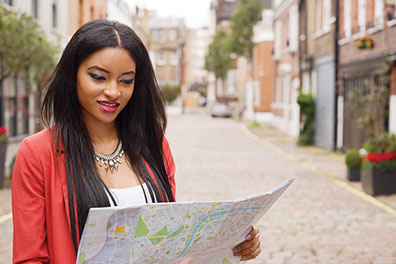
    Image of young women reading a map.

    Perhaps more than ever, women are willing to ditch their traveling companions and go solo when it comes time to hit the road and see the world. Many travel for business.

    Still, despite the trend, many women may worry that traveling alone can carry too many risks, making them a target for thieves, kidnappers,

    and other criminals.

    Barbara Foster, a veteran globetrotter and author of the book The Confessions of a Librarian: A Memoir of Loves, advises, “Sure, there are risky places and bad types out there. But with the right precautions, women can travel solo with confidence, visiting the places and meeting the people they always dreamed of and returning home with wonderful stories and memories.”

    *Steer clear of the most dangerous locales.Simply put, some places just aren’t worth the risk. Avoid “no go” neighborhoods, cities, and countries.

    *Connect with friendly contacts.Make yourself known not only to the US embassy or consul, but also to people in your field, Foster said. During her travels, Foster wrote articles about libraries she visited. Her fellow librarians were a  protective group.

    *Learn the language or at least useful phrases.Even if it’s just a few key words, speaking the language can come in handy if you need to seek help. Knowing what others are saying can also alert you to potential dangers.

    *Dress wisely, pay attention to manners, and spend money in moderation.Don’t draw needless attention to yourself. For added protection against thieves, Foster suggests carrying money and ID in a pouch under your shirt.

    *Travel in the US.You will miss many of the world’s must-see places, but if the thought of traveling abroad holds too much stress for you, it might be better to stick closer to home.

    © American Institute for Preventive Medicine

  • Supplements

    Healthylife® Weigh

    Part 7

    Doctor and patient talking.

    The term “dietary supplement” can be used for anything that you take orally to enhance your usual food intake. Dietary supplements include vitamins, minerals, amino acids, protein powders, and herbal products. Supplements do not have to be approved by the FDA.

    Reasons to Take a Supplement:

    *  Females who are pregnant or breastfeeding need more iron, folic acid, and calcium.

    *  Females with excessive menstrual bleeding may need to take an iron supplement.

    *  Some vegetarians may not get enough calcium, iron, zinc, and vitamin B12.

    *  Older adults and people with little exposure to sunlight may need a vitamin D supplement.

    *  People with certain disorders or diseases and people who take some medications may need a supplement. For example, people with high blood pressure who take a water pill may need to take a potassium supplement.

    Ask your doctor if you need any vitamin and/or mineral supplement due to a medical condition or any medication(s) you take. Supplements can interact with food and other medications.

    HealthyLife® Weigh Guidelines:

    1. Healthy adults and children can get the nutrients they need by choosing a variety of foods rather than taking supplements. This reduces the risk of deficiencies, as well as excesses.

    a. Do not take supplements that contain more than 10 times the Recommended Daily Intake (RDI) for a nutrient, particularly fat soluble vitamins (A, D, E, and K). The mineral selenium can also be harmful if taken in large amounts.

    b. The maximum value of vitamins is in food rather than supplements. It’s much better to get your vitamins and minerals from food rather than from pills. Unlike supplements, fruits, vegetables, and grains have dietary fiber that is beneficial, promotes regularity, and aids in the prevention of disease.

    2. Some supplement ingredients can be seriously harmful. Examples include high potency doses of some vitamins, such as niacin, amino acids (e.g., L-tryptophan) and herbs (e.g., chaparral, comfrey, and germander).

    3. Supplements may not be pure. If you have allergies, be sure to follow recommendations from your doctor or allergist before taking a supplement.

    Bottom Line: You should eat healthy foods to get needed nutrients. Consult your doctor or registered dietitian if you think taking vitamin/mineral supplements could benefit you.

    Resources for Supplement Information:

    Center for Food Safety and Applied Nutrition

    www.fda.gov/about-fda/fda-organization/center-food-safety-and-applied-nutrition-cfsan

    Food and Nutrition Information Center

    www.nal.usda.gov/fnic

    National Center for Complementary and Integrative Health (NCCIH)

    www.nccih.nih.gov

    National Institute of Health: Office of Dietary Supplements

    https://ods.od.nih.gov

    © American Institute for Preventive Medicine
  • Pop The Cork, Not Your Eye

    WELL-BEING

    Image of cork popping from a champagne bottle.

    Americans will consume more than a billion glasses of champagne during holiday and New Year celebrations. According to the American Academy of Ophthalmology, the careless handling of champagne is one of the most common causes for holiday-related eye injuries. These injuries are often caused by improperly opening the bottle, as a champagne cork is just less than 90 pounds of pressure-3 times the pressure inside a car tire.

    The Korbel Champagne authorities offer this advice:

    *  The recommended way to properly open a bottle is to ease the cork out slowly, with the sound of a gentle sigh-not a pop, which wastes champagne.

    *  Make sure your champagne is chilled and unshaken. Chill the bottle for at least 4 hours in the refrigerator (a warm bottle is more likely to pop).

    *  Remove the foil cap covering the top of the bottle, exposing a wire hood.

    *  Undo the wire hood with 6 half-turns of the knob.

    *  Hold the bottle at a 45-degree angle while holding the cork firmly with one hand and the base of the bottle with the other. Be sure to point the bottle away from your guests.

    *  Do not twist the cork. Rather, turn the bottle slowly while letting the cork glide out gently, emitting a gentle sigh.

    *  In the did-you-know department: There are more than 50 million bubbles in a standard bottle of champagne.

    © American Institute for Preventive Medicine