Tag: safety

  • Avoid A Walking Injury

    BE FIT

    Older couple hiking using walking sticks.

    Walking is great exercise – but an injury will leave you sidelined. Keep your walks safe and healthy with these tips.

    Get the right shoes.

    Comfortable, supportive shoes are a must. Experts recommend getting new walking shoes after walking for 300 – 500 miles in them. If your shoes are uncomfortable or show signs of wear, toss them. A new pair is an investment in your health.

    Don’t do too much.

    If you haven’t exercised in a while, start off slow. Walking for just a few minutes may be enough at first. Increase your distance by  10% each week. Doing too much, too soon can cause painful shin splints or other injuries.

    Prevent blisters.

    Synthetic fiber socks may help you prevent blisters. Cotton socks can trap moisture and cause rubbing. If you have diabetes or nerve problems, see a doctor if you get blisters or sores on your feet.

    Know your knees.

    If your knees hurt when you walk, talk to your doctor. Knee pain can be caused by arthritis, damaged ligaments and other health problems.

    If you don’t have any health issues, you may need a new pair of shoes. In some cases, doing stretches or leg strengthening exercises can help. Some people find that soft ground like grass is easier on their joints. Walking on concrete may cause more pain.

    Be aware.

    Newer hybrid and electric cars are very quiet. Don’t rely on hearing alone when crossing the street. Stop and look both ways. If you’re using headphones, keep them turned down low. This helps protect your hearing and helps you hear people, animals or cars nearby.

    Source: American Heart Association

    © American Institute for Preventive Medicine

  • 6 Things To Know Before Taking Any Medicines

    SELF-CARE CORNER

    Image of women reading medication information.

    The Centers for Disease Control and Prevention (CDC) says that adverse drug events (ADEs) are a serious public health problem. An ADE is when an injury occurs after taking medicine. With 82 percent of Americans taking at least one medication, ADEs could happen to almost anyone.

    ADEs can be serious, and even deadly. They may include:

    *  Side effects from a medicine

    *  Interactions with other medicines or supplements

    *  Allergic reactions to a medicine

    *  Overdoses

    *  Taking the wrong dose or type of medicine

    You can avoid ADEs with a few simple steps. Do these things today to keep yourself and loved ones safe:

    1.Be aware of any interactions before you take a medicine.Some medicines should not be taken with certain foods, such as grapefruit or grapefruit juice. Others can cause side effects if taken with certain herbs and supplements. Because of possible interactions, be sure your doctor knows everything you take, including natural supplements, vitamins and herbs. If you’re caring for an aging family member, keep track of all their medications and show the list to their doctors during appointments. If you see more than one doctor, make sure all your doctors know which medications you take.

    2.Keep them secure, out of reach from others.Something that’s safe for you to take could be dangerous – or even deadly – to a child or pet. Keep all medicines out of reach of kids and pets, preferably with child-proof packaging.

    3.Take only the dose you are prescribed.If you feel your medication isn’t working, talk to your doctor about options. Taking a higher dose than what’s prescribed or mixing it with other medications can lead to serious side effects or overdoses.

    4.Don’t share your medicines.It can be dangerous to give someone a prescription drug that wasn’t prescribed to them. Even over-the-counter medicines should be used with caution, especially if a person has health conditions or is taking other medicines.

    5.Keep medicines in their original bottles.Putting medicines in other containers could lead to someone accidentally taking the wrong medicine. It also makes it more difficult to keep track of what you’re taking.

    6.Dispose of expired or unneeded medicines correctly.Using a drug “take-back” program is a safe option. If you must throw them away, don’t flush them. Put them in the household trash with kitty litter or coffee grounds. For complete information on medicine disposal, visit the FDA website atwww.fda.gov.

    © American Institute for Preventive Medicine

  • Protect Your Personal Information

    FINANCIAL HEALTH

    Image of laptop with shield and lock key.

    Identity theft is a serious crime. It happens when someone steals your personal information such as your social security number or credit card numbers and uses it without your permission. You may see mistakes or mystery charges on your bank, credit card, or other account statements. You may receive bills for products or services you never received. Protect your personal information, urges the Federal Trade Commission. Get detailed information online atwww.ftc.gov/idtheft.

    *Keep your important papers secure.Limit what you carry in your wallet or purse. Pick up new checks at the bank instead of having them mailed to your home. Take outgoing mail to a collection box or the post office. Don’t leave it in your mailbox. Shred sensitive documents, receipts, credit card offers, insurance forms, checks, bank statements, and similar documents.

    *Secure your social security number.Only give it out when necessary (and ask if you can use a different kind of identification).

    *Protect your computer and mobile devices.Use anti-virus software. Don’t open files or click on links sent by strangers. Remove the memory cards from mobile devices before recycling them.

    *Protect your data online.Keep your passwords private. Don’t over share on social networking sites. If you post too much information about yourself, an identity thief can use that information to answer challenging questions on your accounts (birthdays, mother’s name, pet names, high school).

    © American Institute for Preventive Medicine

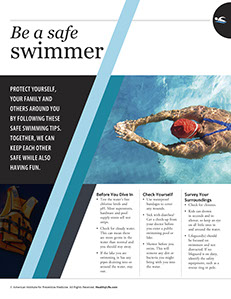
  • Be A Safe Swimmer

    BE FIT

    Bird eye view of female swimming.

    Protect yourself, your family and others around you by following these safe swimming tips. Together, we can keep each other safe while also having fun.

    Before You Dive In

    *  Test the water’s free chlorine levels and pH. Most superstores, hardware and pool supply stores sell test strips.

    *  Check for cloudy water. This can mean there are more germs in the water than normal and you should stay away.

    *  If the lake you are swimming in has any pipes draining into or around the water, stay out.

    Check Yourself

    *  Use waterproof bandages to cover any wounds.

    *  Sick with diarrhea? Get a check-up from your doctor before you enter a public swimming pool or lake.

    *  Shower before you swim. This will remove any dirt or bacteria you might bring with you into the water.

    Survey Your Surroundings

    *  Check for closures.

    *  Kids can drown in seconds and in silence, so keep an eye on all little ones in and around the water.

    *  Lifeguard(s) should be focused on swimmers and not distracted. If no lifeguard is on duty, identify the safety equipment, such as a rescue ring or pole.

    © American Institute for Preventive Medicine

  • A Burning Issue: How To Handle Household Burns

    SELF-CARE CORNER

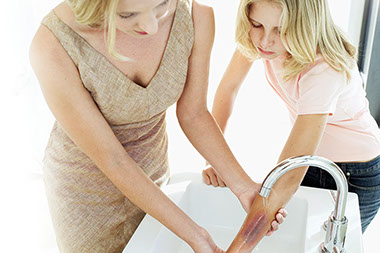
    Image of a mother helping daughter with a burn on the arm.

    Accidental burns can happen just about anywhere in your home, and they’re not always caused by fire. Hot objects or liquids, friction, the sun, electricity, or certain chemicals can also cause burns.

    Each year, about a half-million people nationwide seek medical attention for burns. Household burns lead to nearly 7 of 10 admissions to burn centers. The good news is that the number of deaths from severe burns has dropped by more than half over the past 4 decades, in large part because of treatments developed through NIH-funded research.

    Burns result in skin or tissue damage. The severity of a burn depends on the area it covers and how deep the damage goes. First-degree burns affect only the thin top layer of skin. Second-degree burns include the thick lower layer of skin. A third-degree burn is the most serious; it penetrates the entire thickness of the skin, permanently destroying it and the tissue that’s underneath.

    You can care for most minor burns at home. If the burn is red and painful with mild swelling or little blistering, then it’s a first-degree or minor second-degree burn.

    See a doctor if the burn is dark red and looks glossy with a lot of blistering. These are signs of a deep second-degree burn. Get immediate treatment if the burned skin is dry and leathery, perhaps with white, brown, or black patches. These are signs of a third-degree burn.

    Burns can become infected with bacteria or other germs if protective layers of skin are lost. Burns can also lead to painful inflammation, as your immune system shifts into gear.

    First aid for burns

    For minor burns:

    *  Immerse in fresh, cool water or apply cool compresses for 10 to 15 minutes.

    *  Dry the area with a clean cloth. Cover with sterile gauze or a non-adhesive bandage.

    *  Don’t apply ointments or butter; these may cause infection.

    *  Don’t break blisters.

    *  Over-the-counter pain medications may help reduce inflammation and pain.

    Call emergency services (911) if:

    *  Burns cover a large area of the body

    *  Burns affect the entire thickness of skin

    *  The victim is an infant or elderly

    *  The burn was caused by electricity, which can lead to “invisible” burns

    © American Institute for Preventive Medicine
  • Race Drinking

    BE FIT

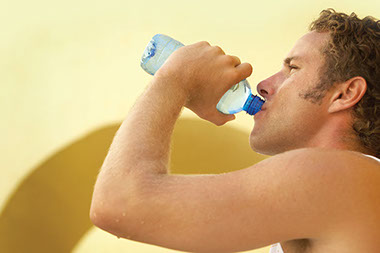
    Image of man drinking from a water bottle.

    Nearly half of recreational runners may be drinking too much fluid during races, according to a survey of runners by Loyola University Health System researchers. Expert guidelines recommend runners drink only when thirsty. But the Loyola survey found that 36.5% of runners drink according to a preset schedule or to maintain a certain body weight and 8.9% drink as much as possible.

    Drinking too much fluid while running can cause a potentially fatal condition called exercise-associated hyponatremia. It occurs when runners drink even when they are not thirsty. Drinking too much during exercise can dilute the sodium content of blood to abnormally low levels.

    Drinking only when thirsty will prevent overconsumption of fluids. “It’s the safest known way to hydrate during endurance exercise,” said Loyola sports medicine physician Dr. James Winger. The study is in the British Journal of Sports Medicine.

    Symptoms of hyponatremia can include nausea, vomiting, headache, confusion, loss of energy, muscle weakness, spasms or cramps. In extreme cases, the condition can lead to seizures, unconsciousness, and coma.

    © American Institute for Preventive Medicine
  • Bleeding

    Pregnancy & Prenatal Care

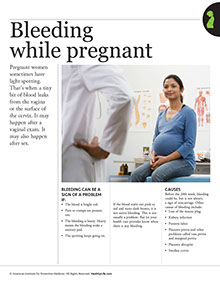
    Pregnant women sometimes have light spotting. That’s when a tiny bit of blood leaks from the vagina or the surface of the cervix. It may happen after a vaginal exam. It may also happen after sex. If the blood starts out pink or red and turns dark brown, it is not active bleeding. This is not usually a problem. But let your health care provider know when there is any bleeding. He or she will decide what to do. Bleeding can be a sign of a problem if:

    *  The blood is bright red.

    *  Pain or cramps are present, too.

    *  The bleeding is heavy. Heavy means the bleeding soaks a sanitary pad.

    *  The spotting keeps going on.

    Causes

    Before the 20th week, bleeding could be, but is not always, a sign of miscarriage. Other causes of bleeding include:

    *  Loss of the mucus plug

    *  Kidney infection

    *  Preterm labor

    *  Placenta previa and other problems called vasa previa and marginal previa

    *  Placenta abruptio

    *  Swollen cervix

    Placenta Previa

    The placenta carries oxygen and food to the baby. In most pregnancies, the placenta attaches high in the uterus. In placenta previa, it attaches low, over the cervix. The lower uterus stretches during late pregnancy. Parts of the placenta tear from the wall. That causes bleeding.

    Placenta previa is rare. It happens in only 1 in 200 pregnancies. Its cause is not known. Falls and injuries are not factors. Symptoms of placenta previa are:

    *  Bright red vaginal bleeding. This could start as early as the 24th week. Often, it starts during the 34th or 35th week.

    *  Usually, there is no pain or cramping.

    A woman may not know that she has placenta previa until bleeding happens. Then an ultrasound test can show the problem.

    Women with placenta previa have to spend a lot of time in bed. Bed rest may last late into the pregnancy. Bed rest gives the baby time to grow. It prevents stress to the uterus. The goal is to keep blood loss down. A lot of blood loss means danger for both mother and baby. In severe cases, the mother may have to go to the hospital for treatment.

    In some cases, the bleeding stops, but the placenta blocks the cervix. The mother will need a Cesarean section (C-section) delivery if the placenta completely blocks the cervix. The mother may need a C-section if the placenta only partly blocks the cervix. When this happens, the mother may have more bleeding after she delivers the baby.

    {Note: Some pregnant women may have a “low lying placenta.” This means the placenta lies at the bottom of the uterus (not higher where it should be). An ultrasound can show a “low lying” placenta. If it is found before the 24th week, the placenta can move upward and out of the way of the cervix. If so, there is no longer a problem.}

    Placenta Abruptio

    There is a right time for delivery of the placenta. That’s after the baby is born. But sometimes it happens another way. The placenta starts to leave the wall of the uterus too early. It starts before the baby is born. This can happen whether the placenta is attached high or low.

    Placenta abruptio happens in about 1 in 200 pregnancies. Some cases are more serious than others. Causes might be high blood pressure or a serious blow to the belly. An older mother may be more apt to have placenta abruptio. So are women who use cocaine during pregnancy. Symptoms of placenta abruptio are:

    *  Bright red vaginal bleeding

    *  Severe pain in the abdomen. The pain lasts. It doesn’t come and go.

    There are no tests for placenta abruptio. Even ultrasound may not show it. Regular prenatal visits help. The health care provider looks for blood in the mother’s vagina. The provider finds out if the uterus is tender.

    Women with placenta abruptio need to go to the hospital right away. Some women can have a vaginal delivery. That’s if labor begins on its own and the baby is healthy. Otherwise, a C-section is done. The mother may be given blood.

    Questions to Ask

    Self-Care / Prevention

    *  Watch closely for bleeding. If you see any, call your health care provider.

    *  Rest in bed for light bleeding.

    *  Avoid doing things that could injure you. Examples: heavy lifting, hard exercise. Don’t do work, sports, or exercises that could give you a blow to the belly.

    *  Wear a special seat belt when you drive. You can get one that protects a pregnant woman’s belly.

    *  Don’t smoke.

    *  Don’t be exposed to other people’s smoke.

    *  Follow your health care provider’s advice about sex. You may be told to:

    – Avoid sex.

    – Use extra caution during sex:

    – Your partner can focus on more gentle touching.

    – Limit how deeply the penis enters the vagina. Use positions that help control the depth.

    Prenatal Self-Care book by the American Institute for Preventive Medicine. www.HealthyLife.com. All rights reserved.

    © American Institute for Preventive Medicine

  • Are Natural Sleep Aids Safe?

    WELL-BEING

    Image of different supplements.

    Many herbal and “natural” sleep supplements are available in stores today. Although they claim to help you sleep without side effects, experts say you should use caution before taking one.

    The Food and Drug Administration (FDA) considers these natural remedies to be “dietary supplements.” This means they are not regulated as strictly as medicines. In fact, the companies that make these supplements don’t have to get FDA approval before selling them.

    Herbs and supplements can interact with medicines you already take. Be sure to talk with your doctor before taking any natural supplement. And parents should not give any natural supplements to children without first talking with the child’s pediatrician. These supplements can have effects on children’s growing bodies.

    © American Institute for Preventive Medicine
  • Re-Freeze Foods Safely

    HEALTHY EATING

    Image of a freezer.

    It’s an old-wives’ tale that foods cannot be refrozen. But follow guidelines for safe food handling, according to the Partnership for Food Safety Education and the USDA.

    If raw foods such as meat, poultry, egg products, and seafood have been thawed in the refrigerator, then they may be safely re-frozen without cooking for later use. Never thaw raw foods by letting them sit on the kitchen counter. If raw foods are thawed outside of the refrigerator, for example in the microwave or in cool water, they should be cooked immediately. Never re-freeze raw or not fully cooked foods that have been thawed outside of the refrigerator.

    © American Institute for Preventive Medicine

  • Bleeding 2

    First Aid

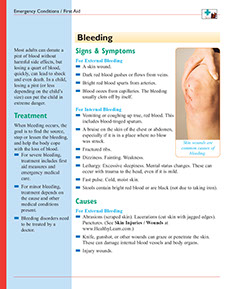
    Most adults can donate a pint of blood without harmful side effects, but losing a quart of blood, quickly, can lead to shock and even death. In a child, losing a pint (or less depending on the child’s size) can put the child in extreme danger.

    Signs & Symptoms

    For External Bleeding

    *  A skin wound.

    *  Dark red blood gushes or flows from veins.

    *  Bright red blood spurts from arteries.

    *  Blood oozes from capillaries. The bleeding usually clots off by itself.

    For Internal Bleeding

    *  Vomiting or coughing up true, red blood. This includes blood-tinged sputum.

    *  A bruise on the skin of the chest or abdomen, especially if it is in a place where no blow was struck.

    *  Fractured ribs.

    *  Dizziness. Fainting. Weakness.

    *  Lethargy. Excessive sleepiness. Mental status changes. These can occur with trauma to the head, even if it is mild.

    *  Fast pulse. Cold, moist skin.

    *  Stools contain bright red blood or are black (not due to taking iron).

    Causes

    For External Bleeding

    *  Abrasions (scraped skin). Lacerations (cut skin with jagged edges). Punctures.

    *  Knife, gunshot, or other wounds can graze or penetrate the skin. These can damage internal blood vessels and body organs.

    *  Injury wounds.

    For Internal Bleeding

    *  A bruise. This is bleeding from and damage to tissues beneath the skin.

    *  Damage to blood vessels and/or internal structures. This includes a blunt injury that does not break the skin, a bleeding ulcer, and an aneurysm.

    *  Bleeding disorders.

    Taking blood-thinning drugs can result in both internal and external bleeding.

    Treatment

    When bleeding occurs, the goal is to find the source, stop or lessen the bleeding, and help the body cope with the loss of blood.

    *  For severe bleeding, treatment includes first aid measures and emergency medical care.

    *  For minor bleeding, treatment depends on the cause and other medical conditions present.

    *  Bleeding disorders need to be treated by a doctor.

    Questions to Ask

    Self-Care / First Aid

    For Severe Bleeding

    *  Without delay, apply direct pressure to the wound using a sterile dressing or clean cloths. {Note: If the cut is large and the edges of it gape open, pinch the edges of the wound while you apply pressure.}

    *  Call 9-1-1 or take the person to nearest hospital emergency department.

    *  Do not remove an object that is stuck in a wound. Pack it in place with padding. Put tape around the padding so it doesn’t move.

    *  If bleeding continues before getting medical help, put extra cloths, etc. on top of existing ones. Keep putting pressure on the wound until bleeding stops or until medical help takes over.

    *  The most important thing to do is to apply direct pressure on the bleeding site. Some health experts advise to do these things, too, if needed:

    – Elevate the wounded area higher than heart level while applying pressure. Do this if no bone is broken.

    – Apply pressure to a “pressure point” if bleeding still continues after 15 to 20 minutes of direct pressure. Use the pressure point closest to the bleeding site that is between the wound and the heart. (See Pressure Points.)

    *  Don’t apply a tourniquet except to save a life.

    *  While giving first aid for bleeding, keep looking for signs of shock.

    For an Amputation

    *  Control bleeding.

    *  Wrap the severed part in a clean, dry (not wet) cloth or sterile gauze. Place the wrapped part in a plastic bag or other waterproof container. Put these on a bed of ice. Do not submerge the severed part in cold water or ice.

    For Bleeding from the Scalp

    *  Use a ring pad to apply pressure around the edges of the wound, not on the wound. Make a ring pad (shaped like a doughnut) with a bandage of narrow, long strips of cloth. Start with one end of the narrow bandage and wrap it around all four fingers on one hand until you form a loop. Leave a long strip of the bandage material to weave in and around the loop so it doesn’t unravel.

    Healthier at Home book by the American Institute for Preventive Medicine. www.HealthyLife.com. All rights reserved.

    © American Institute for Preventive Medicine