
Category: Family Life

  • Back-To-School Stress Busters

    FAMILY LIFE

    Smiling child with backpack on.

    Going back to school is a big transition for kids. Providing extra support and understanding can ensure a smooth start to the school year and a positive school experience.

    Ease into a daily routine

    A week or two before school starts, gradually establish an appropriate sleep and meal schedule. A tired or hungry child will struggle to manage their feelings. Set them up for success.

    Plan a daily chat time

    It doesn’t have to be long, but set aside ten or fifteen minutes to check in with your child. Ask questions and let them share their thoughts and feelings about their day.

    Make time for play

    Play is how kids relax and make sense of the world around them. Unstructured play should be a non-negotiable part of your child’s day.

    If your child is struggling, it helps to talk to your pediatrician. Your healthcare provider can recommend stress management techniques or address any other needs your child may have.

    © American Institute for Preventive Medicine

  • Best Prep For Your Kid’s Doc Appointment

    FAMILY LIFE

    Image of parent holding baby on doctor's table.

    When somebody needs to see the doctor, it’s best to make the most of your visit, said Dr. Hannah Chow, Loyola University Health System pediatrician, who shares this advice:

    *  Ask your most important questions first. Bring a list of questions. Keep it short.

    *  Make good use of the office nurse. Sometimes the nurse can answer your questions by phone right away. A doctor may not be able to call you back until the end of the day.

    *  Make sure your phone number and address are correct in your chart.

    *  Never assume no news is good news regarding tests, labs, X-rays and other similar results. Always contact your doctor’s office if you do not receive a test result in the expected time frame.

    *  Fill out papers to the best of your ability. If the doctor needs to sign a release to the school to give your child medication, fill out which drug and which child.

    *  Don’t bring too many other children to the appointments.

    *  Schedule annual physicals early. Doctors’ offices get very busy for back-to-school and sports appointments.

    © American Institute for Preventive Medicine

  • Forget The Ipad, Let Kids Play In Sand Or With Blocks

    FAMILY LIFE

    Image of young boy playing with blocks.

    When it comes to finding toys to encourage a child’s interest in science, sometimes simpler can be better and yet more sophisticated.

    Creighton University professor of physics Dr. Gintaras Duda suggests looking at toys with a tactile, kinesthetic component that can help illustrate scientific principles while allowing a child to come up with new ways to play.

    “If you can get kids to be creative, that’s the main thing,” Dr. Duda said. “Let them sort of figure out how these things work. It’s great scientific learning. Yes, kids love to play with the iPad, but if you dump a bin of Legos out in front of them and let them go, you’ll always be surprised at what they come up with.”

    Hands-on building blocks, tower sets, and a strangely behaving substance known as kinesthetic sand, which shares certain properties with regular sand but performs differently as it’s being molded, have all captured children’s attention and imagination.

    © American Institute for Preventive Medicine
  • No Family Dinner? Other Options To Try

    FAMILY LIFE

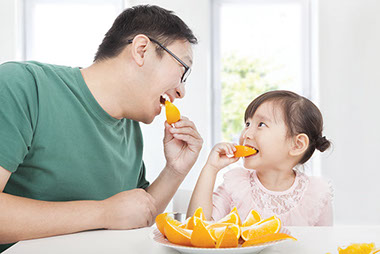
    Image of laughing family as dad feeds daughter a piece of fruit.

    Today’s families are busier than ever. Parents’ jobs, kids’ activities, social events, and homework seem to leave little time for anything else.

    Research shows that sitting down as a family for dinner is good for everyone at the table. The Family Dinner Project says sharing a family meal is good for the brains and health of all family members. But some families simply can’t make this happen every night. So what should you do? Don’t give up on finding time for each other. There are other options for family bonding that don’t need to happen at the dinner hour.

    *Consider breakfast.If everyone is home in the morning, why not take a few extra minutes to enjoy a family breakfast? It can get everyone off on the right foot.

    *Try weekend lunches.If dinner only happens once or twice a week, weekend lunches can be a great choice too. A picnic outside in the warmer months makes for a fun change of pace.

    *Think about your schedule.If you can’t get everyone together for a meal at least twice a week, consider rearranging activities or saying “no” to some commitments. The benefits of family meals together are worth the effort.

    © American Institute for Preventive Medicine

  • Summer With Less Screens

    FAMILY LIFE

    Image of grandparents playing basketball with grandkids.

    When the kids are home from school for the summer, it can be hard to avoid technology. Kids (and adults) are used to constant entertainment from the television, computer, smartphones and tablets. But, reducing screen time can have many benefits for families:

    *  Boredom is a great way for kids to learn to be creative. If they’re always entertained by a screen, kids don’t have a chance to be bored and to learn how to entertain themselves.

    *  Sitting in front of a screen means time not spent getting exercise.

    *  Some studies suggest that too much screen time can lead to behavior problems, lack of good thinking skills, and sleep problems.

    It’s not always realistic to avoid screens completely. If you can’t, look for ways to limit screen time. Try these tips:

    *  Choose certain times of day to be screen-free. For instance, you can choose to let kids have 30 minutes of screens after lunch, but morning is for screen-free play.

    *  Watch the clock. Decide on a daily limit of screen time, such as two hours, and stick with it. Consistent rules help kids know what they can expect each day, so there is less complaining.

    *  Visit the library. If you can get kids to read books they like, they won’t miss screens as much.

    *  When you do watch TV, watch shows together as a family. Choose educational shows when possible.

    Have a plan

    A family media plan can help you stay on track with screen time. Create yours atwww.healthychildren.org/English/media.

    © American Institute for Preventive Medicine

  • What Our Aging Parents Fear Most

    FAMILY LIFE

    Image of eldery man in wheel chair cooking at his stove.

    Seniors fear moving into a nursing home and losing their independence more than death, according to a new research study, Aging in Place in America, commissioned by Clarity and  The EAR Foundation.

    The study looked at the attitudes and anxieties of the nation’s elderly. The children of seniors also fear for their parents, with particular concern about their emotional and physical well-being should they have to enter a nursing home.

    One of the most significant findings of the study is that, when asked what they fear most, seniors rated loss of independence (26%) and moving out of their homes into a nursing home (13%) as their greatest fears. These two possibilities are a much higher concern than death, which was the greatest fear for only 3% of seniors surveyed.

    Other key findings include these:

    *  Most seniors want to age in place. That means they want to grow older without having to move from their homes. More than half are concerned about their ability to do so.

    *  Seniors cited three primary concerns that could jeopardize their ability to live independently: health problems, memory problems and inability to drive or get around.

    *  Many seniors said they are open to or would like to use new technologies that enable independence. More than half would consider the use of technology in their homes-specifically, sensors-to monitor their health and safety.

    *  Most Baby Boomers fear their parents will be mistreated in a nursing home and fear they will be sad. Almost two-thirds of Boomers provide some kind of help or support for their aging parents.

    “These findings tell us that, above all else, older Americans value their ability to live independently,” said Peter Bell, president of National Aging in Place Council. “As a society, we must find ways to help our parents and grandparents live their latter years at home.”

    © American Institute for Preventive Medicine

  • Bounce House Dangers

    FAMILY LIFE

    Image of a bounce house.

    If your kids like to moonwalk and jump in those ever-present birthday-party experiences called bounce houses, know about these dangers. A child goes to the ER every 45 seconds because of bouncing injuries.

    Researchers at Nationwide Children’s Hospital say inflatable bouncers are the cause of a 15-fold increase in injuries to kids-mostly broken bones, strains and sprains but also head and neck injuries. The findings were published in Pediatrics.

    Injury patterns for inflatable bouncers are similar to those the docs see on trampolines, which have national safety guidelines. Bounce houses have no guidelines. So set your own rules.

    The researchers suggest parents should consider the risks before allowing their children to use an inflatable bouncer.If you allow your child to use an inflatable bouncer, limit use to children 6 years of age and older. Make sure an adult is there to supervise while the bouncer is in use and allow only one child on the bouncer at a time. If more than one child will be on the bouncer at the same time, the children should be about the same age and size.

    © American Institute for Preventive Medicine

  • Getting Active As A Family

    FAMILY LIFE

    Image of family jogging.

    One of the best ways to prevent weight problems in children is to make exercise and activity a family event. Not only can parents set a good example, but it helps everyone get healthier while bonding and having fun together. The U.S. Department of Health and Human Services offers some tips:

    *  Find some free time. Being active together just twice a week can have health and emotional benefits. Try to find some 30-minute time slots and put your activity time on the calendar.

    *  Don’t make too many changes at once. To get everyone on board, start gradually and be sure to celebrate each time you make a healthy change.

    *  Ask for the kids’ ideas. Ask your kids about where they’d like to walk or bike. Talk to them about sports or activities they want to try.

    Remember, any time you make a change toward more activity and less screen time, you’re helping everyone in your family lead a healthier life.

    © American Institute for Preventive Medicine

  • Parenting A Teen

    FAMILY LIFE

    Image of mother and daughter talking.

    It’s not easy parenting a teen. Your teen’s brain is still developing until about age 25, according to the National Institutes of Health. These are areas that control judgment, decision making, and impulse control. What’s a frustrated parent to do? NIH News in Health suggests these actions:

    *  Respect your teen’s opinions. Nonjudgmental communication shows your love.

    *  Be honest and direct with your teen when talking about sensitive subjects such as drugs, drinking, smoking, and sex.

    *  Respect your teen’s privacy.

    *  Have meals together.

    *  Help your teen make healthy choices and plan ahead for difficult situations.

    *  Meet and get to know your teen’s friends.

    *  Compliment your teen and celebrate your child’s efforts and accomplishments.

    *  Limit time your teen uses video games, texting, and instant messaging.

    © American Institute for Preventive Medicine

  • Sun Safety Tips Forinfants & Babies

    FAMILY LIFE

    Image of toddler swimming.

    Hari Cheryl Sachs, M.D., a pediatrician at the Food and Drug Administration offers this advice:

    *  For infants younger than six months old, avoid exposure to the sun in the hours between 10 a.m. and 2 p.m., when ultraviolet (UV) rays are most intense.

    *  Even though it is best to keep infants out of the sun, if you do take your infant outside, stay in the shade. When it is sunny outdoors, create your own shade with the canopy of the stroller, shade visor on a backpack or sling or an umbrella.

    *  Check with your baby’s pediatrician about sunscreen use for your baby. “If your pediatrician agrees, said Dr. Sachs, you can apply a small amount of sunscreen-with a sun protection factor (SPF) of at least 15-to small areas such as the cheeks and back of the hands.” Sachs suggests testing your baby’s sensitivity to sunscreen by first trying a small amount on the inner wrist.

    *  Avoid combination sunscreens that contain insect repellants like DEET. Young children may lick their hands or put them in their mouths. According to the American Academy of Pediatrics, DEET should not be used on infants less than 2 months old. The academy also suggests dressing infants in lightweight long pants, long-sleeved shirts, and brimmed hats that shade the neck to prevent sunburn. Tight weaves are better than loose.

    Source: FDA Consumer Updates

    © American Institute for Preventive Medicine