Blog

  • Healthy Weight, Healthy Kids

    HEALTHY EATING

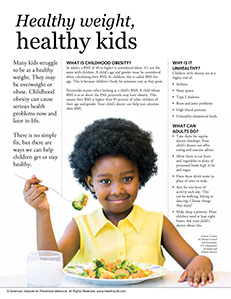
    Young child smiling eating vegetables.

    Many kids struggle to be at a healthy weight. They may be overweight or obese. Childhood obesity can cause serious health problems now and later in life.

    There is no simple fix, but there are ways we can help children get or stay healthy.

    What is childhood obesity?

    In adults, a BMI of 40 or higher is considered obese. It’s not the same with children. A child’s age and gender must be considered when calculating their BMI. In children, this is called BMI-for-age. This is because children’s body fat amounts vary as they grow.

    Percentiles matter when looking at a child’s BMI. A child whose BMI is at or above the 95th percentile may have obesity. This means their BMI is higher than 95 percent of other children of their age and gender. Your child’s doctor can help you calculate their BMI.

    Why is it unhealthy?

    Children with obesity are at a higher risk of:

    *  Asthma

    *  Sleep apnea

    *  Type 2 diabetes

    *  Bone and joint problems

    *  High blood pressure

    *  Unhealthy cholesterol levels

    What can adults do?

    *  Take them for regular doctor checkups. Your child’s doctor can offer eating and exercise advice.

    *  Allow them to eat fruits and vegetables in place of processed foods high in fat and sugar.

    *  Have them drink water in place of juice or soda.

    *  Aim for one hour of activity each day. This can be walking, biking or dancing. Choose things they enjoy!

    *  Make sleep a priority. Most children need at least eight hours. Ask your child’s doctor about this.

    Sources: Centers for Disease Control and Prevention, U.S. Department of Health and Human Services
    © American Institute for Preventive Medicine
  • Health Screenings For Women

    SELF-CARE CORNER

    Stethoscope and female symbol pills on pink top view.

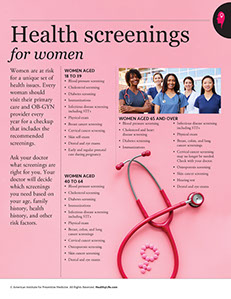
    Women are at risk for a unique set of health issues. Every woman should visit their primary care and OB-GYN provider every year for a checkup that includes the recommended screenings.

    Ask your doctor what screenings are right for you. Your doctor will decide which screenings you need based on your age, family history, health history, and other risk factors.

    Women aged 18 to 39

    *  Blood pressure screening

    *  Cholesterol screening

    *  Diabetes screening

    *  Immunizations

    *  Infectious disease screening including STI’s

    *  Physical exam

    *  Breast cancer screening

    *  Cervical cancer screening

    *  Skin self-exam

    *  Dental and eye exams

    *  Early and regular prenatal care during pregnancy

    Women aged  40 to 64

    *  Blood pressure screening

    *  Cholesterol screening

    *  Diabetes screening

    *  Immunizations

    *  Infectious disease screening including STI’s

    *  Physical exam

    *  Breast, colon, and lung cancer screenings

    *  Cervical cancer screening

    *  Osteoporosis screening

    *  Skin cancer screening

    *  Dental and eye exams

    Women aged 65 and over

    *  Blood pressure screening

    *  Cholesterol and heart disease screening

    *  Diabetes screening

    *  Immunizations

    *  Infectious disease screening including STI’s

    *  Physical exam

    *  Breast, colon, and lung cancer screenings

    *  Cervical cancer screening may no longer be needed. Check with your doctor.

    *  Osteoporosis screening

    *  Skin cancer screening

    *  Hearing test

    *  Dental and eye exams

    © American Institute for Preventive Medicine
  • Health Screenings For Men

    SELF-CARE CORNER

    Blue stethoscope on a blue table.

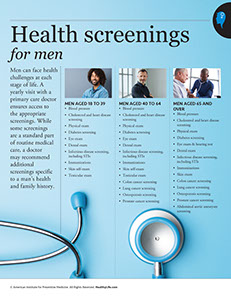
    Men can face health challenges at each stage of life. A yearly visit with a primary care doctor ensures access to the appropriate screenings. While some screenings are a standard part of routine medical care, a doctor may recommend additional screenings specific to a man’s health and family history.

    Men aged 18 to 39

    *  Blood pressure

    *  Cholesterol and heart disease screening

    *  Physical exam

    *  Diabetes screening

    *  Eye exam

    *  Dental exam

    *  Infectious disease screening, including STIs

    *  Immunizations

    *  Skin self-exam

    *  Testicular exam

    Men aged 40 to 64

    *  Blood pressure

    *  Cholesterol and heart disease screening

    *  Physical exam

    *  Diabetes screening

    *  Eye exam

    *  Dental exam

    *  Infectious disease screening, including STIs

    *  Immunizations

    *  Skin self-exam

    *  Testicular exam

    *  Colon cancer screening

    *  Lung cancer screening

    *  Osteoporosis screening

    *  Prostate cancer screening

    Men aged 65 and over

    *  Blood pressure

    *  Cholesterol and heart disease screening

    *  Physical exam

    *  Diabetes screening

    *  Eye exam & hearing test

    *  Dental exam

    *  Infectious disease screening, including STIs

    *  Immunizations

    *  Skin exam

    *  Colon cancer screening

    *  Lung cancer screening

    *  Osteoporosis screening

    *  Prostate cancer screening

    *  Abdominal aortic aneurysm screening

    © American Institute for Preventive Medicine
  • Health News: Sorting Fact From Fiction

    WELL-BEING

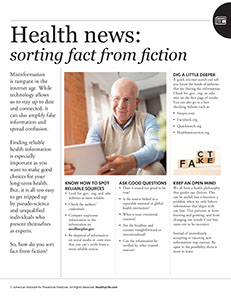
    Older man on reading on a tablet.

    Misinformation is rampant in the internet age. While technology allows us to stay up to date and connected, it can also amplify false information and spread confusion.

    Finding reliable health information is especially important as you want to make good choices for your long-term health. But, it is all too easy to get tripped up by pseudo-science and unqualified individuals who present themselves as experts.

    So, how do you sort fact from fiction?

    Know how to spot reliable sources

    *  Look for .gov, .org, and .edu websites as most reliable.

    *  Check the authors’ credentials.

    *  Compare suspicious information to the information onmedlineplus.gov.

    *  Be skeptical of information on social media or .com sites that you can’t verify from a more reliable source.

    Ask good questions

    *  Does it sound too good to be true?

    *  Is the source linked to a reputable national or global health institution?

    *  What is your emotional reaction?

    *  Are the headline and content straightforward or sensationalized?

    *  Can the information be verified by other trusted sources?

    Dig a little deeper

    A quick internet search can tell you know the kinds of websites that are sharing the information. Check for .gov, .org, or .edu sites on the first page of results. You can also go to a fact-checking website such as:

    *Snopes.com

    *Factcheck.org

    *Quackwatch.org

    *Healthnewsreview.org

    Keep an open mind

    We all have a health philosophy that guides our choices. This can be useful, but it becomes a problem when we only believe information that aligns with our bias. This prevents us from learning and growing, and from changing our minds if our bias turns out to be incorrect.

    Instead of immediately accepting or rejecting new information, stay curious. Be open to the possibility there is more to learn.

    © American Institute for Preventive Medicine
  • The Health Benefits Ofolive Oil

    HEALTHY EATING

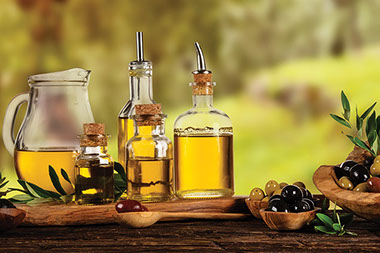
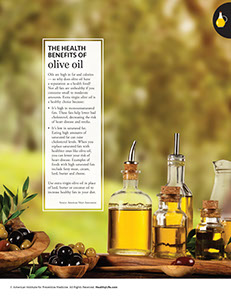
    Olive oil bottles on table.

    Oils are high in fat and calories – so why does olive oil have a reputation as a health food? Not all fats are unhealthy if you consume small to moderate amounts. Extra virgin olive oil is a healthy choice because:

    *  It’s high in monounsaturated fats. These fats help lower bad cholesterol, decreasing the risk of heart disease and stroke.

    *  It’s low in saturated fat. Eating high amounts of saturated fat can raise cholesterol levels. When you replace saturated fats with healthier ones like olive oil, you can lower your risk of heart disease. Examples of foods with high saturated fats include fatty meat, cream, lard, butter and cheese.

    Use extra virgin olive oil in place of lard, butter or coconut oil to increase healthy fats in your diet.

    Source: American Heart Association

    © American Institute for Preventive Medicine

  • Hand Washing Or Sanitizer?

    WELL-BEING

    Close up image of person washing hand with soap and water.

    If there’s one habit that’s good for everyone’s health, it’s hand washing. But is hand sanitizer just as good as soap and water? Maybe not. Hand sanitizers:

    *  Do not get rid of all germs.

    *  Don’t work well when hands have dirt or grease on them.

    *  May not remove dangerous chemicals, like pesticides and heavy metals.

    Hand washing does all these things – when you use soap and water and scrub for at least 20 seconds.

    Use hand sanitizer when you can’t get soap and water. But always choose the sink and soap when you can!

    Source: Centers for Disease Control and Prevention

    © American Institute for Preventive Medicine
  • Gut Check: Tips For Healthy Digestion

    SELF-CARE CORNER

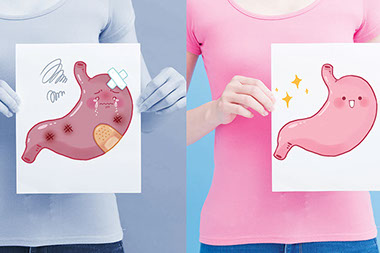
    Person holding a paper with a stomach illustration, one half happy stomach the other half a sick stomach.

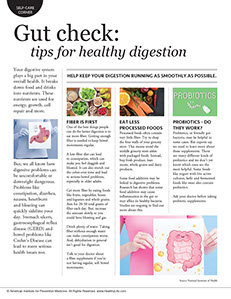
    Your digestive system plays a big part in your overall health. It breaks down food and drinks into nutrients. These nutrients are used for energy, growth, cell repair and more.

    But, we all know how digestive problems can be uncomfortable or downright dangerous. Problems like constipation, diarrhea, nausea, heartburn and bloating can quickly sideline your day. Stomach ulcers, gastroesophageal reflux disease (GERD) and bowel problems like Crohn’s Disease can lead to more serious health issues too.

    Help keep your digestion running as smoothly as possible.

    Fiber is first

    One of the best things people can do for better digestion is to eat more fiber. Getting enough fiber is needed to keep bowel movements regular.

    A low-fiber diet can lead to constipation, which can make you feel sluggish and bloated. It can also stretch out the colon over time and lead to serious bowel problems, especially in older adults.

    Get more fiber by eating foods like fruits, vegetables, beans and legumes and whole grains. Aim for 20-30 total grams of fiber each day. But, increase the amount slowly or you could have bloating and gas.

    Drink plenty of water. Taking fiber without enough water can make constipation worse. And, dehydration in general isn’t good for digestion.

    Talk to your doctor about a fiber supplement if you’re not having regular, soft bowel movements.

    Eat less processed foods

    Processed foods often contain very little fiber. Try to shop the four walls of your grocery store. This means avoid the middle grocery store aisles with packaged foods. Instead, buy fresh produce, lean meats, whole grains and dairy products.

    Some food additives may be linked to digestive problems. Research has shown that some food additives may cause inflammation in the gut or may affect its healthy bacteria. Studies are ongoing to find out more about this.

    Probiotics – do they work?

    Probiotics, or friendly gut bacteria, may be helpful in some cases. But experts say we need to learn more about these supplements. There are many different kinds of probiotics and we don’t yet know which ones are the most helpful. Some foods like yogurt with live active cultures, kefir and fermented foods like miso also contain probiotics.

    Ask your doctor before taking probiotic supplements.

    Source: National Institutes of Health

    © American Institute for Preventive Medicine
  • Go Nuts For A Healthy Heart

    HEALTHY EATING

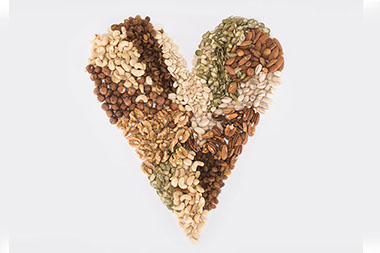
    Variety of nuts shaped into a heart.

    Nuts often get a reputation as being unhealthy. We add them to cookies and ice cream. People eat them by the handful at parties. But do nuts deserve a bad rap?

    Concerns about calories

    For years, many people avoided nuts because they are high in calories and fat. However, newer research finds that nuts can be an important part of a healthy diet. They contain many nutrients needed for body functions.

    The key is to eat nuts in moderation. This means you may need to eat smaller portions. Then, you can avoid eating too many calories from nuts.

    Look at the serving size on a package of nuts to get an idea of how much to eat. One serving may be quite small (2-4 tablespoons).

    Some Fats are Healthy

    Yes, most nuts are high in total fat. But these fats found in nuts actually promote good health! Most are high in healthy monounsaturated or polyunsaturated fats.

    Monounsaturated and polyunsaturated fats can help lower bad cholesterol, which can lower the risk of heart disease and stroke. The American Heart Association recommends people eat more of these fats from healthy sources like nuts and seeds.

    Protein packed

    Nuts are a good source of plant-based protein. Protein is an essential nutrient that the body needs for building muscle, repairing tissues and making hormones.

    It takes longer for the body to digest proteins than carbohydrates. That’s why eating some protein could help you feel less hungry than if you ate only carbohydrates, like crackers or bread.

    The Dietary Guidelines for Americans recommend that people eat healthy sources of protein, like those that come from nuts and seeds, and plant foods.

    Which types to eat

    Of course, there are many different kinds of nuts. Each type tastes different and may contain a variety of nutrients. As long as you’re not coating nuts with sugar and salt, any type can be healthy.

    Take a look at your favorite nut’s nutrition facts and go from there. For instance, macadamia nuts are one of the highest in calories and fat per ounce. But take those calories into account, and eat them instead of chips or cookies.

    Replace unhealthy, processed foods with nuts. You’ll get more nutrients and might even feel more full.

    Sources: Academy of Nutrition and Dietetics, National Institutes of Health, U.S. Department of Agriculture

    © American Institute for Preventive Medicine
  • Give Swiss Chard A Try

    HEALTHY EATING

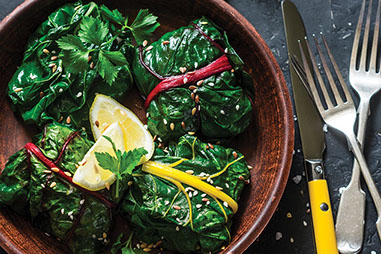
    Swiss chard wraps.

    When it comes to leafy greens, spinach and kale get most of the attention. But leafy greens are so nutritious. Why limit yourself to just two types?

    Swiss chard has less bitterness than kale, and offers plenty of important nutrients. Plus, this time of year, swiss chard is plentiful at farmers’ markets or the local grocery store. It can be used like any greens:

    *  Raw in a salad

    *  Sautéed or steamed

    *  Added to pasta  and soups

    Here’s more about swiss chard’s nutritional benefits:

    *  Rich in magnesium, potassium, vitamin A, vitamin C, several B vitamins and iron.

    *  One cup (chopped) contains more than 700 percent of your recommended daily intake of vitamin K, which is needed for bone health and blood clotting.

    *  Each cup contains only 35 calories and nearly 4 grams of fiber. Talk about a low-calorie and nutritious punch!

    Source: USDA Nutrient Database

    © American Institute for Preventive Medicine