Blog

  • Getting Your Kids To Eat Right

    Children’s Health

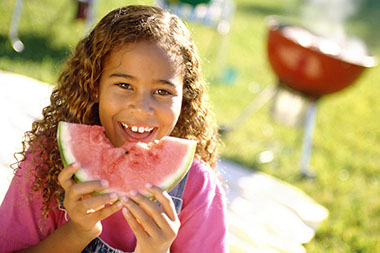
    Image of young girl eating watermelon.

    Persuading your child to develop good eating habits can be a challenge. Here are some pointers.

    *  Start your child’s day with a good breakfast. Hot cereal is a better choice than over-sweetened breakfast foods that are heavily advertised to kids.

    *  Buy snacks that are low in fat, sugar, and salt. Fresh fruit, unbuttered popcorn, whole-grain muffins, juice, milk, and yogurt are tasty, nutritious foods that appeal to kids. Crackers with small amounts of peanut butter or cheese are also acceptable between-meal treats.

    *  Limit fast-food meals. A steady diet of fast-food menu items tends to be high in fat and generally doesn’t provide all the essential nutrients a child needs.

    *  Don’t punish or reward behavior with food. Punishing children by withholding food can deprive them of required nutrients. Rewarding them with food can encourage overeating and weight gain.

    *  Set a good example. Children can’t be expected to adopt good eating habits if parents don’t.

    For nutrition-packed school lunches:

    *  Try sandwiches, using turkey, chicken, peanut butter with no added oil or sugar, and low-fat cheese or tuna fish instead of processed lunch meats.

    *  Pack finger foods like grapes, carrot sticks, celery stalks, and other fruit or crunchy vegetables instead of potato chips. Single-serving cans of fruit or applesauce are also handy ways to round out a lunch.

    Beware of convenience foods that claim to be nutritious.

    Here are some of the traps to look out for.

    *  Fruit drinks. Some contain only a small amount of fruit juice, but a lot of added sugar.

    *  Breakfast bars. These usually contain lots of sugar and very little in  the way of nutrition.

    *  Pre-popped popcorn. Some popcorn products have a lot of oil, salt, and contain artificial coloring.

    Teach Teens to Snack Wisely

    Once kids reach their teens, they tend to eat what they want, when they want it. But these years of rapid growth and change call for added nutrients which might be lacking in diets that are hit-or-miss. And as their bones grow rapidly, teens need plenty of calcium. Adolescent girls need plenty of iron to offset iron lost due to menstrual flow. If the right foods are available, between-meal snacking can actually boost a teen’s intake of those critical nutrients.

    *  Leftovers, like chicken drumsticks, are high in iron and make good late-night snacks.

    *  Low-fat milk, yogurt, and cheese can provide needed calcium.

    *  Keep the kitchen stocked with whole wheat crackers, sliced watermelon, fruit salad, and other ready-to-eat alternatives to junk food.

    *  Encourage teens to invent their own, easy-to-eat snacks, like “ants on a log”-celery stalks stuffed with peanut butter and dotted with raisins.

    Resources

    Page from A Year of Health Hints book by the American Institute for Preventive Medicine. www.HealthyLife.com. All rights reserved.

    © American Institute for Preventive Medicine
  • Getting Ready For Childbirth

    Pregnancy & Prenatal Care

    What to Do First

    *  Choose where you want to have your baby.

    *  Choose a health care provider.

    How to Get Ready

    *  Read books on pregnancy and childbirth.

    *  Take a childbirth class, if you can.

    *  Get regular prenatal care from your health care provider.

    Childbirth Classes Do These Things

    *  Tell you what happens when you give birth

    *  Show you and your partner (or other “coach”) what to do during labor and delivery

    *  Help lessen the fear of giving birth

    *  Help explain what happens with a Cesarean section (C-section). Knowing what to expect is helpful when a C-section is planned. It is helpful, too, if it is not planned, but needs to be done for the safety of you and your baby.

    *  Teach you how to work with the natural birthing process. You can do this through:

    – Exercises that make the muscles used in childbirth stronger

    – Massage

    – Focusing the mind

    – Relaxing and breathing methods

    You can find out about childbirth classes from:

    *  Your health care provider

    *  The maternity department of local hospitals

    *  Local education programs

    *  Local March of Dimes

    Prenatal Self-Care book by the American Institute for Preventive Medicine. www.HealthyLife.com. All rights reserved.

    © American Institute for Preventive Medicine
  • Getting Help For Violence And Abuse

    Women’s Health

    Violence uses force, power, or threats to cause physical or emotional harm on purpose.

    Abuse is one form of violence. It can be emotional, physical, financial, and/or sexual.

    It may not be easy to admit that you are the victim of abuse. You may be confused about what to do or how to find a way out.

    Time to Get Help When

    It is time to get help if the person you love, live with, or work with does any of these things:

    *  Puts you down in public.

    *  Criticizes you for little things.

    *  Keeps you from seeing or talking to family, friends, or co-workers.

    *  Monitors what you are doing all of the time.

    *  Keeps accusing you of being unfaithful.

    *  Destroys things you own or care about.

    *  Gets angry when he or she drinks alcohol or uses drugs.

    *  Blames you for his or her angry outbursts.

    *  Threatens to hurt you, children, or animals. Beats, chokes, hits, kicks, pushes, shoves, or slaps you or them, or hurts you in any way.

    *  Says it is your fault if he or she hurts you, then promises that it will not happen again.

    *  Threatens to or uses weapons against you.

    *  Forces you to have sex against your will. {The Department of Veterans Affairs uses the term military sexual trauma (MST) for sexual assault or repeated, threatening sexual harassment that occurred while a Veteran was in the service.}

    Causes

    Violence and abuse are ways to gain and keep control over others. Persons who commit violence or abuse come from all ethnic groups and backgrounds. Often, they have these problems:

    *  Poor skills to communicate.

    *  Past family violence. They may have been abused in the past. They may have seen one parent beat the other.

    *  Alcohol or drug problems.

    Regardless of the cause, no one deserves to be abused! Most often, persons who abuse others or commit violence, find it hard to change their behavior without expert help. If you are a victim of violence or abuse, get help and support.

    Getting Help

    *  If you are assaulted or threatened or need emergency help, call 911!

    *  If you are not in immediate danger, have a plan for times you feel unsafe or in danger or when you decide to leave the abusive setting.

    – Decide who you will call (e.g., police, neighbors, relatives, and a shelter). Make a list of these telephone numbers. Memorize the numbers, too.

    – Decide where you will go. If you have children, plan how you will take them with you. Have a plan for where they should go if you can’t get away. Practice these safety plans with your children. Plan how you will take your pets, too, if you can.

    *  To help recover from sexual assault or trauma, contact your doctor or health care provider for proper counseling and treatment. {Note: Veterans can receive free treatment for military sexual trauma (MST) at all VA health care facilities.}

    Be prepared to leave an abusive setting. Keep important items in a safe place (unknown to the person who is abusing you) until you are ready to leave or if you have to leave quickly. Get these items together ahead of time.

    *  Extra keys to your car, house, and safety deposit box.

    *  Cash. Credit cards and ATM card. Checkbook, bankbooks, and investment records or their account numbers.

    *  Jewelry or other small objects that you can sell in case you need money.

    *  Cell phone, a phone calling card, and phone numbers that you need.

    *  Personal papers for you and your children. These can be the original forms, copies of them, or information, such as numbers and dates written on paper. Items include:

    – Birth certificates and social security numbers.

    – Driver’s license, state ID, and passports.

    – Car registration, title, and insurance information.

    – Medical ID cards and medical records for you and your children.

    – Marriage license, divorce papers, legal papers for custody, restraining orders, etc.

    – House deed or lease agreement.

    Resources

    National Domestic Violence Hotline

    800.799.SAFE (799.7233)

    Rape, Abuse, and Incest National Network (RAINN)

    www.rainn.org

    National Sexual Assault Hotline

    800.656.HOPE (656.4673)

    National Sexual Assault Online Hotline

    https://ohl.rainn.org/online

    Women's Self-Care book by the American Institute for Preventive Medicine. www.HealthyLife.com. All rights reserved.

    © American Institute for Preventive Medicine
  • Gestational Diabetes

    Pregnancy & Prenatal Care

    A pregnant woman can have diabetes. If she didn’t have it before the pregnancy, it’s called gestational diabetes. (Gestational refers to pregnancy.) It can begin any time during pregnancy. It usually begins in the last half, though. It goes away after the baby is born. But the woman has a greater risk of getting diabetes later.

    Symptoms

    *  Feeling very tired

    *  Rapid weight gain

    *  Feeling very thirsty

    *  Having to pass urine often

    Also, a sign for gestational diabetes is when the baby gets too big during the pregnancy.

    All pregnant women should be screened for diabetes. Screening happens through urine and blood tests. Those are part of routine prenatal health care visits.

    Causes

    Any pregnant woman can develop gestational diabetes. But risk factors may be:

    *  Obesity before pregnancy

    *  High blood pressure before pregnancy

    *  Having a baby that weighed more than 9 pounds at birth in the past

    *  Having a stillbirth in the past

    *  Having a child with a birth defect in the past

    *  Being older than 25

    *  Being pregnant with more than one baby

    Treatment

    Special problems can be avoided with treatment. Without treatment, the baby can get too big. The mother may not be able to have a vaginal birth. Other problems are preeclampsia and preterm birth. Preterm birth is when the baby is born 3 or more weeks before the due date. There can also be delivery problems. But a woman with gestational diabetes can have a healthy baby. She needs proper medical care, though.

    Blood sugar must be controlled. This is done through:

    *  Special diet from the health care provider

    *  Exercises from the health care provider

    *  Insulin shots, in some cases, when diet and exercise are not enough. Insulin is a hormone. Among other things, it keeps blood sugar from getting too high. The provider teaches how to do the shots. The provider teaches the mother how to check her own blood sugar. It is important to do what the provider requests.

    *  Having prenatal visits more often. The provider checks the mother’s daily blood sugar record. Tests are done to see how the baby is doing.

    *  Extra care at delivery

    {Note: The baby should be checked for low blood sugar a day or so after birth.}

    Questions to Ask

    Self-Care / Prevention

    If you get diabetes during pregnancy:

    *  Follow the diet and exercise plan your health care provider or dietitian gives you.

    *  Drink at least 8 to 10 cups of fluids a day. Drink enough for your thirst. Limit ones with a lot of sugar. Examples: all kinds of sodas, fruit drinks and juices.

    *  Get plenty of rest when you feel tired.

    *  If you are told to do so, test your blood sugar levels at home. Your health care provider will tell you how. Keep a daily record of the results.

    *  After you have your baby, get your blood sugar checked when your doctor tells you to.

    {Note: Some pregnant women need to give themselves insulin shots at home. If your provider says you need to, you will be shown how. Be sure to give the insulin correctly. It’s an important way of taking care of yourself and your baby.}

    Prenatal Self-Care book by the American Institute for Preventive Medicine. www.HealthyLife.com. All rights reserved.

    © American Institute for Preventive Medicine
  • Genital Herpes

    Sexual Health

    Sexually transmitted infections (STIs) are ones that pass from one person to another through sexual contact. This can be from vaginal, anal, or oral sex, and from genital-to-genital contact. STIs are also called sexually transmitted diseases (STDs).

    Signs & Symptoms

    For Females and Males

    *  Painful sores and/or blisters on the genital area, anus, thighs, and/or buttocks.

    *  Itching, irritation, and tingling can occur 1 to 2 days before the outbreak of the blisters.

    *  Outbreaks may be triggered by stress, other illnesses, or vigorous sexual intercourse.

    After a few days, the blisters break open and leave painful, shallow ulcers. These can last from 5 days to 3 weeks.

    With outbreaks, especially the first one, there may be flu-like symptoms (swollen glands, fever, body aches). Outbreaks that follow are usually milder and shorter. Once infected, the virus lives in nerve cells. New outbreaks can occur even without contact.

    Causes

    *  Herpes simplex virus (HSV-1 or HSV-2). HSV-2 is the common cause. HSV-1 most often affects the oral area as cold sores.

    *  The virus is spread by direct skin-to-skin contact from the site of infection to the contact site. It can be spread when no symptoms are noticed. Oral sex can spread herpes from the mouth to the genital area and from the genital area to the mouth.

    Treatment

    *  There is no cure. Antiviral medicines can help prevent and shorten outbreaks. During delivery, an infant may need protection from infection if the mother has active herpes.

    *  Self-care measures.

    Questions to Ask

    Self-Care / Prevention

    Safer Sex To Help Prevent STIs

    *  The only sure way to avoid STIs is not having sex. This includes intercourse, oral sex, anal sex, and genital-to-genital contact. Caressing, hugging, dry kissing, and masturbation are no risk or extremely low-risk practices. So is limiting your sexual contact to one person your entire life. This is if your partner does not have an STI and has sex only with you.

    *  Latex and polyurethane condoms can help reduce the risk of spreading HIV and other STIs (i.e., chlamydia, gonorrhea, and trichomoniasis). To do this, they must be used the right way for every sex act. They do not get rid of the risk entirely. Barriers made of natural membranes, such as from lamb, do not give good protection against STIs.

    *  Females and males should use latex or polyurethane condoms every time they have genital-to-genital contact and/or oral sex. Use polyurethane condoms if either partner is allergic to latex. You don’t need condoms to prevent STIs if you have sex only with one partner and neither of you has an STI.

    *  For oral-vaginal sex and oral-anal sex, use latex dams (“doilies”). These are latex squares.

    *  Latex condoms with spermicides, such as nonoxynol-9 (N-9) are no better than other lubricated condoms for preventing HIV/STIs. Spermicides with N-9 do not prevent chlamydia, cervical gonorrhea, or HIV. on’t use spermicides alone to prevent HIV/STIs. Using spermicides with N-9 often has been linked with genital lesions which may increase the risk of spreading HIV. Also, N-9 may increase the risk of spreading HIV during anal intercourse.

    *  Use water-based lubricants, such as K-Y Brand Jelly. Don’t use oil-based or “petroleum” ones, such as Vaseline. They can damage latex barriers.

    *  To lower your risk for HPV, use latex or polyurethane condoms. These work best at covering areas of the body that HPV is most likely to affect. A diaphragm does not prevent the spread of HPV.

    *  Don’t have sex while under the influence of drugs or alcohol. You are less likely to use “safer sex” measures.

    *  Limit sexual partners. Sexual contact with many persons increases the risk for STIs, especially if no protection is used.

    *  Discuss a new partner’s sexual history with him or her before you start having sex. Know that persons are not always honest about their sexual past.

    *  Avoid sexual contact with persons whose health status and health practices are not known.

    *  Follow your doctor’s advice to check for STIs.

    For Genital Herpes

    *  If prescribed an oral antiviral medicine, take it as advised.

    *  Bathe the affected area twice a day with mild soap and water. Pat dry with a towel or use a hair dryer set on warm. Using a colloidal oatmeal soap or bath may be soothing.

    *  Use a sitz bath to soak the affected area. You can buy a sitz bath basin from a medical supply or drug store.

    *  Apply ice packs on the affected genital area for 5 to 10 minutes to relieve itching and swelling.

    *  Wear loose-fitting pants or skirts. Don’t wear pantyhose. Wear cotton (not nylon) underwear.

    *  If pain is made worse when you urinate, squirt tepid water near the urinary opening while you pass urine. Or, urinate while using a sitz bath.

    *  Take a mild pain reliever as directed.

    *  Ask your doctor about using a local anesthetic ointment, such as lidocaine, during the most painful part of an outbreak.

    *  Wash your hands if you touch the blisters or sores. Don’t touch your eyes during an outbreak. Doing this could spread the virus to your eyes.

    *  To help avoid spreading the virus to others, use latex barriers during sex and skin-to-skin contact.

    Resources

    American Social Health Association (ASHA)

    www.ashastd.org

    CDC National STD Hotline

    800.CDC.INFO (232.4636)

    www.cdc.gov/STD

    Healthier at Home book by the American Institute for Preventive Medicine. www.HealthyLife.com. All rights reserved.

    © American Institute for Preventive Medicine
  • General Safety Guidelines

    Student Health

    *  Learn your school’s safety guidelines and follow them. Read your school’s safety handbook. Memorize the telephone number(s) for emergency help, such as 9-1-1. Carry a cell phone with you at all times. Pre-program emergency telephone numbers in the phone to be able to call them quickly.

    *  If you choose to drink, do so responsibly. Don’t use drugs. Be careful around other persons who drink heavily and/or use drugs, too. Designate a sober driver.

    *  Always wear a seatbelt in a motor vehicle. Wear a helmet when riding on a motorcycle, bike, or when rollerblading.

    *  To avoid being robbed, assaulted, etc.

    – When you go out, go with a friend or a group of people, especially at night and to unfamiliar places.

    – Use ATM machines in well-lit areas, preferably while a friend is with you.

    – Keep your doors and windows locked, especially when you are alone.

    – Lock your bike with a U-shaped lock that is hard for someone to remove.

    – Hold your backpack, purse, etc., securely so someone can’t grab it from you. Don’t leave these and other personal items, such as your laptop computer, unattended.

    – Have your car, house, or room keys in your hand, ready to unlock your doors.

    – If you use social networking Web sites, such as facebook, be aware of potential dangers. Find out safety tips fromwww.wiredsafety.org.

    – Report suspicious behaviors and activities to your school’s security or the police.

    – Take a class, etc., to learn how to avoid sexual assault.

    *  To Avoid Fires:

    – Don’t smoke in bed or when you are very tired. Better yet, don’t smoke at all!

    – Follow fire safety precautions when cooking in your dorm room or kitchen.

    – Follow your school’s policy on candle use.

    – Keep a working fire extinguisher in your dorm room or house.

    *  To Manage Conflict Without Violence:

    – Be assertive, not aggressive, when you communicate.

    – Learn to deal with frustration, disappointment, rejection, ridicule, jealousy, and anger.

    – Accept differences in others, including sexual preferences, ethnic and religious backgrounds, etc. You do not need to change your convictions, but don’t expect other persons to change their convictions either.

    – Be an active listener. Pay attention to what the other person is saying and try to understand his or her point of view or simply accept it as an opinion.

    – Take a class or seminar in conflict resolution to gain skills in managing conflict.

    – When you can’t resolve a conflict on your own, get help.

    Resources

    Your school’s Student Health Service, Student Counseling or Mental Health Service, Office of Student Conflict Resolution, Office of the Ombudsman, or Student Affairs

    The National Crime Prevention Council’s Online Resource Center

    www.ncpc.org

    For Sexual Assault/Hate Crimes/Other Crimes: The National Center for Victims of Crime

    www.ncvc.org

    National Domestic Violence Hotline

    800.799.SAFE (799.7233)

    www.ndvh.org

    Student Self-Care book by the American Institute for Preventive Medicine. www.HealthyLife.com. All rights reserved.

    © American Institute for Preventive Medicine
  • Gallstones

    Abdominal & Urinary Conditions

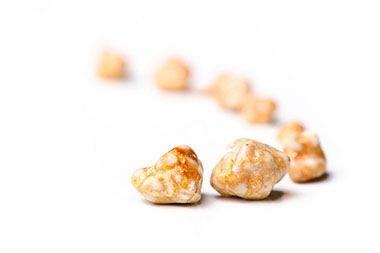
    Image of gallstones.

    The gallbladder stores bile. This substance helps digest fats. Gallstones form when bile hardens into pieces of stone-like material. These deposit in the gallbladder or bile ducts (which carry bile to the small intestine). The stones can range in size from less than a pinhead to 3 inches across.

    Signs & Symptoms

    *  Feeling bloated and gassy, especially after eating fried or fatty foods.

    *  Steady pain in the upper right abdomen lasting 20 minutes to 5 hours.

    *  Pain between the shoulder blades or in the right shoulder.

    *  Indigestion. Nausea. Vomiting. Severe abdominal pain with fever. Sometimes a yellow color to the skin and/or the whites of the eyes.

    {Note: Gallstone symptoms can be hard to tell apart from heart-related or other serious problems. A doctor should evaluate any new symptoms.}

    Gallstones

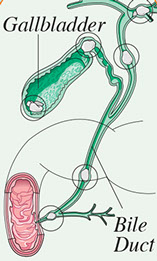
    Illustration of gallbadder with gallstones.

    Causes

    *  Ethnic background (i.e., Native Americans) and family history of gallstones. Being middle age.

    *  Obesity. Very rapid weight loss.

    *  Being female. Having had many pregnancies. Taking estrogen.

    *  Having diabetes. Having diseases of the small intestine.

    Treatment

    *  A low-fat diet.

    *  Surgery to remove the gallbladder. This is the most common treatment. You can still digest foods without a gallbladder.

    Questions to Ask

    Self-Care / Prevention

    *  Avoid high-fat foods. Don’t eat large meals.

    *  Get to and stay at a healthy body weight. If you are overweight, lose weight slowly (1 to 1-1/2 pounds per week). Do not follow a rapid weight loss diet unless under strict medical guidance.

    *  Eat a high fiber, low-fat diet.

    Healthier at Home book by the American Institute for Preventive Medicine. www.HealthyLife.com. All rights reserved.

    © American Institute for Preventive Medicine

  • Fun Ways To Get The Water Your Body Needs

    General Health Conditions

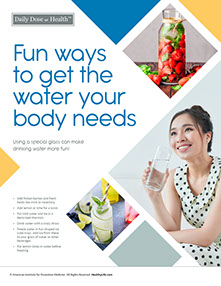
    Happy women holding a glass of water.

    Using a special glass can make drinking water more fun!

    *  Add frozen berries and fresh herbs like mint or rosemary.

    *  Add lemon or lime for a twist.

    *  Put cold water and ice in a decorated thermos.

    *  Drink water with a crazy straw.

    *  Freeze water in fun-shaped ice cube trays. Add ice from these to your glass of water or other beverages.

    *  Put lemon slices in water before freezing.

    Health at Home Lifetime book by the American Institute for Preventive Medicine. www.HealthyLife.com. All rights reserved.

    © American Institute for Preventive Medicine
  • Frostbite & Hypothermia

    First Aid

    Frostbite freezes the skin. It can damage tissue below the skin, too. Most often, frostbite affects the toes, fingers, earlobes, chin, and tip of the nose.

    Hypothermia is when body temperature drops below 96ºF. The body loses more heat than it can make. This usually occurs from staying in a cold place for a long time.

    Frostbite & Frostnip

    Signs & Symptoms

    *  Cold, numb skin swells and feels hard and solid.

    *  Loss of function. Absence of pain.

    *  Skin color changes from white to red to purple. Blisters occur.

    *  Slurred speech.

    *  Confusion.

    Frostnip is a less serious problem. The skin turns white or pale and feels cold, but the skin does not feel hard and solid.

    Causes

    When temperatures drop below freezing, frostbite and frostnip can occur. Both can set in very slowly or very quickly. This will depend on how long the skin is exposed to the cold and how cold and windy it is.

    Hypothermia

    Signs & Symptoms

    With mild hypothermia, symptoms include: Shivering; slurred speech; memory lapses; and the abdomen and back feel cold.

    With moderate hypothermia, shivering stops, but the skin feels ice cold and looks blue. The person may act confused, drowsy, very cranky, and/or stuporous. Muscles may be rigid and stiff. Pulse rate and breathing slow down.

    With severe hypothermia, the person has dilated pupils, no response to pain, and loses consciousness. The person appears to be dead. Death occurs in half or more of persons with severe hypothermia.

    Causes

    *  Exposure to cold temperatures (wet or dry). Many factors increase the risk. Examples are: Wet clothing or lying on a cold surface; circulation problems; diabetes; and old age. The elderly are more prone to hypothermia if they live in a poorly heated home and do not dress warm enough.

    *  Immersion. This can be from 6 hours or less of exposure to cold water immersion. It can also be from water immersion or exposure on land to cold, wet weather near freezing for up to 24 hours.

    *  Shock.

    Treatment

    Self-care measures can treat frostnip. Prompt emergency medical care is needed for frostbite to keep the area affected from getting infected and to prevent the loss of a limb. Hypothermia needs emergency medical care.

    Wind Chill Temperature

    As the wind increases, the body is cooled at a faster rate. This causes the skin temperature to drop. Wind chill temperature combines outdoor air temperature and wind speed to give a temperature of what it “feels like” on the skin. The National Weather Service has a “Wind Chill Chart” that shows temperatures, wind speeds, and exposure times that cause frostbite. To get this, accesswww.nws.noaa.gov/om/windchill.

    Questions to Ask

    {Note: The damage from exposure to the cold may not be noted for 72 hours.}

    Self-Care / First Aid

    First Aid for Frostbite and Hypothermia Before Emergency Care

    *  Gently move the person to a warm place and Call 9-1-1!

    *  Check for a response. Give Rescue Breaths or CPR, as needed.

    *  Loosen or remove wet and/or tight clothing. Remove jewelry.

    *  Don’t rub the area with snow or soak it in cold water.

    *  Warm the affected area by soaking it in a tub of warm water (101ºF to 104ºF) and an antiseptic solution, such as Betadine.

    *  Stop when the affected area becomes red, not when sensation returns. This should take about 45 minutes. If done too fast, thawing can be painful and blisters may develop.

    *  If warm water is not available, cover the person with blankets, coats, etc., or place the frostbitten body part in a warm body area, such as an armpit or on the abdomen (human heat) or use a blow dryer, if available.

    *  Keep exposed areas elevated, but protected.

    *  Don’t rub or massage a frostbitten area.

    *  Protect the exposed area from the cold. It is more sensitive to re-injury.

    *  Don’t break blisters.

    First Aid for Frostnip

    *  Warm the affected area. This can be done a number of ways:

    – Place cold fingers in armpits.

    – Place cold feet onto another person’s warm stomach.

    – Put the affected area in warm water (101ºF to 102ºF).

    After warming the area, the skin may be red and tingling. If it is not treated, frostnip can lead to frostbite.

    *  Protect the exposed area from the cold. It is more sensitive to re-injury.

    To Prevent Frostbite and Outdoor Hypothermia

    *  Stay indoors, as much as possible, when it is very cold and windy.

    *  Wear clothing made of wool or polypropylene. These fabrics stay warm even when wet. Layer clothing. Wear 2 or 3 pairs of socks instead of 1 heavy pair. Wear roomy shoes. Do not wear items that constrict the hands, wrists, or feet.

    *  Wear a hat that keeps your head and ears warm. A major source of heat loss is through the head.

    Healthier at Home book by the American Institute for Preventive Medicine. www.HealthyLife.com. All rights reserved.

    © American Institute for Preventive Medicine