Blog

  • Protect Yourself – Preventing Medical Errors

    Medical Care

    Medical errors are a leading cause of death and injury. It has been reported that about 195,000 patients a year die in U.S. hospitals due to medical errors that could have been prevented. This brochure lists important tips on what you can do to help protect yourself from medical errors.

    Medical Errors

    Medical errors occur when a planned part of medical care doesn’t work out or when the wrong plan was used in the first place. Medical errors can occur anywhere in the health care system, including:

    *  Hospitals and clinics.

    *  Outpatient surgery centers.

    *  Doctors’ and other healthcare providers’ offices.

    *  Nursing homes.

    *  Pharmacies.

    *  Patients’ homes.

    Examples of medical errors are:

    *  A wrong medicine is prescribed or taken. Too much or not enough medicine is taken. Harmful medication interactions occur.

    *  A patient is given blood that doesn’t match his or her own type.

    *  Diagnostic tests are not ordered. Test results are misinterpreted or action is not taken on abnormal test results.

    *  The wrong diagnosis is made. This can lead to an incorrect choice of therapy.

    *  Equipment failure occurs.

    *  Mistakes are made before, during, and after surgery.

    *  Guidelines are not followed to prevent infections.

    Most errors result from problems created by today’s complex health care system. But errors also happen when doctors and their patients have problems communicating.

    What Can You Do?

    The single most important way you can help to prevent errors is to be an active member of your health care team. Do this A.S.A.P.

    *  Ask questions.

    *  Speak up for your needs.

    *  Acquire information.

    *  Protect yourself.

    Take an active role in every decision about your health care. Research shows that patients who are more involved with their care tend to get better results. If necessary, have a family member or friend oversee your care. Specific tips, based on scientific evidence about what works best, follow.

    Tips

    Hospital Tips

    *  Ask all health care workers who have direct contact with you if they have washed or sanitized their hands. Hand washing and hand sanitizing are important ways to prevent the spread of infections in hospitals.

    *  When you are being discharged from the hospital, ask for an explanation and written instructions for the treatment plan you will use at home. This includes learning about your medicines and finding out when you can get back to your regular activities. Research shows that at discharge time, doctors think their patients understand more than they really do about what they should or should not do when they return home.

    Surgery Tips

    *  If you are having surgery, make sure that you, your doctor, and your surgeon all agree and are clear on exactly what will be done. Doing surgery at the wrong-site (for example, operating on the left knee instead of the right) is rare. But even once is too often. The good news is that wrong-site surgery is 100 percent preventable. Surgeons at VA hospitals outline or trace the area on the surgery site. The surgeon then initials the area. At a non-VA hospital, sign your initials directly on the site to be operated on.

    Medicine Tips

    *  Make sure that all of your doctors know about everything you are taking. This includes prescription and over-the-counter medicines, and dietary supplements, such as vitamins and herbs. Keep a complete and up-to-date list of all the medicines you take or print one from yourwww.myhealth.va.govWeb site. If you are not already registered for this, see how to do so on the last panel of this brochure. At least once a year, show all of your medicines and supplements, in their original containers, to your doctor. Doing this can help you and your doctor talk about them and find out if there are any problems. It can also help your doctor keep your records up-to-date, which can help you get better quality care.

    *  Make sure each doctor who prescribes medicine for you knows about any allergies and adverse reactions you have had to medicines and to foods, such as shrimp. This can help you avoid getting a medicine that can harm you. See that things that you are allergic to are written clearly in your medical records and on your hospital chart. Wear a medical ID tag that lists your health conditions and allergies.

    *  When your doctor writes a prescription for you, make sure you can read it. If you can’t read your doctor’s handwriting, your pharmacist might not be able to either. Ask your doctor for one you can read.

    *  Ask for information about your medicines in terms you can understand-both when your medicines are prescribed and when you receive them.

    – What is the medicine for?

    – How am I supposed to take it, and for how long? Speak up if it is hard for you to swallow pills. Some medicines are not effective if they are crushed before swallowed. Ask your doctor to write a prescription for medicine in a form you are better able to take.

    – What side effects are likely? What do  I do if they occur?

    – Is this medicine safe to take with other medicines or dietary supplements I am taking?

    – What food, drink, or activities should  I avoid while taking this medicine?

    *  When you pick up your medicine from the pharmacy, ask, “Is this the medicine that my doctor prescribed?” If you get medicines refilled through your VA Rx Refill service, call your Pharmacy Service or your healthcare provider for questions and concerns. A study by the Massachusetts College of Pharmacy and Allied Health Sciences found that 88 percent of medicine errors involved  the wrong drug or the wrong dose.

    *  If you have any questions about the directions on your medicine labels, ask. Medicine labels can be hard to understand. For example, ask if “four doses daily” means taking a dose every 6 hours around the clock or just during regular waking hours.

    *  Ask your pharmacist for the best device to measure your liquid medicine. Also, ask questions if you’re not sure how to use it. Research shows that many people do not understand the right way to measure liquid medicines. For example, many use household teaspoons, which often do not hold a true teaspoon of liquid. Special devices, like marked syringes, help people to measure the right dose. Being told how to use the devices helps even more.

    *  Ask for written information about the side effects your medicine could cause. It’s hard to remember everything your doctor tells you. Written information about medicines can help you recognize problem side effects and then give that information to their doctor or pharmacist.

    Steps You Can Take

    *  Speak up if you have questions or concerns. You have a right to question anyone who is involved with your care.

    *  Make sure that someone, such as your personal doctor, is in charge of your care. This is especially important if you have many health problems or are in a hospital.

    *  Make sure that all health professionals involved in your care have important health information about you. Do not assume that everyone knows everything they need to.

    *  Ask a family member or friend to be there with you and to be your advocate (someone who can help get things done and speak up for you if you can’t). Even if you think you don’t need help now, you might need it later.

    *  If you have a test or procedure, don’t assume that no news is good news. Ask about the results and find out what the results mean for you.

    *  Learn about your condition and treatments by asking your doctor and nurse and by using other reliable sources. You can get treatment recommendations based on the latest scientific evidence from the National Guidelines Clearinghouse™ atwww.guideline.gov.

    *  Get reliable, secure Veterans health information, from:www.myhealth.va.gov. Complete the “In Person Authentication (IPA)” process. It’s easy, quick and of course, free. All you need to do is go to your VA Medical Center or VA clinic and tell a VA staff/volunteer or contact person that you want to complete the In-Person Authentication process.

    *  The In Person Authentication (IPA) is used to verify your user identity for information and tools you need to improve and help protect your health. You’ll be able to see and reorder your prescriptions from your home or clinic kiosk. Coming soon, you will be able to schedule appointments, laboratory tests, and X-rays. Next year, you will be able to send secure messages to your health care team.

    Cover image to the Protect Yourself brochure by the American Institute for Preventive Medicine. www.HealthyLife.com. All rights reserved.

    © American Institute for Preventive Medicine

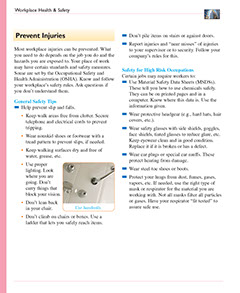
  • Prevent Injuries

    Work Life

    Most workplace injuries can be prevented. What you need to do depends on the job you do and the hazards you are exposed to. Your place of work may have certain standards and safety measures. Some are set by the Occupational Safety and Health Administration (OSHA). Know and follow your workplace’s safety rules. Ask questions if you don’t understand them.

    General Safety Tips

    *  Help prevent slip and falls.

    – Keep walk areas free from clutter. Secure telephone and electrical cords to prevent tripping.

    – Wear nonskid shoes or footwear with a tread pattern to prevent slips, if needed.

    – Keep walking surfaces dry and free of water, grease, etc.

    – Use proper lighting. Look where you are going. Don’t carry things that block your vision.

    – Don’t lean back in your chair.

    – Don’t climb on chairs or boxes. Use a ladder that lets you safely reach items.

    *  Don’t pile items on stairs or against doors.

    *  Report injuries and “near misses” of injuries to your supervisor or to security. Follow your company’s rules for this.

    Safety for High Risk Occupations

    Certain jobs may require workers to:

    *  Use Material Safety Data Sheets (MSDSs). These tell you how to use chemicals safely. They can be on printed pages and in a computer. Know where this data is. Use the information given.

    *  Wear protective headgear (e.g., hard hats, hair covers, etc.).

    *  Wear safety glasses with side shields, goggles, face shields, tinted glasses to reduce glare, etc. Keep eyewear clean and in good condition. Replace it if it is broken or has a defect.

    *  Wear ear plugs or special ear muffs. These protect hearing from damage.

    *  Wear steel-toe shoes or boots.

    *  Protect your lungs from dust, fumes, gases, vapors, etc. If needed, use the right type of mask or respirator for the material you are working with. Not all masks filter all particles or gases. Have your respirator “fit tested” to assure safe use.
    Healthier at Home book by the American Institute for Preventive Medicine. www.HealthyLife.com. All rights reserved.

    © American Institute for Preventive Medicine
  • Prevent Musculoskeletal Disorders

    Work Life

    Musculoskeletal Disorders (MSDs) affect muscles, tendons, nerves, joints, ligaments, cartilage, and discs in the spine. They do not result from slips, falls, or similar accidents. Common Work-Related Musculoskeletal Disorders (WMSDs) are low back pain, carpal tunnel syndrome, and tendonitis. These are caused by:

    *  Repeating the same motion. This can result in Repetitive Motion Injuries.

    *  Awkward or static postures

    *  Using a great deal of force to do a job

    *  Vibration

    WMSDs can be prevented or reduced using ergonomics. This is the science of fitting the job to the worker.

    One way to prevent and deal with WMSDs is to use proper workstation positions.

    Other Workstation Proper Positions

    *  Keep your head upright and your ears, shoulders, and hips in a straight line.

    *  Keep your work within reach without having to stretch or strain your arms, shoulders, or back. Don’t stretch to reach items on an assembly line. Wait for the items to reach you.

    *  Change positions or tasks often. This avoids repeated stress on a single body part.

    *  Use the proper tools for the job. Use tools made to reduce vibration and/or pressure, if needed.

    Healthier at Home book by the American Institute for Preventive Medicine. www.HealthyLife.com. All rights reserved.

    © American Institute for Preventive Medicine
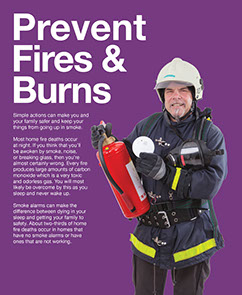
  • Prevent Fires & Burns

    Home Safety

    Do This, Not That

    Simple actions can make you and your family safer and keep your things from going up in smoke.

    Most home fire deaths occur at night. If you think that you’ll be awoken by smoke, noise, or breaking glass, then you’re almost certainly wrong. Every fire produces large amounts of carbon monoxide which is a very toxic and odorless gas. You will most likely be overcome by this as you sleep and never wake up.

    Smoke alarms can make the difference between dying in your sleep and getting your family to safety. About two-thirds of home fire deaths occur in homes that have no smoke alarms or have ones that are not working.

    General Guidelines

    Cooking Safety

    Electrical Safety

    Safe at Home - Do This, Not That Book. Published by the American Institute for Preventive Medicine.

    © American Institute for Preventive Medicine
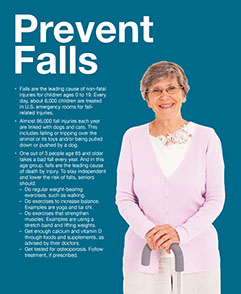
  • Prevent Falls

    Home Safety

    Do This, Not That

    *  Falls are the leading cause of non-fatal injuries for children ages 0 to 19. Every day, about 8,000 children are treated in U.S. emergency rooms for fall-related injuries.

    *  Almost 86,000 fall injuries each year are linked with dogs and cats. This includes falling or tripping over the animal or its toys and/or being pulled down or pushed by a dog.

    *  One out of 3 people age 65 and older takes a bad fall every year. And in this age group, falls are the leading cause of death by injury.

    Older Adults

    People with Special Needs

    General Guidelines

    Safe at Home - Do This, Not That Book. Published by the American Institute for Preventive Medicine. www.HealthyLife.com. All rights reserved.

    © American Institute for Preventive Medicine
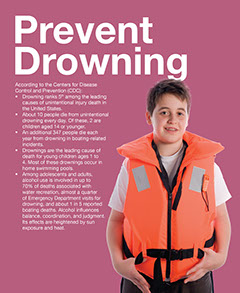
  • Prevent Drowning

    Home Safety

    Do This, Not That

    According to the Centers for Disease Control and Prevention (CDC):

    *  Drowning ranks 5th among the leading causes of unintentional injury death in the United States.

    *  About 10 people die from unintentional drowning every day. Of these, 2 are children aged 14 or younger.

    *  An additional 347 people die each year from drowning in boating-related incidents.

    *  Drownings are the leading cause of death for young children ages 1 to 4. Most of these drownings occur in home swimming pools.

    *  Among adolescents and adults, alcohol use is involved in up to 70% of deaths associated with water recreation, almost a quarter of Emergency Department visits for drowning, and about 1 in 5 reported boating deaths. Alcohol influences balance, coordination, and judgment. Its effects are heightened by sun exposure and heat.

    General Guidelines

    Safe at Home - Do This, Not That Book. Published by the American Institute for Preventive Medicine. www.HealthyLife.com. All rights reserved.

    © American Institute for Preventive Medicine
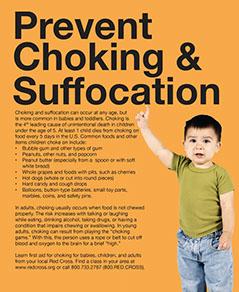
  • Prevent Choking & Suffocation

    Home Safety

    Do This, Not That

    Choking and suffocation can occur at any age, but is more common in babies and toddlers. Choking is the 4th leading cause of unintentional death in children under the age of 5. At least 1 child dies from choking on food every 5 days in the U.S. Common foods and other items children choke on include:

    *  Bubble gum and other types of gum

    *  Peanuts, other nuts, and popcorn

    *  Peanut butter (especially from a  spoon or with soft white bread)

    *  Whole grapes and foods with pits, such as cherries

    *  Hot dogs (whole or cut into round pieces)

    *  Hard candy and cough drops

    *  Balloons, button-type batteries, small toy parts, marbles, coins, and safety pins.

    In adults, choking usually occurs when food is not chewed properly. The risk increases with talking or laughing while eating, drinking alcohol, taking drugs, or having a condition that impairs chewing or swallowing. In young adults, choking can result from playing the “choking game.” With this, the person uses a rope or belt to cut off blood and oxygen to the brain for a brief “high.”

    Learn first aid for choking for babies, children, and adults from your local Red Cross. Find a class in your area atwww.redcross.orgor call 800.733.2767 (800.RED.CROSS).

    Adults

    Children

    Safe at Home - Do This, Not That Book. Published by the American Institute for Preventive Medicine. www.HealthyLife.com. All rights reserved.

    © American Institute for Preventive Medicine

  • Prevent Burnout 2

    Work Life

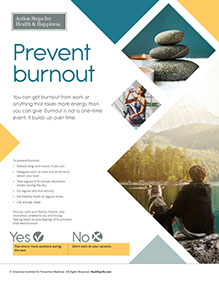
    Man sitting on roack along a lake with his dog.

    You can get burnout from work or anything that takes more energy than you can give. Burnout is not a one-time event. It builds up over time.

    To prevent burnout:

    *  Reduce long work hours, if you can.

    *  Delegate tasks at work and at home to lessen your load.

    *  Take regular 5-10 minute relaxation breaks during the day.

    *  Do regular physical activity.

    *  Eat healthy foods at regular times.

    *  Get enough sleep.

    *  Plan one or more vacations during the year.

    *  Don’t work on your vacation.

    Discuss, with your family, friends, and coworkers, problems you are having. Talking helps to ease feelings of frustration that feed burnout.

    ays to Well-Being book by the American Institute for Preventive Medicine. www.HealthyLife.com. All rights reserved.

    © American Institute for Preventive Medicine