Blog

  • Make “Be Happier” A Goal

    Mental Health Care

    Women wearing head phones in a dance position.

    Happiness is contagious. If you are happy, tell someone. Listen to reasons others are happy, too.

    *  Schedule fun and relaxing times with family and friends.

    *  Find your passion in life. Every day, week, or month, do something you enjoy and look forward to.

    *  Find satisfaction in using your talents.

    *  Try a new hobby. Take a class in something that interests you.

    Minding Your Mental Health Book. Published by the American Institute for Preventive Medicine. www.HealthyLife.com. All rights reserved.

    © American Institute for Preventive Medicine

  • Major Illness Warning Signs

    Medical Care

    It is better to prevent an illness than to get it. The next best thing is to detect and treat an illness early.

    Prevention

    *  Maintain a healthy body weight.

    *  Do regular exercise.

    *  Eat healthy.

    – Eat 5 or more servings of fruits and vegetables a day. Eat whole-grain breads, cereals, and bran. Eat kidney and other beans, peas, and soy foods, such as tofu.

    – Have 20 to 35 grams of dietary fiber a day.

    – Follow a low saturated fat diet. Strictly limit trans fats.

    – Limit cholesterol to 300 milligrams per day.

    – Eat salt-cured, salt-pickled, and smoked foods only once in a while, if at all.

    *  Limit alcohol to 2 drinks per day for men; 1 drink per day for women and persons age 65 and older.

    *  Don’t smoke or use tobacco products. Avoid secondhand smoke.

    *  Limit exposure to cancer causing agents, such as asbestos, pesticides, etc.

    *  Have X-rays only when needed.

    *  Limit your exposure to the sun, sun lamps, and tanning booths. When you are in the sun, protect your skin.

    *  Manage stress.

    *  Take the medicines your doctor prescribes.

    *  Talk to your doctor about taking vitamins, minerals, and other supplements.

    *  Have regular health screenings.

    *  Ask your doctor if there are other things you can do to lower your risk for health problems, especially if you are at a high risk for them. Examples include:

    – Breast cancer

    – Diabetes

    – Heart disease

    – High blood pressure

    – Osteoporosis

    – Stroke

    * Adults should also be screened for alcohol misuse, depression, obesity, and tobacco use. If you are at an increased risk for an illness, tests may need to be done sooner. Extra tests, such as screenings for diabetes, may also be needed. Follow your doctor’s advice.

    1. Screening guidelines vary with different health groups. For ages 40-49 and 75+, discuss your risk for breast cancer and the pros and cons of screening with your doctor. If you are at a high risk for breast cancer, seek expert medical advice about screening and prevention.

    2. Prostate-specific antigen (PSA) blood test screening guidelines vary with different health groups. Ask your doctor if and at what age you should start discussing the benefits and risks of getting PSA blood tests.

    Cancer

    When cancer first develops, there may be no pain or other signs. That’s why screening tests are important. As different types of cancers grow, warning signs may be present. These signs may be due to problems other than cancer, too. See your doctor to find out. In many cases, the sooner cancer is found and treated, the better the chances for a full recovery.

    For Bladder Cancer

    *  Blood in the urine. The color of the urine can be deep red or it can be a faint rust or smokey color.

    *  Pain when you urinate.

    *  The need to urinate often or urgently.

    For Breast Cancer

    *  A lump or thickening: In the breast; in the surrounding area; along the collar bone and below the breast; or in the underarm area.

    *  A change in the size or shape of the breast.

    *  A nonmilky or bloody discharge from the nipple.

    *  A change in the color or feel of the skin of the breast, nipple, or areola (the brown or pink area around the nipple). Dimpled, puckered, or scaly skin.

    For Colon and Rectal Cancers

    *  A change in bowel habits.

    *  Constipation. Having stools more often and/or loose stools.

    *  A feeling that the bowel does not empty all the way.

    *  Blood in or on the stool. This can be bright red or very dark in color.

    *  Stools that are more narrow than usual.

    *  Stomach bloating, fullness, and/or cramps.

    *  Frequent gas pains.

    *  Weight loss for no known reason.

    *  Constant tiredness.

    For Kidney Cancer

    *  Blood in the urine.

    *  A lump or mass that can be felt in the kidney area.

    *  A dull ache or pain in the back or side.

    *  An unexplained cough for more than 3 weeks.

    For Lung Cancer

    *  A cough that doesn’t go away. This could be a “smoker’s cough” that gets worse.

    *  Constant chest pain. Back pain in some persons.

    *  Hoarseness.

    *  Shortness of breath and wheezing.

    *  Recurring pneumonia or bronchitis.

    *  Coughing up blood.

    *  Fatigue, appetite loss and weight loss.

    *  Weakness in your shoulder, arm, or hand.

    For Ovarian Cancer

    Often, there are no early symptoms. When symptoms appear, they include:

    *  Swelling, bloated feeling, or discomfort in the lower abdomen.

    *  Feeling full even after a light meal. Loss of appetite and weight.

    *  Gas. Indigestion. Nausea.

    *  Diarrhea, constipation, or frequent urination.

    *  Bleeding from the vagina.

    Often, the cancer has spread by the time it is found.

    For Prostate Cancer

    Early prostate cancer often does not cause symptoms. When symptoms occur, they may include:

    *  A need to pass urine often, especially at night.

    *  A hard time starting to urinate, holding back urine, or not being able to pass urine.

    *  Weak or interrupted flow of urine.

    *  Pain or burning feeling when you pass urine.

    *  Pain when you ejaculate.

    *  Blood in the urine or semen.

    *  Frequent pain or stiffness in the lower back, hips, or upper thighs.

    For Testicular Cancer

    *  A lump in a testicle

    *  A feeling of heaviness in the scrotum

    *  A dull ache in the lower abdomen or groin

    *  A sudden build up of fluid in the scrotum

    *  Pain or discomfort in a testicle or the scrotum

    *  Enlarged or tender breasts

    Males aged 15 and older should do a testicular self-exam (TSE) if and as often as advised by their doctors to look for any lumps or changes in the size or shape of a testicle.

    For Throat Cancer

    *  Hoarseness or other changes in the voice

    *  A lump on the neck or feeling of a lump in the throat

    *  A cough that doesn’t go away

    *  A hard time swallowing. A feeling of fullness, pressure, or burning when swallowing.

    *  Repeated cases of indigestion and heartburn. Frequent vomiting or choking on food.

    *  Pain behind the breastbone or in the throat

    Basal and Squamous Cell Cancers

    *  Basal cell. More than 90% of all skin cancers in the U.S. are this type. It grows slowly. It seldom spreads to other parts of the body.

    *  Squamous cell. This type of skin cancer spreads more often than the basal cell type. It is still rare for it to spread, though.

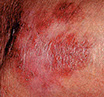
    Basal and squamous cell cancers are found mainly on areas of the skin that are exposed to the sun, like the head, face, neck, hands, and arms. These skin cancers can occur anywhere, though.

    Early Warning Signs of Basal and Squamous Cell Cancers

    Small, smooth, shiny, pale, or waxy lump.

    Firm red lump.

    A lump that bleeds or develops a crust.

    A flat, red spot that is rough, dry, or scaly.

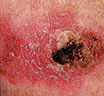
    Warning Signs of Melanoma

    The first sign can be a change in an existing mole or a new or “ugly-looking” mole. The letters “ABCDE” can identify signs.

    Skin Self-Exam

    *  Do an exam monthly, after a shower or bath. To check your skin, use:

    – A well-lit room

    – A full-length mirror

    – A hand-held mirror

    *  Locate your birthmarks, moles, and blemishes. Check for a change in the size, texture, or color of a mole. Check for a sore that does not heal.

    Check all areas.

    1.  Look at the front and back of your body in the mirror. Raise your arms and look at your left and right sides.

    2.  Bend your elbows and look carefully at the palms of your hands. Look at both sides of your forearms and upper arms.

    3.  Look at the back and front of your legs. Look between the buttocks and around the genital area.

    4.  Sit and closely examine your feet. Look at the soles and between the toes.

    5.  Look at your face, neck, and scalp. Use a comb to move your hair so you can see your scalp.

    See your doctor if you find anything unusual.

    Diabetes

    One in three people who have diabetes do not know they have it. See your doctor if you have one or more of the signs listed below.

    Signs of Diabetes:

    * Frequent urination

    * Excessive thirst

    * Extreme hunger

    * Unusual weight loss

    * Increased fatigue

    * Irritability

    * Blurry vision

    In type 1 diabetes, symptoms tend to come on quickly. With this type, the body either makes no insulin or only very small amounts.

    In type 2 diabetes, symptoms tend to come on more slowly. The body does not make enough insulin or can’t use it the right way. This type most often occurs in persons who are over age 40, are overweight, and who don’t exercise.

    Pre-diabetes occurs before type 2 diabetes. Getting diagnosed and treated for this can keep you from getting type 2 diabetes.

    Diabetes can be present without symptoms. Follow your doctor’s advice to screen for diabetes. Early detection and treatment lower the chances of diabetes complications.

    Heart Attack

    Heart Attack Warning Signs

    If heart attack warning signs occur, call 9-1-1 or your local rescue squad right away!

    See your doctor if you have one or more of these signs and symptoms:

    *  Chest discomfort. Most heart attacks involve discomfort in the center of the chest that lasts for more than a few minutes or goes away and comes back. The discomfort feels like pressure, fullness, squeezing or pain.

    *  Discomfort in other areas of the upper body. This can include pain or discomfort in one or both arms or in the back, neck, jaw, or stomach.

    *  Shortness of breath. Often, this comes with chest discomfort. But it can also come before the chest discomfort.

    *  Other symptoms. These can include breaking out in a cold sweat, nausea, or being lightheaded.

    The most common heart attack symptom for both men and women is chest pain or discomfort. But women are more likely than men to have some of the other common signs, especially shortness of breath, nausea or vomiting, and back or jaw pain.

    Lupus

    Lupus is an immune system disorder. It can affect the skin, joints, kidneys, and nervous system.

    Warning signs of lupus:

    *  Joints ache and swell for more than 3 months.

    *  Fingers get pale, numb, or ache in the cold temperatures.

    *  Mouth sores last for more than 2 weeks.

    *  Blood tests show: Anemia; low white cell count, or low platelet count; and/or protein in the urine.

    *  A rash occurs across the nose and cheeks. It lasts for more than 1 month.

    *  Skin rash (not sunburn) occurs after being in the sun.

    *  Pain lasts for more than 2 days when taking deep breaths.

    *  A seizure or convulsion occurs.

    Let your doctor know if you have or have had any of these warning signs. Having 3 or more of these signs may suggest lupus.

    Stroke

    Stroke Warning Signs

    *  Sudden numbness or weakness of the face, arm or leg, especially on one side of the body

    *  Sudden confusion, trouble speaking or understanding

    *  Sudden trouble seeing in one or both eyes

    *  Sudden trouble walking, dizziness, loss of balance or coordination

    *  Sudden severe headache with no known cause

    If stroke warning signs occur, call 9-1-1 or your local rescue squad right away!

    Cover image to the Major Illness Warnings brochure by the American Institute for Preventive Medicine. www.HealthyLife.com. All rights reserved.

    © American Institute for Preventive Medicine

  • Look At The World Through The Wonder Of A Child’s Eyes

    Mental Health Care

    Two young kids outside with hats on looking through binoculars.

    *  When you wake up, see a new day full of exciting possibilities.

    *  Use your imagination to deal with mundane tasks at work and home.

    *  Be free to be you. Care less about what other people think.

    *  Enjoy reading a children’s book or watching a children’s cartoon or TV show.

    Minding Your Mental Health Book. Published by the American Institute for Preventive Medicine. www.HealthyLife.com. All rights reserved.

    © American Institute for Preventive Medicine

  • Long-Term Care Insurance

    Medical Care

    Image of couple talking to an insurance agent.

    Long-term care insurance is meant to cover the cost of nursing home care and long-term  home health care. Medicare and private health insurances do not cover these costs. This kind of insurance is not government regulated. You may want to purchase this for yourself. Your children may want to purchase it for you to protect themselves from having to pay for your long-term care or to protect their future inheritance.

    Find out more about long-term care insurance from:

    *  LongTermCare.gov athttp://longtermcare.gov. Learn the basics of long-term care and ways to pay for it. Use the LTC PathFinder tool to get information on long-term care insurance that is most relevant and useful to you now.

    *  National Advisory Center for Long-Term Care Insurance atwww.longtermcareinsurance.org. Get help from an unbiased long-term care insurance advisor. Ask for multi-company comparative quotes  for long-term care insurance.

    *  Consider a policy that starts paying on the 90th day instead of day 1. The difference in price can be 30%. Do this only if you can afford the long-term care center’s cost for the first 3 months on your own.

    *  Check Moody’s and Standard & Poors at your local library. Look for insurers rated “A” or better.

    *  Read the complete policy coverage. Consult an attorney or knowledgeable person to review it with you.

    *  Pay premiums, by check, directly to the insurance company. Never pay in cash.

    *  Fill out the policy application yourself or with a friend or relative. Don’t allow someone to do it for you.

    *  Be cautious of companies advertised by celebrities.

    *  Insist on coverage that does not require a hospital stay before going to a nursing home.

    *  Resist high pressure insurance agents or claims that their long-term care insurance is endorsed by the government.

    Be cautious before you purchase a policy. Ask the following questions:

    *  Will the policy cover home health care? Does this include “aides” or housekeeping coverage or just “skilled” care?

    *  Does the policy cover Alzheimer’s disease, specifically?

    *  Must you be medically ill to receive benefits? What about custodial care?

    *  Does the coverage include nursing home custodial care, adult day care, or other community-based services?

    *  Does the policy require a prior hospital stay before entering a nursing home?

    *  Are there exclusions for “pre-existing” illnesses? Are there waiting periods?

    *  How long is a stay in a nursing home covered? (The average stay is just under 4 years.)

    *  How much will the nursing home be paid on a daily basis from this policy? What is the daily charge of the nursing home? You will have to pay the difference between the insurance coverage and what the nursing home charges.

    *  If premiums are being paid, is there a guarantee that the policy can be renewed?

    *  Is the policy one that can’t be canceled?

    *  Will your coverage keep up with inflation?

    *  Are premiums waived while getting benefits?

    Page from the Health at Home Lifetime book by the American Institute for Preventive Medicine. www.HealthyLife.com. All rights reserved.

    © American Institute for Preventive Medicine

  • Lawn Mower Safety

    Personal Safety

    Image of lawn mower cutting the grass.

    Getting sliced by a lawn mower blade and being hit by rocks or other propelled objects are the two most common lawn mower-related injuries. (Mower blades rotate at nearly 200 miles per hour, and seemingly harmless sticks and stones often become dangerous missiles when picked up and hurled at that speed.) To mow grass safely:

    *  Before you start to mow, clear the lawn of sticks, stones, toys, garden hoses, and so forth.

    *  Don’t use electric mowers on wet grass.

    *  Wear heavy-duty shoes and long pants to protect your legs.

    *  Wear safety goggles to protect your eyes. Wear ear protectors (like those worn on shooting ranges) to protect your hearing.

    *  Push the mower, never pull it (if you have a push mower).

    *  Mow across a slope, not up or down, so the mower doesn’t slide or fall on top of you. Look several feet ahead when mowing.

    *  Turn off the engine if you have to check the blade, or clean or adjust the mower. Never fuel a lawn mower when the engine is hot. Spilled fuel or fumes can result in an explosion or fire. Instead, allow the engine to cool before refueling.

    *  Never allow children to operate a power mower, and keep small children far away from a mower that’s in use.

    A Year of Health Hints book by the American Institute for Preventive Medicine. www.HealthyLife.com. All rights reserved.

    © American Institute for Preventive Medicine

  • Know What Treatment You’Ve Agreed To

    Medical Care

    Image of doctor and patient talking.

    Every patient should be aware of the policy of Informed Consent, an ethical standard in medicine that implies that you have been given an explanation and fully understand your treatment. You should be able to explain in your own words what your treatment is about. You should know what the likelihood is that the medical procedure will accomplish what it’s supposed to. The benefits and the accompanying risks should always be identified clearly. You should also be notified if your treatment is experimental in nature.

    The physician should review any alternatives that are available in lieu of surgery or other procedures. Informed Consent enables you to make a rational and educated decision about your treatment. It is also a tool that promotes greater understanding between you and your doctor and encourages joint decision making.

    Three principles of Informed Consent that involve your responsibility as a patient are:

    *  You cannot demand services that go beyond what are considered “acceptable” practices of medicine or that violate professional ethics.

    *  You must recognize that you may be faced with some uncertainties or unpleasantness.

    *  You should, if competent, be responsible for your choices and not pass them along to others.

    Page from A Year of Health Hints book by the American Institute for Preventive Medicine. www.HealthyLife.com. All rights reserved.

    © American Institute for Preventive Medicine

  • Killer Household Products

    Home Safety

    Harmful drugs could be right under your nose.

    Spray paint, gasoline, glue, hair spray, and cleaning products become drugs when their vapors are inhaled on purpose to get “high.” Inhalants are easy to get and are among the most popular and deadly substances that teens abuse.

    The highs and lows

    At first, the effects of sniffing or snorting fumes are like drinking alcohol. But feeling giddy and less inhibited lasts only a few minutes. Continued use of the inhalant is needed to feel “high” longer. Breathing in chemical fumes replaces oxygen in the lungs. As a result, repeated use can cause:

    *  Death (even from one session of repeated use of the inhalant)

    *  Liver, kidney, and bone marrow problems

    *  Heart rhythm problems and heart failure

    *  Headaches

    *  Dizziness

    *  Confusion

    *  Delusions

    Also, the use of inhalants over time can cause health problems that cannot be reversed:

    *  Hearing loss

    *  Problems with learning and memory

    *  Muscle spasms

    Signs of inhalant use:

    *  Chemical smell on clothing or breath

    *  Drunk, dazed, or dizzy look

    *  Slurred speech

    *  Sores around the nose or mouth

    *  Paint or other chemical stains on fingers

    *  Empty spray paint bottles or rags hidden in closets

    If you suspect that a family member is using inhalants, get medical help without delay.

    Action Step

    Talk to your kids about the dangers of inhalants. Find out more fromwww.inhalants.drugabuse.gov.

    Ways to Well-Being book by the American Institute for Preventive Medicine. www.HealthyLife.com. All rights reserved.

    © American Institute for Preventive Medicine

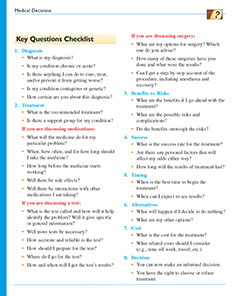
  • Key Questions Checklist

    Medical Care

    Diagnosis

    *  What is my diagnosis?

    *  Is my condition chronic or acute?

    *  Is there anything I can do to cure, treat, and/or prevent it from getting worse?

    *  Is my condition contagious or genetic?

    *  How certain are you about this diagnosis?

    Treatment

    *  What is the recommended treatment?

    *  Is there a support group for my condition?

    If you are discussing medications:

    *  What will the medicine do for my particular problem?

    *  When, how often, and for how long should I take the medicine?

    *  How long before the medicine starts working?

    *  Will there be side effects?

    *  Will there be interactions with other medications I am taking?

    If you are discussing a test:

    *  What is the test called and how will it help identify the problem? Will it give specific or general information?

    *  Will more tests be necessary?

    *  How accurate and reliable is the test?

    *  How should I prepare for the test?

    *  Where do I go for the test?

    *  How and when will I get the test’s results?

    If you are discussing surgery:

    *  What are my options for surgery? Which one do you advise?

    *  How many of these surgeries have you done and what were the results?

    *  Can I get a step-by-step account of the procedure, including anesthesia and recovery?

    Benefits vs. Risks

    *  What are the benefits if I go ahead with the treatment?

    *  What are the possible risks and complications?

    *  Do the benefits outweigh the risks?

    Success

    *  What is the success rate for the treatment?

    *  Are there any personal factors that will affect my odds either way?

    *  How long will the results of treatment last?

    Timing

    *  When is the best time to begin the treatment?

    *  When can I expect to see results?

    Alternatives

    *  What will happen if I decide to do nothing?

    *  What are my other options?

    Cost

    *  What is the cost for the treatment?

    *  What related costs should I consider (e.g., time off work, travel, etc.).

    Decision

    *  You can now make an informed decision.

    *  You have the right to choose or refuse treatment.

    Page from the Healthier at Home book by the American Institute for Preventive Medicine. www.HealthyLife.com. All rights reserved.

    © American Institute for Preventive Medicine