Blog

  • Zone Minutes Explained

    BE FIT

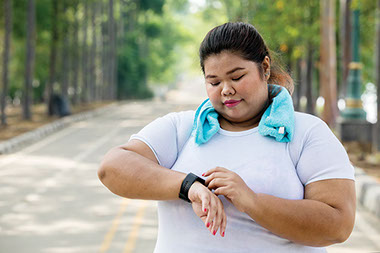
    Women looking at watch before exercising.

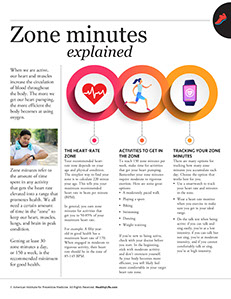
    When we are active, our heart and muscles increase the circulation of blood throughout the body. The more we get our heart pumping, the more efficient the body becomes at using oxygen.

    Zone minutes refer to the amount of time spent in any activity that gets the heart rate elevated into a range that promotes health. We all need a certain amount of time in the “zone” to keep our heart, muscles, lungs, and brain in peak condition.

    Getting at least 30 zone minutes a day, or 150 a week, is the recommended minimum for good health.

    The heart-rate zone

    Your recommended heart-rate zone depends on your age and physical condition. The simplest way to find your zone is to calculate 220 minus your age. This tells you your maximum recommended heart rate in beats per minute (BPM).

    In general, you earn zone minutes for activities that get you to 50-85% of your maximum heart rate.

    For example: A fifty-year-old in good health has a maximum heart rate of 170. When engaged in moderate to vigorous activity, their heart rate should be in the zone of 85-145 BPM.

    Activities to get in the zone

    To reach 150 zone minutes per week, make time for activities that get your heart pumping. Remember your zone minutes require moderate to vigorous exertion. Here are some great options:

    *  A moderately paced walk

    *  Playing a sport

    *  Biking

    *  Swimming

    *  Dancing

    *  Weight training

    If you’re new to being active, check with your doctor before you start. In the beginning, stick with moderate activity and don’t overexert yourself. As your body becomes more efficient, you will likely feel more comfortable in your target heart rate zone.

    Tracking your zone minutes

    There are many options for tracking how many zone minutes you accumulate each day. Choose the option that works best for you.

    *  Use a smartwatch to track your heart rate and minutes in the zone.

    *  Wear a heart rate monitor when you exercise to make sure you get in your ideal range.

    *  Do the talk test when being active: if you can talk and sing easily, you’re at a low intensity; if you can talk but not sing, you’re at moderate intensity, and if you cannot comfortably talk or sing, you’re at high intensity.
    © American Institute for Preventive Medicine
  • Workout Wear 101

    BE FIT

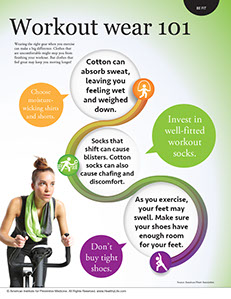
    Women riding stationary bike.

    Wearing the right gear when you exercise can make a big difference. Clothes that are uncomfortable might stop you from finishing your workout. But clothes that feel great may keep you moving longer!

    *  Choose moisture-wicking shirts and shorts. Cotton can absorb sweat, leaving you feeling wet and weighed down.

    *  Invest in well-fitted workout socks. Socks that shift can cause blisters. Cotton socks can also cause chafing and discomfort.

    *  Don’t buy tight shoes. As you exercise, your feet may swell. Make sure your shoes have enough room for your feet.

    Source: American Heart Association

    © American Institute for Preventive Medicine
  • Work-Related Skin Problems

    WORK LIFE

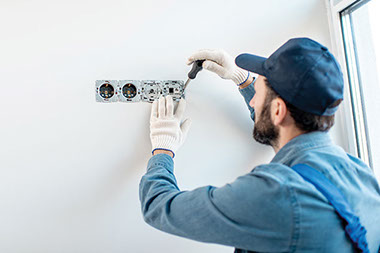
    Electrician wearing gloves while working.

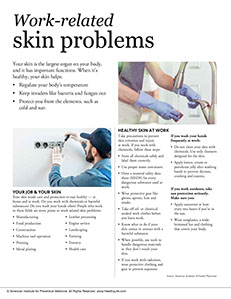
    Your skin is the largest organ on your body, and it has important functions. When it’s healthy, your skin helps:

    *  Regulate your body’s temperature

    *  Keep invaders like bacteria and fungus out

    *  Protect you from the elements, such as cold and sun

    Your job & your skin

    Your skin needs care and protection to stay healthy – at home and at work. Do you work with chemicals or harmful substances? Do you wash your hands often? People who work in these fields are more prone to work-related skin problems:

    *  Manufacturing

    *  Food production

    *  Construction

    *  Machine tool operation

    *  Printing

    *  Metal plating

    *  Leather processing

    *  Engine service

    *  Landscaping

    *  Farming

    *  Forestry

    *  Health care

    Healthy skin at work

    Take precautions to prevent skin irritation and injury at work. If you work with chemicals, follow these steps:

    *  Store all chemicals safely and label them correctly.

    *  Use proper waste containers.

    *  Have a material safety data sheet (MSDS) for every dangerous substance used at work.

    *  Wear protective gear like gloves, aprons, hats and masks.

    *  Take off oil- or chemical-soaked work clothes before you leave work.

    *  Know what to do if your skin comes in contact with a harmful substance.

    *  When possible, use tools to handle dangerous materials so they don’t touch your skin.

    *  If you work with radiation, wear protective clothing and gear to prevent exposure.

    If you wash your hands frequently at work:

    *  Do not clean your skin with chemicals. Use only cleansers designed for the skin.

    *  Apply lotion, cream or petroleum jelly after washing hands to prevent dryness, cracking and eczema.

    If you work outdoors, take sun protection seriously. Make sure you:

    *  Apply sunscreen at least every two hours if you’re in the sun.

    *  Wear sunglasses, a wide-brimmed hat and clothing that covers your body.

    Source: American Academy of Family Physicians

    © American Institute for Preventive Medicine
  • Winter Crisp

    HEALTHY EATING

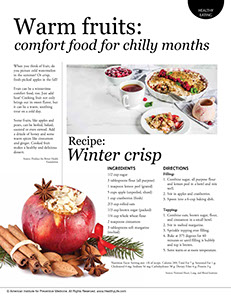
    Plate with winter crisp and a cup of tea.

    Warm fruits: comfort food for chilly months

    When you think of fruit, do you picture cold watermelon in the summer? Or crisp, fresh-picked apples in the fall?

    Fruit can be a wintertime comfort food, too. Just add heat! Cooking fruit not only brings out its sweet flavor, but it can be a warm, soothing treat on a cold day.

    Some fruits, like apples and pears, can be boiled, baked, sauteed or even stewed. Add a drizzle of honey and some warm spices like cinnamon and ginger. Cooked fruit makes a healthy and delicious dessert.

    Source: Produce for Better Health Foundation

    Recipe: Winter crisp

    Ingredients

    1/2 cup sugar

    3 tablespoons flour (all purpose)

    1 teaspoon lemon peel (grated)

    5 cups apple (unpeeled, sliced)

    1 cup cranberries (fresh)

    2/3 cup rolled oats

    1/3 cup brown sugar (packed)

    1/4 cup whole wheat flour

    2 teaspoons cinnamon

    3 tablespoons soft margarine (melted)

    Directions

    Filling:

    1.  Combine sugar, all purpose flour and lemon peel in a bowl and mix well.

    2.  Stir in apples and cranberries.

    3.  Spoon into a 6-cup baking dish.

    Topping:

    1.  Combine oats, brown sugar, flour, and cinnamon in a small bowl.

    2.  Stir in melted margarine.

    3.  Sprinkle topping over filling.

    4.  Bake at 375 degrees for 40 minutes or until filling is bubbly and top is brown.

    5.  Serve warm or at room temperature.

    Nutrition Facts: Serving size: 1/6 of recipe. Calories 289; Total Fat 7 g; Saturated Fat 1 g;  Cholesterol 0 mg; Sodium 54 mg; Carbohydrates 58 g; Dietary Fiber 6 g; Protein 3 g

    Source: National Heart, Lung, and Blood Institute

    © American Institute for Preventive Medicine
  • Why You Should Check Your Social Security Statement

    FINANCIAL HEALTH

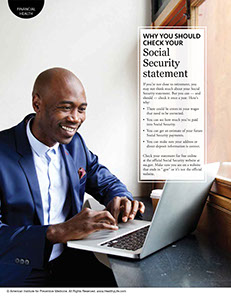
    Man smiling while using the computer.

    If you’re not close to retirement, you may not think much about your Social Security statement. But you can – and should – check it once a year. Here’s why:

    *  There could be errors in your wages that need to be corrected.

    *  You can see how much you’ve paid into Social Security.

    *  You can get an estimate of your future Social Security payments.

    *  You can make sure your address or direct deposit information is correct.

    Check your statement for free online at the official Social Security website atssa.gov. Make sure you are on a website that ends in “.gov” or it’s not the official website.

    © American Institute for Preventive Medicine

  • Why You Need A Vacation

    WORK LIFE

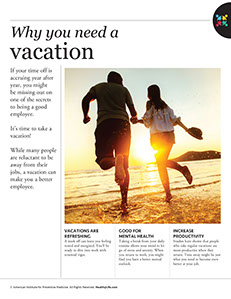
    Couple holding hands running into the ocean.

    If your time off is accruing year after year, you might be missing out on one of the secrets to being a good employee.

    It’s time to take a vacation! While many people are reluctant to be away from their jobs, a vacation can make you a better employee.

    Vacations are refreshing

    A week off can leave you feeling rested and energized. You’ll be ready to dive into work with renewed vigor.

    Good for mental health

    Taking a break from your daily routine allows your mind to let go of stress and anxiety. When you return to work, you might find you have a better mental outlook.

    Increase productivity

    Studies have shown that people who take regular vacations are more productive when they return. Time away might be just what you need to become even better at your job.

    © American Institute for Preventive Medicine
  • Which Std Tests Do You Need?

    MEDICAL NEWS

    Couple embracing each other.

    Sexually transmitted diseases (STDs) can occur when people have sexual contact with a person who also has an STD.

    People of all ages can get STDs. If you have unprotected sexual contact with someone who is infected, you risk getting an STD. This includes oral, anal and vaginal sex.

    Don’t be afraid or embarrassed to ask a health care provider about STDs. Getting tested is important so you can get treatment for STDs. The most common ones include:

    *  Human papilloma virus (HPV)

    *  Chlamydia

    *  Gonorrhea

    *  Syphilis

    *  Herpes

    *  Trichomoniasis

    *  HIV/AIDS

    Why do I need tests?

    Testing is the only way to know for sure if a person has an STD. Many STDs don’t cause any symptoms. This means people could spread STDs to others without knowing. They could also have long-term health problems.

    Risks of STDs include:

    *  Spreading STDs to others

    *  Infertility (trouble getting pregnant)

    *  Long-term pain in the pelvic area

    *  Pelvic inflammatory disease (PID), which can cause pain and infertility

    *  Serious health and immune system problems (from HIV infection)

    Who needs to be tested?

    The Centers for Disease Control and Prevention (CDC) lists the following recommendations for testing:

    *  Everyone ages 13 to 64 should be tested at least once for HIV.

    *  Anyone who has unprotected sex or shares injection drug equipment should get tested for HIV at least once a year.

    *  All sexually active women younger than 25 years should be tested for gonorrhea and chlamydia every year.

    *  Some women 25 years and older should also be tested for gonorrhea and chlamydia every year. This includes women at a higher risk. They may have multiple sex partners or have a partner who has a known STD.

    *  All pregnant women should be tested for syphilis, HIV and hepatitis B. Some pregnant women may also need tests for chlamydia and gonorrhea. Pregnant women may need more than one test throughout pregnancy.

    *  Sexually active gay and bisexual men may need HIV tests every 3 to 6 months.

    *  All sexually active gay and bisexual men should be tested at least once a year for syphilis, chlamydia and gonorrhea. Some men may need to get tested more often if they have multiple partners.

    Many health departments offer STD testing or can help people find a testing site. To find STD testing sites near you visitgettested.cdc.gov.

    Source: Centers for Disease Control and Prevention

    © American Institute for Preventive Medicine

  • When Blood Pressure Is Low

    MEDICAL NEWS

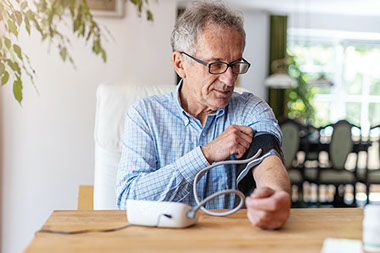
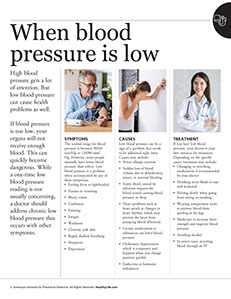
    Man taking his blood pressure at home.

    High blood pressure gets a lot of attention. But low blood pressure can cause health problems as well.

    If blood pressure is too low, your organs will not receive enough blood. This can quickly become dangerous. While a one-time low blood pressure reading is not usually concerning, a doctor should address chronic low blood pressure that occurs with other symptoms.

    Symptoms

    The normal range for blood pressure is between 90/60 mm/Hg to 120/80 mm/Hg. However, some people naturally have lower blood pressure than others. Low blood pressure is a problem when accompanied by any of these symptoms:

    *  Feeling dizzy or lightheaded

    *  Nausea or vomiting

    *  Blurry vision

    *  Confusion

    *  Fainting

    *  Fatigue

    *  Weakness

    *  Clammy, pale skin

    *  Rapid, shallow breathing

    *  Sleepiness

    *  Depression

    Causes

    Low blood pressure can be a sign of a problem that needs to be addressed right away. Causes may include:

    *  Severe allergic reaction

    *  Sudden loss of blood volume due to dehydration, injury, or internal bleeding

    *  Septic shock caused by infection impacts the blood vessels causing blood pressure to drop

    *  Heart problems such as heart attack or changes in heart rhythm, which may prevent the heart from pumping blood efficiently

    *  Certain medications or substances can lower blood pressure

    *  Orthostatic hypotension which is temporary and happens when you change position quickly

    *  Endocrine or hormone imbalances

    Treatment

    If you have low blood pressure, your doctor is your best resource for treatment. Depending on the specific cause, treatment may include:

    *  Changing or switching medications if recommended by your doctor

    *  Drinking more fluids to stay well hydrated

    *  Moving slowly when going from sitting to standing

    *  Wearing compression socks to prevent blood from pooling in the legs

    *  Medicines to increase heart strength and improve blood pressure

    *  Avoiding alcohol

    *  In severe cases, receiving blood through an IV

    © American Institute for Preventive Medicine