Blog

  • What’s The Secret To A Long Life?

    MEDICAL NEWS

    Father and adult son talking while drinking coffee.

    Today many people are living longer than ever. Part of this is because of advances in medical care. But there are things you can do to live a long, healthy life too. Here are some tips that could help you live longer.

    Exercise

    Experts in aging and health say exercise may be the most important thing you can do to live longer. But why?

    As we age, we lose some muscle. This can lead to less energy and achy joints, which may cause you to exercise less and sit more. This, in turn, raises the risk of disease as well as death.

    People of any age can learn to get active. Not sure how to start? Talk to your doctor about options that are safe and healthy for you.

    Shed extra pounds

    Having a BMI higher than 30 raises the risk of all causes of mortality (death). It can lead to health problems like heart disease, stroke, diabetes and some cancers.

    You may not need to lose a lot to improve your health. Even losing 10-15 pounds can make a difference.

    Losing weight isn’t easy. But there are safe and healthy ways to do it. Eating healthier foods and getting regular exercise will help, but ask your doctor for advice.

    Quit smoking (or don’t smoke)

    Smoking increases the risk of lung disease, cancers, heart disease and diabetes. The good news is that when you quit smoking, your risk of smoking-related death starts to decrease. It can add years to your life if you quit today!

    Many people are able to quit smoking with help from a doctor or therapist. They may also use nicotine replacement products like patches, gum or an inhaler. Ask your doctor for help with your plan to quit.

    Do I need good genes?

    We may think a long life is all in our family history. But genes are only a piece of the health puzzle.

    Experts in aging say that your own healthy behaviors mean much more than genes. In fact, many people could live to 90 with a healthy lifestyle, regardless of genes, according to experts at the National Institutes of Health.

    Harness the power to live longer by starting healthy habits!

    Sources: Centers for Disease Control and Prevention, National Institutes of Health

    © American Institute for Preventive Medicine
  • What’s That Rash?

    SELF-CARE CORNER

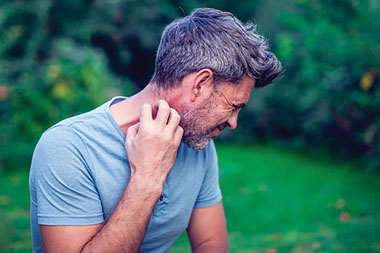
    Man itching rash on neck.

    Red, itchy skin – you have a rash. Most people get a rash at some point in their lives. Rashes happen when the skin reacts to a foreign “invader.” They also occur with illnesses, like chicken pox or measles.

    Poison ivy, bug bites, and allergies are all possible causes for a rash. A minor rash is usually not a sign of a serious health problem. It may be a sign that your skin is reacting to an invader.

    If you notice a rash, ask yourself these questions:

    1.  Have I been outside recently? In the woods? You could have run into poison ivy or been bitten by an insect.

    2.  Do I have allergies? Sometimes seasonal allergies to pollen and mold can cause itchy skin.

    3.  Did I use a new laundry product? Certain laundry detergents and fabric softeners can cause rashes and allergic reactions in some people.

    4.  Did I use a new skin care product? Fragrances and other ingredients in these products can be irritating to skin.

    5.  Have I taken a new medicine? Some medicines can cause rashes and allergic reactions. Call your doctor right away if you notice this.

    6.  Am I wearing new jewelry? Some people are allergic to certain metals, like nickel. This can cause itching and redness.

    Treating the rash

    If your rash is minor and you otherwise feel fine, you can probably treat it at home.

    Over-the-counter creams can be helpful. You can also try an ice pack or aloe gel to soothe irritated skin.

    When to see a doctor

    A rash can be a sign you need medical care. Watch for these red flags:

    *  Fever

    *  Feeling unwell

    *  A rash keeps getting worse

    *  A rash covers a large area of the body

    *  Severe pain

    *  Any rash on the face

    *  A rash that is very red, oozing, or hot

    *  A circular rash with a “bull’s eye” in the middle

    *  A rash that might be caused by your medicine

    *  Signs of a severe allergy, such as swelling or trouble breathing

    *  A rash appears after being around someone who has a serious illness, like measles or chicken pox

    *  A rash lasts more than 2 weeks

    If you’re concerned about a rash on yourself or your child, always call your doctor.

    © American Institute for Preventive Medicine
  • What’s In Your Medicine Cabinet?

    SELF-CARE CORNER

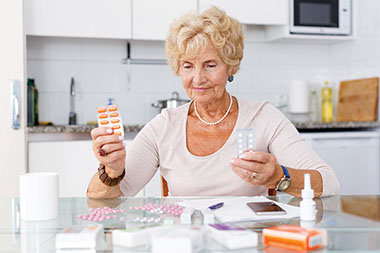
    Women sitting at kitchen table organizing medication.

    Unused or expired medications pose a health risk to you and your loved ones. Getting your medicine cabinet up to date should be part of your yearly spring cleaning.

    Medication left lingering in your cabinet is problematic for several reasons:

    *  Expired medication can make you sick or fail to work as expected.

    *  Unused prescription drugs are some of the most commonly misused substances among teens.

    *  Unused medications are a potential poisoning concern for both children and pets.

    In addition, identifying and properly disposing of unused or expired medications is a crucial way to prevent pollution from entering local water sources.

    Give your medicine cabinet a good declutter

    1.  Remove everything from your medicine cabinet and gather any over-the-counter or prescription drugs from around the house.

    2.  Place any prescriptions that are up to date and in use back in the cabinet.

    3.  All other prescription medications should go in a pile for disposal.

    4.  Check the expiration date on all over-the-counter medications. Place any that are expired in the disposal pile.

    5.  Evaluate anything that is not expired to determine if it is needed. It should go in the disposal pile if it is unlikely to be used.

    6.  Organize any remaining medications by type in the medicine cabinet. Ensure all medicine in the cabinet is clearly labeled.

    7.  It’s always important to store medication in a child and pet-proof location.

    How to safely dispose of medication

    The best way to get rid of unused or expired medication is through a local take-back program. Contact your local city or county government and ask if they hold hazardous waste collection days or have a location to drop off medications for disposal.

    You can also visitdisposemymeds.orgto find a local pharmacy that allows you to drop off medication.

    If you cannot find a place to take back your medication, follow these steps to dispose of it at home safely.

    1.  Empty all medication from its original container into a disposable container or ziplock bag.

    2.  Mix the medication with an undesirable substance such as kitty litter or coffee grounds, and seal it up.

    3.  Place the container in the trash.

    4.  Remove any identifying tags from empty medication bottles and place them in the trash or recycle bin.

    © American Institute for Preventive Medicine
  • What You Need To Know About Measles

    MEDICAL NEWS

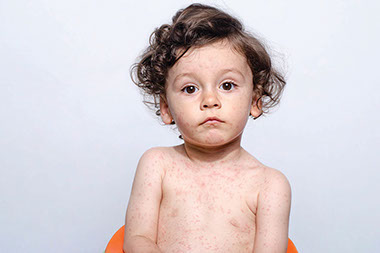
    Young child with measles.

    In 2019, the U.S. has seen the biggest measles outbreak since 1994. Measles was declared eliminated in the year 2000, but in recent years measles has come back.

    This outbreak is due to two main factors:

    1.  Many people travel abroad. They may travel to a place where measles is common. They catch measles there and bring it back to the U.S. with them. They may not even know they have measles until several days after they return.

    2.  Some people in the U.S. do not get the measles vaccine. If they are exposed, they get sick and can spread measles to others.

    Dangerously easy to catch

    Measles is highly contagious. It spreads through the air. An infected person can simply breathe and spread measles. It can also be spread through coughing and sneezing.

    You don’t even have to be near a person with measles to catch it from them. Measles stays in the air for a long time. In fact, you could go into a room two hours after an infected person has left and still catch measles.

    Many times, people spread measles before they even know they have it.

    Almost everyone who hasn’t gotten the measles vaccine will catch measles if they are exposed.

    Know the signs

    *  Very high fever (this usually comes first)

    *  Cough, runny nose and red eyes

    *  Diarrhea

    *  Ear infection

    *  Rash of tiny red spots, usually starting at the head and spreading all over

    Serious complications

    Serious problems can happen to a person who catches measles, especially babies and young children. This includes:

    *  Pneumonia (a serious lung infection)

    *  Brain swelling (encephalitis)

    *  Permanent brain damage

    *  Deafness

    *  Death

    Get the shot

    The best way to avoid getting measles is to get the measles vaccine. This can also keep you from spreading it to babies who are too young to get the shot.

    Two doses of the MMR (measles, mumps, rubella) shot are 97 percent effective in preventing measles. Children should get the first dose at 12 to 15 months of age. They get the second dose at 4 to 6 years of age.

    Some adults have not received the MMR shot. Even adults who have received it may need a booster shot. Your doctor can perform a simple blood test to see if you are immune to measles.

    Ask your doctor if you need the measles vaccine or if you should have the blood test done. The MMR vaccine is very safe and it works. Most health insurance covers the cost of the vaccine. If you have any concerns, discuss them with your doctor.

    Sources: American Medical Association, Centers for Disease Control and Prevention

    © American Institute for Preventive Medicine
  • What To Know About Moldy Food

    HEALTHY EATING

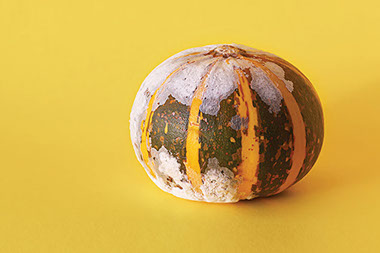
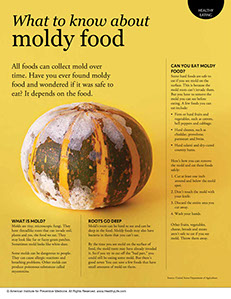
    A squash that has mold on it.

    All foods can collect mold over time. Have you ever found moldy food and wondered if it was safe to eat? It depends on the food.

    What is mold?

    Molds are tiny, microscopic fungi. They have threadlike roots that can invade soil, plants and yes, the food we eat. They may look like fur or fuzzy green patches. Sometimes mold looks like white dust.

    Some molds can be dangerous to people. They can cause allergic reactions and breathing problems. Other molds can produce poisonous substances called mycotoxins.

    Roots go deep

    Mold’s roots can be hard to see and can be deep in the food. Moldy foods may also have bacteria in them that you can’t see.

    By the time you see mold on the surface of food, the mold roots may have already invaded it. So if you try to cut off the “bad part,” you could still be eating some mold. But there’s good news: You can save a few foods that have small amounts of mold on them.

    Can you eat moldy food?

    Some hard foods are safe to eat if you see mold on the surface. This is because the mold roots can’t invade them. But you have to remove the mold you can see before eating. A few foods you can eat include:

    *  Firm or hard fruits and vegetables, such as carrots, bell peppers and cabbage.

    *  Hard cheeses, such as cheddar, provolone, parmesan and Swiss.

    *  Hard salami and dry-cured country hams.

    Here’s how you can remove the mold and eat these foods safely:

    1.  Cut at least one inch around and below the mold spot.

    2.  Don’t touch the mold with your knife.

    3.  Discard the entire area you cut away.

    4.  Wash your hands.

    Other fruits, vegetables, cheese, breads and meats aren’t safe to eat if you see mold. Throw them away.

    Source: United States Department of Agriculture

    © American Institute for Preventive Medicine
  • What To Know About Blood Clots

    SELF-CARE CORNER

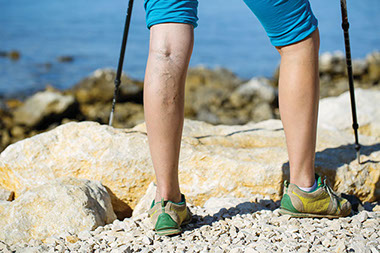
    Veins on the back of a women's leg.

    Healthy blood is designed to clot. When blood clots, it prevents heavy bleeding. But, if a clot happens inside a vein, it can be dangerous. This is called a deep vein thrombosis (DVT). Sometimes, the blood clot may move through the body and get stuck in the lungs. This is called a pulmonary embolism (PE).

    Up to 100,000 Americans die from a DVT or PE every year. These clots kill more people than breast cancer, car collisions, and HIV/AIDS combined.

    Signs of a clot

    Signs of a DVT or PE include:

    *  Swelling, tenderness, redness or warmth in one area of the body

    *  Chest heaviness or pain

    *  Sweating

    *  Feeling out of breath

    *  Weakness or fainting

    *  Fast heart beat

    *  Feeling of impending doom

    Know your risk

    Certain things make you more likely to get a blood clot. They include:

    *  Recent surgery or an injury

    *  Being in bed for long periods

    *  Not moving a certain body part, such as a broken leg

    *  Sitting for a long time, including during travel

    *  Higher levels of estrogen from birth control pills, pregnancy or hormone replacement therapy

    *  Medical conditions, such as cancer, Crohn’s disease, ulcerative colitis, heart disease, blood clotting disorders or lung disease

    *  Obesity

    *  Smoking

    *  History of atrial fibrillation (A-fib)

    Reduce your risk

    Talk about your risk with your doctor. You can lower your risk of getting a blood clot by:

    *  Getting up from sitting at least every two hours

    *  Moving around after surgery or being in bed for a long time

    *  Moving legs and feet while on plane trips

    *  Wearing loose-fitting clothes while sitting for a long time

    *  Exercising regularly

    *  Wearing compression stockings if recommended by your doctor

    What to do?

    If you think you or a loved one might have a blood clot, see a doctor right away. A blood clot can be treated if it’s caught early. Sometimes, doctors use medicines that dissolve the clot. Other times, doctors will perform surgery to remove the clot.

    Sources: American Society of Hematology, Centers for Disease Control and Prevention

    © American Institute for Preventive Medicine
  • What To Do When Your Heel Hurts

    SELF-CARE CORNER

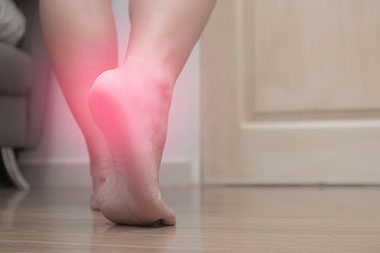
    Image of heel walking on bare floor.

    Heel pain is the most common foot and ankle problem. Often, a sore heel is not serious. But if you ignore it and keep using the foot, it could get worse.

    When it comes to heel pain, the first clue is where the heel hurts. Pain at the bottom of the heel is different from pain behind the heel.

    Pain underneath the heel

    *  Plantar fasciitis. This happens when activity inflames the tissue band that runs along the bottom of the foot. Sometimes, people get plantar fasciitis from wearing shoes that don’t properly support their foot. It’s often worse when you first get up in the morning. It can usually be resolved with rest, wearing special inserts in the shoes and/or physical therapy.

    *  Heel spur. A heel spur is a buildup of calcium that causes a bony bump on the heel bone. It usually happens if a person has plantar fasciitis for a long time. Treatment is usually similar to plantar fasciitis treatment.

    *  Stone bruise. Stepping on a hard object like a stone can injure the bottom of the heel. If you stepped on something recently, try to rest and protect the foot for a few days until it feels better. Wear shoes when you go outside to prevent this from happening in the future.

    Pain behind the heel

    Pain in the back of the heel is usually due to a problem with the Achilles tendon. This tendon connects the heel bone to the calf muscle. Heavy activity or exercise can put too much stress on the tendon too quickly. This can cause Achilles tendinitis, which includes small tears and inflammation in the tendon. Treatment may include:

    *  Physical therapy

    *  Rest

    *  Ice

    *  Orthotic(s) (shoe inserts)

    *  Night splint (device worn at night to protect the foot and tendon)

    People who have Achilles tendinitis may need to avoid the activity that caused it, such as running or jumping.

    Respect your feet

    Many people ignore heel pain, hoping it will go away. But, untreated problems with the foot may only get worse over time without treatment. If your heel pain lasts more than a couple of days, or if you have a health condition like diabetes, see a doctor right away.

    Source: American Academy of Orthopaedic Surgeons, American College of Foot and Ankle Surgeons

    © American Institute for Preventive Medicine
  • What To Do About Varicose Veins

    SELF-CARE CORNER

    Doctor and patient talking.

    Do you have bulging veins on your legs? The veins may be blue, purple or red in color. If so, you may have varicose veins.

    What are varicose veins?

    Your heart is always pumping blood out to your organs. Then, the blood goes back to the heart through the veins. Veins have special valves that push the blood back toward the heart.

    Sometimes these valves stop working correctly. This may happen if valves get weaker over time. Then the blood pools in the vein, unable to move. Blood that is pooling in a vein may cause the bulge or bump of a varicose vein.

    Not just cosmetic

    Some people don’t like the look of varicose veins. But they can also cause other problems. Varicose veins may itch or cause pain, swelling or heaviness in the legs.

    They can also continue to weaken the vein over time. This can cause skin changes like open sores or hard, thick areas of skin.

    Medical options

    Ask your doctor about medical procedures that can help. Options may include:

    *  Lasers that heat the vein and close it off

    *  Injections that seal the vein closed

    *  Surgery to remove the vein if non-invasive options don’t work

    Helping at home

    If varicose veins bother you, there are some things you can do.

    *  First, work toward a healthy weight. Being overweight puts more pressure on the veins.

    *  Be active. Exercise gets your blood pumping. This helps move blood out of the veins.

    *  Ask your doctor about compression stockings. These can help relieve pain and heaviness for some people. These are available at drug stores and online without a prescription if your doctor gives you the okay to wear them.

    *  Put your legs up. When possible, keep your legs up above your heart.

    *  Don’t wear clothes that are very tight around the waist or upper thighs.

    Source: National Heart, Lung and Blood Institute, National Institutes of Health

    © American Institute for Preventive Medicine
  • What Is Lymphoma?

    MEDICAL NEWS

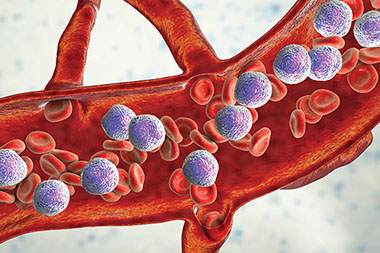
    Illustration of vein with blood cells.

    There are several different types of blood cancers. About half of all blood cancers are lymphomas. Lymphoma is cancer in the lymph system. The lymph system is part of the immune system that fights off illnesses and infections. It also helps control the flow of fluids in the body.

    Lymphoma is not one type of cancer. It is a group of many types.

    Hodgkin lymphoma is one type. It was named after the doctor who discovered it. All other lymphomas are called non-Hodgkin lymphomas. There are more than 60 types of non-Hodgkin lymphomas.

    What’s the difference?

    Hodgkin and non-Hodgkin lymphomas affect lymphocytes, which are cells in the lymphatic system. Doctors can tell which type of lymphoma a person has by looking at their cells under a microscope.

    Hodgkin lymphoma has a special cell with two centers, or nuclei. These are known as Reed-Sternberg cells, and they only occur in people with Hodgkin lymphoma.

    Similar signs

    Even though there are different types of lymphoma, the signs look alike. Some signs include:

    *  A painless lump in the neck, armpit or groin

    *  Excessive sweating

    *  Fever

    *  Trouble breathing

    *  Weight loss

    *  No appetite

    *  Feeling weak

    *  Itching

    Know the risk

    Lymphoma can attack almost any area of the body. Often its symptoms are hard to spot, or they may be blamed on other health issues. That’s why it’s good to know if you’re at a higher risk of getting lymphoma. Risk factors include:

    *  Having a close relative with lymphoma

    *  Previously being exposed to radiation or chemotherapy

    *  Long-term exposure to chemicals

    *  Having a weakened immune system

    Talk to your doctor

    There is no surefire way to prevent lymphoma. However, you can get regular checkups and talk to your doctor about your health. Ask them about your risk of cancer and ways you can lead the healthiest life possible. If you notice changes in your health or symptoms, tell them.

    Sources: American Cancer Society, Leukemia and Lymphoma Society

    © American Institute for Preventive Medicine
  • What Is ‘Lazy Eye’?

    MEDICAL NEWS

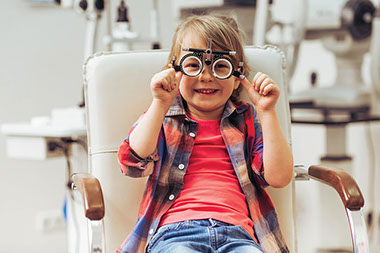
    Young child at the eye doctor office.

    Lazy eye, also known as amblyopia, is the most common cause of vision impairment in children.

    Amblyopia

    Amblyopia means that the vision in one eye is reduced because of a problem with the brain and eye communication. Amblyopia is not a disease, but is a result of another vision problem. Usually, amblyopia can happen when a child has:

    *  Strabismus, which is when the two eyes can’t work together to focus on one object. They may point in different directions. Strabismus may cause a crossed eye, known as esotropia. It may also cause one eye to turn outward, known as exotropia.

    *  One eye that is more nearsighted or farsighted.

    *  One eye that has an astigmatism and can’t see as well as the other eye.

    *  A cataract in one eye that causes blurred vision.

    In all of these cases, the brain can start to “ignore” the signals it gets from the weaker or blurred eye. It starts using the stronger eye by itself.

    When the brain doesn’t use one eye during childhood, the eye and brain connection doesn’t develop well. Over time, the vision in the weaker eye gets worse because the proper brain connections were not formed.

    Steps you can take

    All children should get an eye exam before age 4. If there is a family history of amblyopia, childhood cataracts or other eye problems, get their eyes checked during infancy.

    Treatment for amblyopia usually involves the child wearing an eye patch. They wear the patch over the stronger eye, forcing the brain to use the weaker eye. Your child’s eye doctor will tell you how and when they should wear the patch.

    It can be difficult for a child to get used to the eye patch. Try these tips:

    *  Use positive words to explain that the patch will help them see better.

    *  Allow them to pick out a color or design for their eye patch that they like.

    *  If the patch isn’t a good solution for your child, ask the eye doctor about special drops that blur vision in the strong eye for the same effect. The blurring effect is temporary.

    Don’t wait! Getting amblyopia treated during childhood can help your child have good vision as an adult.

    Sources: American Academy of Ophthalmology, National Eye Institute

    © American Institute for Preventive Medicine