Tag: Parenting

  • Dealing With Family Arguments

    FAMILY LIFE

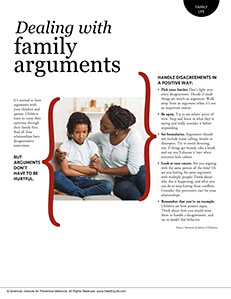
    Mother comforting her young son who's upset.

    It’s normal to have arguments with your children and spouse. Children learn to voice their opinions through their family first. And all close relationships have disagreements sometimes.

    But arguments don’t have to be hurtful.

    Handle disagreements in a positive way:

    *Pick your battles:Don’t fight over every disagreement. Decide if small things are worth an argument. Walk away from an argument when it’s not an important matter.

    *Be open.Try to see others’ point of view. Stop and listen to what they’re saying and really consider it before responding.

    *Set boundaries.Arguments should not include name calling, insults or disrespect. Try to avoid shouting, too. If things get heated, take a break and say you’ll discuss it later when everyone feels calmer.

    *Look at root causes.Are you arguing with the same person all the time? Or are you having the same argument with multiple people? Think about why this is happening, and what you can do to stop having these conflicts. Consider this preventive care for your relationships.

    *Remember that you’re an example.Children see how parents argue. Think about how you would want them to handle a disagreement, and try to model that behavior.

    Source: American Academy of Pediatrics
    © American Institute for Preventive Medicine

  • How To Teach Children Gratitude

    FAMILY LIFE

    Young child hugging mother.

    Children may often want every new toy and thing they see. But you can help teach them gratitude with these tips:

    1.Make getting things a surprise.This helps kids see something as a gift, not an entitlement. For instance, “surprise” them with a trip to the park or their favorite dessert on special occasions.

    2.Be careful with choices.Allowing children to choose something big, such as a vacation destination, will make them think they can get whatever they want. Instead, the adults can choose the vacation plans and present it as a surprise.

    3.Talk about what made them happy each day.This teaches kids to be thankful for good things. It can be as simple as playing at recess, seeing a friend or enjoying what they ate for lunch.

    4.Serve others as a family.Community charity programs such as working at a food bank are a great way for kids to see how much they have. Also, do smaller things like bring meals to neighbors who are going through a hard time.

    5.Show them how to be positive.Being demanding, whiny or jealous quickly turns into being ungrateful for what they have. You can point out positives in nearly any situation to teach them how to find it themselves. “It’s really hot today, but I’m so glad we have cold water to drink” is a great example.

    6.Insist on saying “please” and “thank you.”Give them positive reinforcement every time they use these words. This helps to teach them the importance of showing  gratitude and respect for other people.

    7.Give them chores to do.Yes, kids are busy, but simple things like putting away their clothes, helping with dishes and picking up their toys are valuable lessons. Chores teach kids that it takes work to keep up a household and that they should contribute. Even five to 10 minutes of chores a day is helpful.

    8.Consider gifts of “experiences” instead of “things.”Not sure what to get them because they already have so much? How about tickets to a movie or show? Or a trip to a water park for a day? Chances are, they will remember those fun experiences far longer than any toy or gadget.

    Source: American Academy of Pediatrics

    © American Institute for Preventive Medicine

  • Positive Parenting Hacks

    FAMILY LIFE

    Parents with son, smile.

    Don’t focus on mistakes or bad behavior. Catch your child doing good things and point them out.

    Chores don’t have to be a punishment. Chores at home can help children learn life skills and independence.

    Spend a little time connecting each day. Take a few minutes to talk to your child without phones or screens.

    © American Institute for Preventive Medicine

  • Preparing For College Move-In

    FAMILY LIFE

    Female college student carring in a full bin of stuff.

    It’s time to send your young adult off for their first semester of college. Here are some tips to be sure they’re ready for move-in day.

    *Pack light.Only pack the basics you know they will use and plan to order additional items when needed.

    *Bring cleaning supplies.Have them handy when you first arrive.

    *Limit who helps with the move.College move-in can be chaotic, and the fewer people, the better.

    *Pack seasonally.Your college student won’t need a winter coat in August. Use vacuum seal bags for items that will be needed later.

    *Find the nearest drugstore, grocery store, and restaurants.Make sure your student knows how to access transportation to get there.

    *Bring lots of snacks.Move-in day can be physically as well as emotionally taxing. Make sure everyone stays well hydrated and fed so you can enjoy the day together.

    © American Institute for Preventive Medicine

  • The Importance Of Chores

    FAMILY LIFE

    Child holding a load of clothes in her arms.

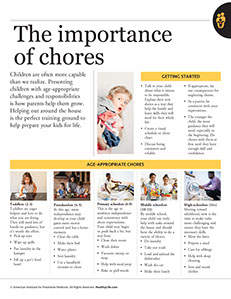
    Children are often more capable than we realize. Presenting children with age-appropriate challenges and responsibilities is how parents help them grow. Helping out around the house is the perfect training ground to help prepare your kids for life.

    Getting started

    *  Talk to your child about what it means to be responsible. Explain their new duties as a way they help the family and learn skills they will need for their whole life.

    *  Create a visual schedule or chore chart.

    *  Discuss being consistent and reliable.

    *  If appropriate, lay out consequences for neglecting chores.

    *  As a parent, be consistent with your expectations.

    *  The younger the child, the more guidance they will need, especially in the beginning. Do chores with them at first until they have enough skill and confidence.

    Age-appropriate chores

    Toddlers (2-3)

    Toddlers are eager helpers and love to do what you are doing. They will need lots of hands-on guidance, but it’s worth the effort.

    *  Pick up toys

    *  Wipe up spills

    *  Put laundry in the hamper

    *  Fill up a pet’s food bowl

    Preschoolers (4-5)

    At this age, more independence may develop as your child gains more motor control and has a better memory.

    *  Clear the table

    *  Make their bed

    *  Water plants

    *  Sort laundry

    *  Use a handheld vacuum to clean

    Primary schoolers (6-9)

    This is the age to reinforce independence and consistency with chore expectations. Your child may begin to push back a bit, but stay firm.

    *  Clean their room

    *  Wash dishes

    *  Vacuum, sweep, or mop

    *  Help with meal prep

    *  Rake or pull weeds

    Middle schoolers (10-13)

    By middle school, your child can truly help with tasks around the house and should have the ability to do a variety of chores.

    *  Do laundry

    *  Take out trash

    *  Load and unload the dishwasher

    *  Wash the car

    *  Make their lunch

    High-schoolers (14+)

    Moving toward adulthood, now is the time to make tasks more challenging and ensure they have the necessary skills.

    *  Mow the lawn

    *  Prepare a meal

    *  Care for siblings

    *  Help with deep cleaning

    *  Iron and mend clothes

    © American Institute for Preventive Medicine

  • Weekly Family Meetings

    FAMILY LIFE

    Young family smiling and laughing togething.

    A weekly family meeting is a time to be together, check in, and address any issues that arise.

    *  Make the meeting fun: Plan a special dessert to enjoy. Create a relaxed mood with special lighting or comfy pillows.

    *  Have an agenda: While you don’t want the meeting to be too formal, you should have a schedule to keep you on task.

    *  Get everyone involved: Let people take turns leading discussions. Encourage input and prioritize creative problem-solving.

    *  Set a respectful tone: This is a good time to practice resolving conflict with respect and consideration.

    *  End on a good note: If a tough topic needed to be addressed, be sure to end with something positive. Talk about fun upcoming events or brainstorm vacation ideas.

    © American Institute for Preventive Medicine
  • Picky Eater?

    HEALTHY EATING

    Image of young child with a sad face looking down at a bowl of brussel sprouts.

    Is dinner time a war zone at your house? Do you fight battles with your kids over vegetables and mac and cheese?

    Picky eating is as normal as potty-training. Even the best of parents can have a difficult time getting their child to eat. In fact, picky eating is one of the most common events in children, often outgrown as the child reaches adolescence.

    But when eating behavior affects normal development, it could be something much more serious-a pediatric feeding disorder.

    “The difference between a fussy eater and a child with a feeding disorder is the impact the eating behavior has on a child’s physical and mental health,” said Dr. Peter Girolami, clinical director of the Pediatric Feeding Disorders Program at the Kennedy Krieger Institute in Baltimore.

    Pediatric feeding disorders are more common than most think, affecting 1 in 10 infants and children. Some kids just don’t eat enough calories and nutrients to thrive.

    Common symptoms of a pediatric feeding disorder are these:

    *  A sudden change in eating habits lasting longer than 30 days

    *  Delayed development of skills needed to feed or eat foods with greater textures

    *  Weight loss or failure to gain weight

    *  Choking/coughing during meals

    *  Unexplained fatigue, loss of energy

    *  Disruptive behavior during mealtime, throwing utensils

    Early diagnosis and treatment is extremely important.

    © American Institute for Preventive Medicine

  • Power Down At Night

    FAMILY LIFE

    Image of family playing a game of chess.

    Make the hour before bed a no-electronics zone, said Dr. Jill Creighton, pediatrician at Stony Brook Children’s Hospital. Powering down makes bedtime easier because kids need to relax before going to sleep.

    Most school-age kids (ages 6 to 17) have at least one device; a smartphone, video games, iPad or computer in their bedrooms while sleeping, according to a National Sleep Foundation survey. And children who leave those devices on at night sleep less-up to one hour less on average per night. Dr. Creighton makes a few more observations for your kids (and maybe for you as well):

    *  Ban hand-held devices from the bedroom. “The burst of light from a phone (even if it’s just to check the time) can break a sleep cycle,” she said. “A regular alarm clock is best.”

    *  If your child has a slight addiction to technology and is resistant about turning off a device, try dialing down the screen time. “Reduce screen time by 30 minutes or more each week until you reach your goal,” said Dr. Creighton. “A good rule of thumb is try to limit recreational screen time to 60 minutes every day. And for every 30 minutes of screen time, make sure your kids get 30 minutes of physical activity.”

    *  Try to replace screen time with an activity. “It’s sometimes hard to get kids off the couch and get them moving,” said Dr. Creighton. “Parents, get creative and make moving fun for kids.” Some ideas: a 20-minute family walk, 20 minutes of shooting hoops outside, walking the dog, going bike riding and doing chores (with the promise of an allowance) such as vacuuming, putting away laundry, raking leaves, shoveling snow and helping with the garbage/recycling.

    © American Institute for Preventive Medicine

  • Should Kids Have Caffeine

    FAMILY LIFE

    Image of boy drinking water standing next to his bike.

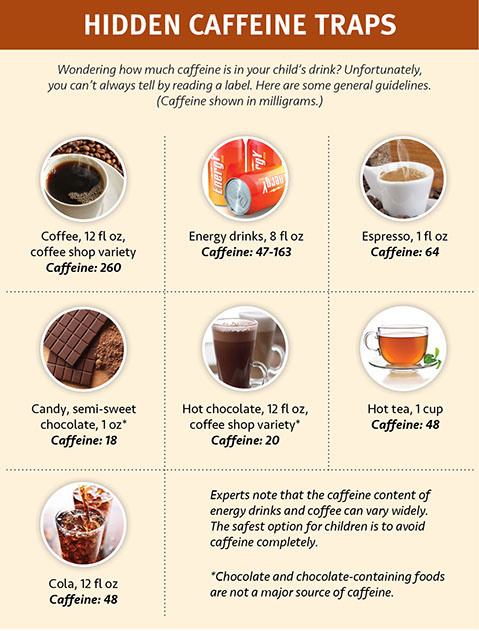
    Many kids love the sugary sweet taste of soda, sports drinks and energy drinks. And, many of these drinks also contain various amounts of caffeine. Is it okay for your child to consume these drinks?

    No, says the American Academy of Pediatrics (AAP). Because these drinks can actually be harmful, the AAP says children and teens should avoid them. Here’s why:

    *  Caffeine can be harmful to a child’s developing brain and heart, according to the AAP.

    *  Soda contains extra sugar and calories that can lead to weight gain and tooth decay.

    *  Energy drinks contain caffeine and other stimulants which can be harmful to children. Often, the caffeine content is not listed and can be higher than a cup of coffee.

    *  Water is a better option for kids playing sports. Sports drinks are usually not needed and often contain extra calories. Only children who exercise very hard for long periods may need a sports drink to replenish lost electrolytes, such as sodium and potassium.

    The Academy of Nutrition and Dietetics (AND) agrees. Caffeine can interfere with a child’s sleep. The AND adds that caffeine can lead to a cycle of lack of sleep and consuming more caffeine to get through the day. If your child is low on energy, the AND recommends a short nap or getting to bed earlier at night.

    © American Institute for Preventive Medicine

  • Single Parents: Strategies For Success

    FAMILY LIFE

    Image of father and young daughter.

    Being a single parent can be stressful. After all, raising a child is tough work! Without someone else to share the load, things may feel twice as hard.

    The U.S. Census Bureau says 11 million households with kids under age 18 have a single parent. These tips can help you and your children lead happy and healthy lives, together:

    *  Let your kids talk. Have a family meal or some time each day to talk with your kids. Ask them about school and activities. Young children may appreciate some quiet playtime with you or reading a book together. Let them talk about their feelings, both positive and negative ones.

    *  Get support. Family, friends and support groups can be very helpful for single parents. Talking to other adults is a great way to get helpful advice and lower your stress level.

    *  Don’t worry about buying “things” for your kids. Most kids just want time with their parent. Your attention is one of the best gifts you can give them.

    *  Find good child care. You may need some time for yourself, away from your kids. A reliable babysitter or daycare is a great way to give you a break from caring for your kids. Try a new hobby, take a walk, or go out with a friend when you get the chance.

    *  Keep a schedule. As much as possible, keep each day close to the same schedule. A consistent bedtime, wake time and meal times can help kids feel secure. Kids like routine because they know what happens next.

    *  Don’t turn to your kids for support. It can be hard when you feel like you need to talk to someone about your feelings. You may be tempted to say things to your kids about work stress or your former spouse or partner. Avoid this, as it adds stress and worry to a child’s mind. Try to keep it to yourself and “vent” to an adult friend instead.

    *  Work on discipline with your former spouse or partner. Having the same rules and parenting strategy is important if kids spend time at more than one house. Try to talk with your child’s other parent about ways you can work together to raise healthy and confident kids.

    *  Keep an eye on your mental well-being. If you are feeling helpless or hopeless, or if you have anxiety or panic attacks, talk to your doctor. Your mental health is an important part of taking on the stress of being a single parent.

    Source: American Academy of Pediatrics

    © American Institute for Preventive Medicine