Tag: protection

  • Flu Shot Faqs

    MEDICAL NEWS

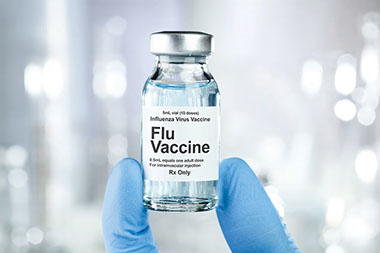
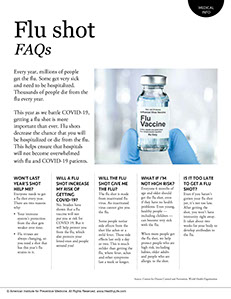
    Flu vaccine in bottle.

    Every year, millions of people get the flu. Some get very sick and need to be hospitalized. Thousands of people die from the flu every year.

    This year as we battle COVID-19, getting a flu shot is more important than ever. Flu shots decrease the chance that you will be hospitalized or die from the flu. This helps ensure that hospitals will not become overwhelmed with flu and COVID-19 patients.

    Won’t last year’s shot help me?

    Everyone needs to get a flu shot every year. There are two reasons why:

    *  Your immune system’s protection from the shot gets weaker over time.

    *  Flu viruses are always changing, so you need a shot that has this year’s flu strains in it.

    Will a flu shot increase my risk of getting COVID-19?

    No. Studies have shown that a flu vaccine will not put you at risk for COVID-19. But it will help protect you from the flu, which also protects your loved ones and people around you!

    Will the flu shot give me the flu?

    The flu shot is made from inactivated flu virus. An inactivated virus cannot give you the flu. Some people notice side effects from the shot like aches or a mild fever. These side effects last only a day or two. This is much milder than getting the flu, where fever, aches and other symptoms last a week or longer.

    What if I’m not high risk?

    Everyone 6 months of age and older should get the flu shot, even if they have no health problems. Even young, healthy people – including children – can become very sick with the flu.

    When more people get the flu shot, we help protect people who are high risk, including babies, older adults and people who are allergic to the shot.

    Is it too late to get a flu shot?

    Even if you haven’t gotten your flu shot yet, it’s not too late. After getting the shot, you won’t have immunity right away. It takes about two weeks for your body to develop antibodies to the flu.

    Source: Centers for Disease Control and Prevention, World Health Organization
    © American Institute for Preventive Medicine

  • Prevent Child Abuse With Strong Families

    FAMILY LIFE

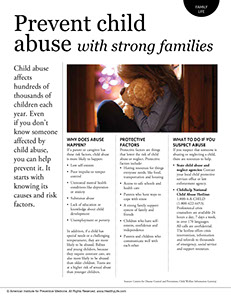
    Young child cuddled up with teddy bear.

    Child abuse affects hundreds of thousands of children each year. Even if you don’t know someone affected by child abuse, you can help prevent it. It starts with knowing its causes and risk factors.

    Why does abuse happen?

    If a parent or caregiver has these risk factors, child abuse is more likely to happen:

    *  Low self-esteem

    *  Poor impulse or temper control

    *  Untreated mental health conditions like depression or anxiety

    *  Substance abuse

    *  Lack of education or knowledge about child development

    *  Unemployment or poverty

    In addition, if a child has special needs or a challenging temperament, they are more likely to be abused. Babies and young children, because they require constant care, are also more likely to be abused than older children. Teens are at a higher risk of sexual abuse than younger children.

    Protective factors

    Protective factors are things that lower the risk of child abuse or neglect. Protective factors include:

    *  Having resources for things everyone needs, like food, transportation and housing

    *  Access to safe schools and health care

    *  Parents who have ways to cope with stress

    *  A strong family support system of family and friends

    *  Children who have self-esteem, confidence and independence

    *  Parents and children who communicate well with each other

    What to do if you suspect abuse

    If you suspect that someone is abusing or neglecting a child, there are resources to help.

    *State child abuse and neglect agencies:Contact your local child protective services office or law enforcement agency.

    *Childhelp National Child Abuse Hotline:1.800-4-A-CHILD  (1-800-422-4453). Professional crisis counselors are available 24 hours a day, 7 days a week, in over 170 languages. All calls are confidential. The hotline offers crisis intervention, information and referrals to thousands of emergency, social service and support resources.

    Sources: Centers for Disease Control and Prevention, Child Welfare Information Gateway

    © American Institute for Preventive Medicine
  • Uv Safety 2

    SELF-CARE CORNER

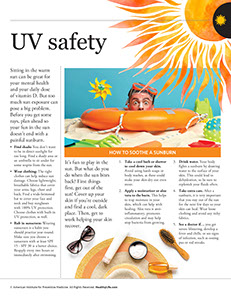
    Man's sun burn face popping out of swimming tube.

    Sitting in the warm sun can be great for your mental health and your daily dose of vitamin D. But too much sun exposure can pose a big problem. Before you get some rays, plan ahead so your fun in the sun doesn’t end with a painful sunburn.

    *Find shade:You don’t want to be in direct sunlight for too long. Find a shady area or an umbrella to sit under for some respite from the sun.

    *Wear clothing:The right clothes can help reduce sun damage. Choose lightweight, breathable fabrics that cover your arms, legs, chest and back. Find a wide-brimmed hat to cover your face and neck and buy sunglasses with 100% UV protection. Choose clothes with built-in UV protection, as well.

    *Rub in sunscreen:Wearing sunscreen is a habit you should practice year-round. Make sure you choose a sunscreen with at least SPF 15 – SPF 30 is a better choice. Reapply every two hours or immediately after swimming.

    How to soothe a sunburn

    It’s fun to play in the sun. But what do you do when the sun bites back? First things first, get out of the sun! Cover up your skin if you’re outside and find a cool, dark place. Then, get to work helping your skin recover.

    1.Take a cool bath or shower to cool down your skin.Avoid using harsh soaps or body washes, as these could make your skin dry out even more.

    2.Apply a moisturizer or aloe vera to the burn.This helps to trap moisture in your skin, which can help with healing. Aloe vera is anti-inflammatory, promotes circulation and may help stop bacteria from growing.

    3.Drink water.Your body fights a sunburn by drawing water to the surface of your skin. This could lead to dehydration, so be sure to replenish your fluids often.

    4.Take extra care.After a sunburn, it is very important that you stay out of the sun for the next few days so your skin can heal. Wear loose clothing and avoid any itchy fabrics.

    5.See a doctor if…you get severe blistering, develop a fever and chills, or see signs of infection, such as oozing pus or red streaks.

    © American Institute for Preventive Medicine

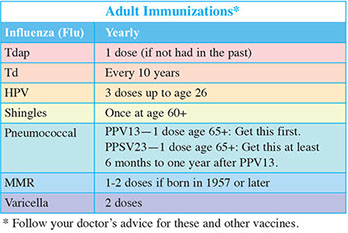
  • Immunizations: Your Best Shot Against Infectious Diseases

    Healthy Travel

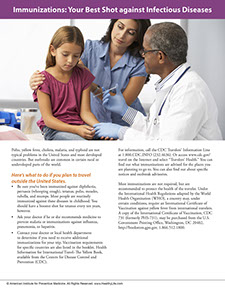
    Image of mother comforting young daughter as she gets a shot.

    Polio, yellow fever, cholera, malaria, and typhoid are not typical problems in the United States and most developed countries. But outbreaks are common in certain rural or undeveloped parts of the world.

    Here’s what to do if you plan to travel outside the United States.

    *  Be sure you’ve been immunized against diphtheria, pertussis (whooping cough), tetanus, polio, measles, rubella, and mumps. Most people are routinely immunized against these diseases in childhood. You should have a booster shot for tetanus every ten years, however.

    *  Ask your doctor if he or she recommends medicine to prevent malaria or immunizations against influenza, pneumonia, or hepatitis.

    *  Contact your doctor or local health department to determine if you need to receive additional immunizations for your trip. Vaccination requirements for specific countries are also listed in the booklet, Health Information for International Travel-The Yellow Book, available from the Centers for Disease Control and Prevention (CDC).

    For information, call the CDC Travelers’ Information Line at 1.800.CDC.INFO (232.4636). Or accesswww.cdc.gov/travelon the Internet and select “Travelers’ Health.” You can find out what immunizations are advised for the places you are planning to go to. You can also find out about specific notices and outbreak advisories.

    Most immunizations are not required, but are recommended to protect the health of the traveler. Under the International Health Regulations adapted by the World Health Organization (WHO), a country may, under certain conditions, require an International Certificate of Vaccination against yellow fever from international travelers. A copy of the International Certificate of Vaccination, CDC 731 (formerly PHS-731), may be purchased from the U.S. Government Printing Office, Washington, DC 20402,http://bookstore.gpo.gov, 1.866.512.1800.

    Page image from A Year of Health Hints book by the American Institute for Preventive Medicine. www.HealthyLife.com. All rights reserved.

    © American Institute for Preventive Medicine
  • Child Passenger Safety

    Child Safety

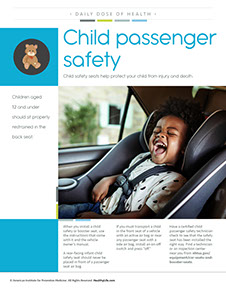
    Yound child in a car seat laughing.

    Child safety seats help protect your child from injury and death.

    Children aged 12 and under should sit properly restrained in the back seat.

    When you install a child safety or booster seat, use the instructions that come with it and the vehicle owner’s manual.

    A rear-facing infant child safety seat should never be placed in front of a passenger seat air bag.

    If you must transport a child in the front seat of a vehicle with an active air bag or near any passenger seat with a side air bag, install an on-off switch and press “off.”

    Have a certified child passenger safety technician check to see that the safety seat has been installed the right way. Find a technician or an inspection center near you fromnhtsa.gov/equipment/car-seats-and-booster-seats.

    A Year of Health Hints book by the American Institute for Preventive Medicine. www.HealthyLife.com. All rights reserved.

    © American Institute for Preventive Medicine

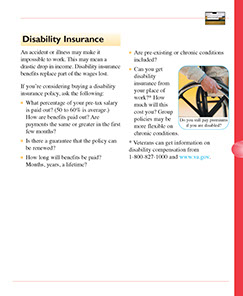
  • Disability Insurance

    Medical Care

    Image of nurse with wheelchair bound women.

    An accident or illness may make it impossible to work. This may mean a drastic drop in income. Disability insurance benefits replace part of the wages lost.

    If you’re considering buying a disability insurance policy, ask the following:

    *  What percentage of your pre-tax salary is paid out? (50 to 60% is average.) How are benefits paid out? Are payments the same or greater in the first few months?

    *  Is there a guarantee that the policy can be renewed?

    *  How long will benefits be paid? Months, years, a lifetime?

    *  Are pre-existing or chronic conditions included?

    *  Can you get disability insurance from your place of work?* How much will this cost you? Group policies may be more flexible on chronic conditions.

    * Veterans can get information on disability compensation from 1-800-827-1000 andwww.va.gov.

    Page from the Health at Home Lifetime book by the American Institute for Preventive Medicine. www.HealthyLife.com. All rights reserved.

    © American Institute for Preventive Medicine
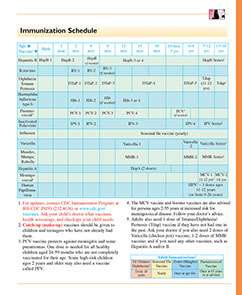
  • Immunization Schedule

    Medical Exams

    1.  For updates, contact CDC Immunization Program at 800.CDC.INFO (232.4636) orwww.cdc.gov/vaccines. Ask your child’s doctor what vaccines, health screenings, and checkups your child needs.

    2.  Catch-up vaccines should be given to children and teenagers who have not already had them.

    3.  PCV vaccine protects against meningitis and some pneumonias. One dose is needed for all healthy children aged 24-59 months who are not completely vaccinated for their age.

    Vaccines for Traveling Abroad

    Before you travel to other countries, find out if you need certain vaccines. Get information from the CDC Travelers’ Information Line. Call 800.CDC.INFO (232.4636) or use thewww.cdc.gov/travelWeb site. Discuss your needs with your doctor.

    Page from the Healthier at Home book by the American Institute for Preventive Medicine. www.HealthyLife.com. All rights reserved.

    © American Institute for Preventive Medicine

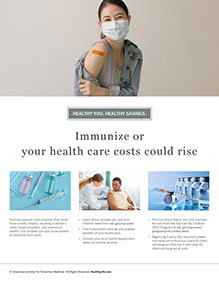
  • Immunize Or Your Health Care Costs Could Rise

    Medical Exams

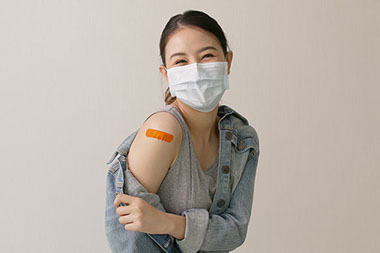
    Women wearing face mask, smiling, showing bandage on arm where she got a vaccine.

    Vaccines prevent many diseases that could have a costly impact, resulting in doctor’s visits, hospitalizations, and premature deaths. Sick children can also cause parents to lose time from work.

    *  Learn about vaccines you and your children need fromcdc.gov/vaccines.

    *  Find if and which vaccines are covered benefits of your health plan.

    *  Contact your local health department about its vaccine services.

    *  Find out about free or low-cost vaccines for kids from the Vaccines for Children (VFC) Program atcdc.gov/vaccines/programs/vfc/index.html.

    *  Beginning in early fall, read local papers and store ads to find out where flu shots will be given. Find out if and when flu shots will be given at work.

    ays to Well-Being book by the American Institute for Preventive Medicine. www.HealthyLife.com. All rights reserved.

    © American Institute for Preventive Medicine
  • Infant Immunization

    Pediatric Care

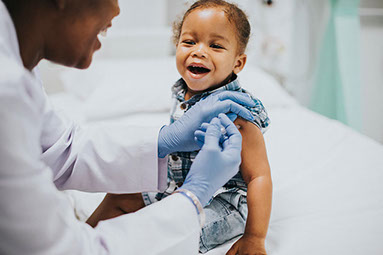
    Young child getting a vaccine from doctor.

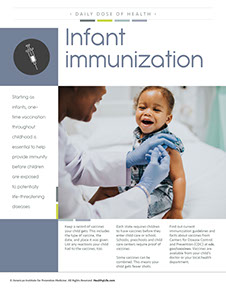
    Starting as infants, one-time vaccination throughout childhood is essential to help provide immunity before children are exposed to potentially life-threatening diseases.

    Keep a record of vaccines your child gets. This includes the type of vaccine, the date, and place it was given. List any reactions your child had to the vaccines, too.

    Each state requires children to have vaccines before they enter child care or school. Schools, preschools and child care centers require proof of vaccines.

    Some vaccines can be combined. This means your child gets fewer shots.

    Find out current immunization guidelines and facts about vaccines from Centers for Disease Control and Prevention (CDC) atcdc.gov/vaccines. Vaccines are available from your child’s doctor or your local health department.

    A Year of Health Hints book by the American Institute for Preventive Medicine. www.HealthyLife.com. All rights reserved.

    © American Institute for Preventive Medicine

  • Infant Safety

    Child Safety

    Young baby wearing blue hat and wrapped in blue blanket.

    Infants depend on their families to keep them safe. While all babies are unique, there are some safety issues that apply to all infants.

    Never leave a baby or young child alone near any water, such as a bathtub, a toilet, a bucket with water, etc., not even to answer a telephone or the door.

    Do not leave a baby alone on a changing table, bed, sofa or chair.

    Sudden Infant Death Syndrome (SIDS) is the leading cause of death among babies between 1 month and 1 year old. To reduce the risk, place a baby to sleep on its back with a wearable blanket on a flat, sleep surface, covered only with a fitted sheet. Do not use a blanket, pillow, or add toys.

    From infancy on, ask your child’s doctor to check your child’s vision at regular exams. In general, children should start getting vision screening exams starting at age 3.

    A Year of Health Hints book by the American Institute for Preventive Medicine. www.HealthyLife.com. All rights reserved.

    © American Institute for Preventive Medicine