Category: Mental Health Care

  • Be Mindful Of…Clutter

    Mental Health Care

    Women carrying 3 large bins over-filled with clothes.

    A clear home can help create a calmer mind. The act of de-cluttering can be emotionally cleansing. Start by evaluating what you have, one room at a time, and how it reflects your current values and lifestyle. Focus on having things in your space that truly connect with your purpose, your loved ones, and with things that bring you joy.

    Minding Your Mental Health Book. Published by the American Institute for Preventive Medicine. www.HealthyLife.com. All rights reserved.

    © American Institute for Preventive Medicine

  • Be Mindful Of…Gratitude

    Mental Health Care

    Wooden circle being held with hands with "Thank You" engraved.

    Practicing gratitude may help nurture better brain health and create more positive events in your life. Make gratitude a part of your day and send more positive, health-promoting vibes to your brain. Thank a friend for their support, set a daily phone reminder to count your blessings, and be sure to thank those who help keep you safe.

    Minding Your Mental Health Book. Published by the American Institute for Preventive Medicine. www.HealthyLife.com. All rights reserved.

    © American Institute for Preventive Medicine

  • Be Mindful Of…Positive Thinking

    Mental Health Care

    Smiling man talking on phone.

    How can we turn off negative self-talk and develop a more “half-full cup” approach to life? Research suggests we would enjoy many health benefits if we could, including less stress. Start by noticing when you have a positive experience and stay with that up-lifting feeling for 30 seconds. Over time, you may train your brain to create more and more optimistic thoughts.

    Minding Your Mental Health Book. Published by the American Institute for Preventive Medicine. www.HealthyLife.com. All rights reserved.

    © American Institute for Preventive Medicine

  • Be Mindful Of…Building Resilience

    Mental Health Care

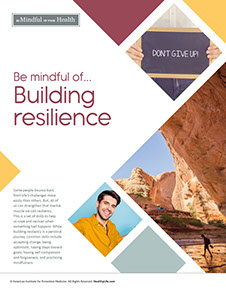
    Smiling man.

    Some people bounce back from life’s challenges more easily than others. But, all of us can strengthen that mental muscle we call resiliency. This is a set of skills to help us cope and recover when something bad happens. While building resiliency is a personal journey, common skills include accepting change, being optimistic, taking steps toward goals, having self-compassion and forgiveness, and practicing mindfulness.

    Minding Your Mental Health Book. Published by the American Institute for Preventive Medicine. www.HealthyLife.com. All rights reserved.

    © American Institute for Preventive Medicine

  • Connect With Nature Year-Round

    Mental Health Care

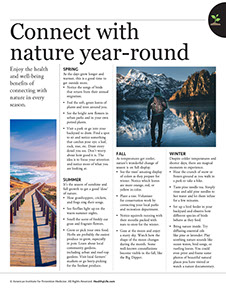
    Man standing in front of lake and mountains.

    Enjoy the health and well-being benefits of connecting with nature in every season.

    Spring

    As the days grow longer and warmer, this is a good time to get outside more.

    *  Notice the songs of birds that return from their annual migration.

    *  Feel the soft, green leaves of plants and trees around you.

    *  See the bright new flowers in urban parks and in your own potted plants.

    *  Visit a park or go into your backyard to draw. Find a spot to sit and notice something that catches your eye: a leaf, rock, tree, etc. Draw every detail you see. Don’t worry about how good it is. The idea is to focus your attention and notice more of what you are looking at.

    Summer

    It’s the season of sunshine and full growth to get a good ‘dose’ of nature.

    *  Hear grasshoppers, crickets, and frogs sing their songs.

    *  See fireflies light up on the warm summer nights.

    *  Smell the scent of freshly cut grass and fragrant flowers.

    *  Grow or pick your own food. Herbs are probably the easiest produce to grow, especially in pots. Learn about local community gardens, including urban and roof-top gardens. Visit local farmers’ markets or go berry-picking for the freshest produce.

    Fall

    As temperatures get cooler, nature’s wonderful change of season is on full display.

    *  See the trees’ amazing display of colors as they prepare for winter. Notice which leaves are more orange, red, or yellow in color.

    *  Plant a tree. Volunteer for conservation work by contacting your local parks and recreation department.

    *  Notice squirrels running with their mouths packed with nuts to store for the winter.

    *  Gaze at the moon and enjoy a starry sky. Watch how the shape of the moon changes during the month. Some well-known constellations become visible in the fall, like the Big Dipper.

    Winter

    Despite colder temperatures and shorter days, there are magical moments to experience.

    *  Hear the crunch of snow or frozen ground as you walk in a park or take a hike.

    *  Taste pine needle tea. Simply rinse and add pine needles to hot water and let them infuse for a few minutes.

    *  Set up a bird feeder in your backyard and observe how different species of birds behave as they feed.

    *  Bring nature inside. Try diffusing essential oils like pine or lavender. Play soothing nature sounds like ocean waves, bird songs, or rustling leaves. You could even print and frame some photos of beautiful natural places you have visited or watch a nature documentary.


    Minding Your Mental Health Book. Published by the American Institute for Preventive Medicine. www.HealthyLife.com. All rights reserved.

    © American Institute for Preventive Medicine