Category: Family Life

  • Build A Strong Family Foundation

    FAMILY LIFE

    Family gardening together.

    Happy families have a strong foundation. This helps parents and children deal with changes and hard times. Every family faces challenges and stress. Here’s how to protect your family from whatever life throws at you.

    Show love through attention

    Connect with your kids or spouse each day. Take time to ask about their day or do an activity together. Have family meals when you can, play games or take walks together. Avoid being on screens too much, when no one is talking or noticing one another.

    Be open to learning

    Having a strong family takes knowledge and care. No one knows everything about families and relationships. Parents can take classes about child development. See a marriage counselor if your marriage is having trouble. You can also look into support groups. Ask your family’s doctor if you need help dealing with specific challenges.

    Care for yourself

    If you get burned out, you can’t help others in your family. Take quiet time to listen to music, take a bath or do whatever relaxes and calms you. Get regular exercise, such as walking, and include family members if you can. Talk to a trusted friend when you’re stressed or overwhelmed.

    Build your community

    Connect with others who understand and support you. Join a sports team, a group or a religious organization that supports family life. Community can make life fun and help you learn from others, too.

    Be open about problems

    If you’re stressed and need some time alone, tell your spouse or your kids. Explain that you need some time to calm down, rather than blowing up or feeling resentment toward them.

    Don’t overschedule

    Try to keep your activities and family calendar reasonable. When everyone is too busy, there’s not much time to connect.

    Sources: American Academy of Family Physicians, U.S. Department of Health and Human Services

    © American Institute for Preventive Medicine
  • Preparing For College Move-In

    FAMILY LIFE

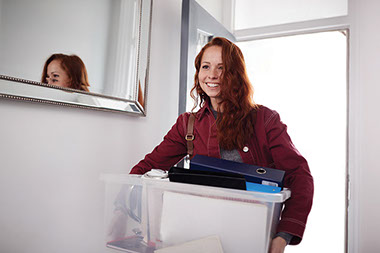
    Female college student carring in a full bin of stuff.

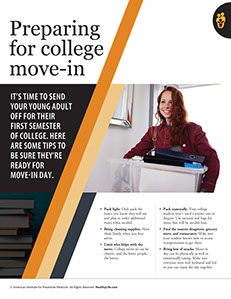
    It’s time to send your young adult off for their first semester of college. Here are some tips to be sure they’re ready for move-in day.

    *Pack light.Only pack the basics you know they will use and plan to order additional items when needed.

    *Bring cleaning supplies.Have them handy when you first arrive.

    *Limit who helps with the move.College move-in can be chaotic, and the fewer people, the better.

    *Pack seasonally.Your college student won’t need a winter coat in August. Use vacuum seal bags for items that will be needed later.

    *Find the nearest drugstore, grocery store, and restaurants.Make sure your student knows how to access transportation to get there.

    *Bring lots of snacks.Move-in day can be physically as well as emotionally taxing. Make sure everyone stays well hydrated and fed so you can enjoy the day together.

    © American Institute for Preventive Medicine
  • Children Of Parents With Aud

    Child Safety

    Close up of adult holding a bottle of alcohol.

    Children of persons with alcohol use disorder (AUD) are more likely than others to become addicted to alcohol or other drugs.

    It is common for children of parents with AUD to blame themselves for their parent’s drinking problem. In truth, children do not cause the problem, can’t control it, and can’t cure it.

    To help cope with being the child of a parent with AUD, contact Al-Anon /Alateen at al-anon.alateen.org.

    A person with AUD needs professional help. To learn more about alcohol treatment options visitalcoholtreatment.niaaa.nih.gov.

    A Year of Health Hints book by the American Institute for Preventive Medicine. www.HealthyLife.com. All rights reserved.

    © American Institute for Preventive Medicine

  • Being Ready For A Disaster

    Home Safety

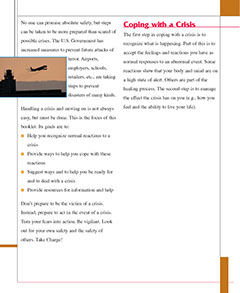
    By acting on the items below, you and your family can be prepared for many types of disasters that may occur in the future.

    General Tips to Stay Safe

    *  Be alert and aware of what’s around you (e.g., a strange car parked in the same spot for a long time or an odd package). Report these and threats of violence to local police. Since the attack inside Columbine High School in 1999, plans for violence in other schools have been prevented because people have found and told police about notes with plans, materials to make bombs, etc. Stay calm and patient.

    *  Listen for sirens that alert you about a possible disaster.

    *  Tune into the TV or radio for news as well as what to do. The Emergency Alert System (EAS) decides what actions should be taken. For more information, contactwww.fcc.gov/eb/eas.

    *  Check for injuries and give first aid, if needed.

    Plans to Make Before a Disaster

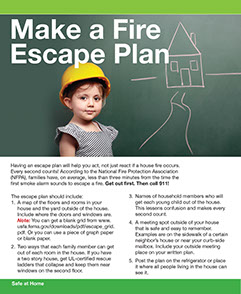
    *  Write down, ahead of time, the steps to take for different disasters (e.g., house, fires, floods, etc.). Go through drills for each plan with the whole family. Make sure the car always has gas. This is in case you have to leave an area.

    *  Know your place of work’s emergency plans. Find out about them from your supervisor, Employee Assistance Program (EAP), etc.

    *  Take a course in first aid from the Red Cross, your police or fire department.

    *  Give each family member a prepaid phone card with about a ten dollar value. Instruct children how to use the card and a pay phone. Some cell phone services may be overwhelmed in an emergency.

    *  Set up a “check-in” plan. Choose someone for family members to call or e-mail to check on each other. Pick someone far enough away who would not likely be part of the same event. Of course, call each other on cell, regular, or pay phones.

    *  Choose two places to meet. One is at home or near your home. Choose another place farther away in case you can’t get home. Make plans for the safety of your children.

    *  If you have children in school, find out the school’s crisis plan. Know the school’s policy for sending children home. Make sure the school has current phone numbers for you and other caregivers in case you can’t be reached. Find out what the school needs to have to release your child to designated caregivers.

    *  If you have a pet, plan for its safety. For more information, contact the Red Cross orwww.disasterrelief.org/library/prepare/pets.html.

    *  When you enter a building, find emergency exits and stairways. Plan ahead how to get out quickly from buildings, vehicles, crowded public places, etc.

    *  Make an emergency supply kit. Put these things in backpacks or containers that one or more family members can easily carry:

    – Three days’ supply of bottled water (one gallon a day per person if possible. Put these next to, not in your containers.)

    – Food that won’t spoil. A hand can opener.

    – Flashlight and extra batteries

    – A battery powered radio or TV and extra batteries

    – First aid kits for the home and the car

    – Sleeping bags or blankets

    – A change of clothing for each person

    – Items for family members with special needs (e.g., baby supplies, medicines, etc.)

    – Duct tape and dry towels that you can make wet to make a room airtight

    – Bleach

    – Important documents, cash, and credit cards

    For more information on being ready for disasters, contactwww.redcross.orgor call your local Red Cross. Ask about their “Preparing for the Unexpected” class. This one and a half-hour class teaches families and employees safety steps to take for many kinds of disasters.

    Types of Disasters

    Weather Disasters

    *  Find out and be prepared for disasters that are likely to occur in your area (e.g., floods, earthquakes, tornados, etc.).

    *  Tune in, daily, to weather forecasts. The Emergency Broadcast System (EBS) uses radio and TV stations to issue a WATCH (for an expected emergency) or a WARNING (for an emergency in progress or one that is about to occur).

    *  Heed the warnings given. Emergency sirens may also sound. Know when your community does a practice drill for sirens (e.g., the first Saturday of the month at 1:00 p.m). Then you won’t confuse this with an actual emergency.

    *  Watch for fallen power lines. Avoid them.

    For more information on weather updates, contact The National Weather Service atwww.nws.noaa.gov.

    Biological Terrorism

    Biological terrorism includes anthrax, smallpox, and other biological agents. If a biological attack occurs, the public will be informed and told what to do. Stay calm and listen for instructions on the radio or television.

    For up-to-date information on biological agents, contact the Centers for Disease Control and Prevention. Call 888.246.2675 (English), 888.246.2857 (Spanish) or visitwww.bt.cdc.gov.

    Bomb Threats

    *  Don’t touch strange packages.

    *  Be suspicious if packages have a ticking sound or have wires or aluminum foil sticking out from them.

    *  Leave the building as fast as you can.

    *  Call local police and the building manager.

    *  When leaving a building, try not to walk by windows.

    For more information, contactwww.disasterrelief.org.

    Anthrax

    Anthrax has already led to illness and death for a limited number of Americans. How concerned should you be about this now? Again, knowledge is power. Don’t panic!

    Know these simple facts:

    *  Anthrax is caused by a specific bacteria. If caught early enough, it can be treated with antibiotics. It does not spread from person to person.

    *  Know what anthrax looks like. It can be brownish and grainy. This is a crude form. It can also be a very fine, white powder.

    *  Know the symptoms of anthrax infections. Symptoms depend on the way anthrax causes the infection. The most common way to get infected is anthrax exposure through a cut or abrasion in the skin. When treated early, this is curable. Inhaled anthrax is more harmful, but is also treatable if found very early.

    Signs and Symptoms of Inhaled Anthrax

    *  Fever

    *  Cough (dry, not with phlegm)

    *  Muscle aches

    *  A hard time breathing

    *  Chest discomfort

    *  A runny nose is not a symptom.

    Signs and Symptoms of Skin Anthrax

    *  A raised, itchy bump that looks like a bug bite

    *  Within two days, this changes into a fluid-filled sac.

    *  A painless ulcer with a dark or black area in the center

    What Else Can You Do?

    *  Get a flu shot at the start of flu season. This lessens the chance of getting the flu. Then you won’t confuse flu symptoms with those of anthrax.

    *  Seek medical care for anthrax symptoms. This is most important for persons who could have been exposed to anthrax where they work or live.

    *  Take antibiotics only if they are prescribed. Don’t take them “just in case” to prevent getting anthrax. Taking antibiotics when they are not needed could lead to resistant bacteria. This means the medicine will no longer work against the germ.

    *  When you open mail keep it away from your face.

    *  Don’t blow or sniff the contents.

    *  WASH YOUR HANDS WELL AFTER YOU HANDLE MAIL!

    *  For more information on anthrax, contactwww.bt.cdc.gov.

    Smallpox

    Smallpox is caused by a specific virus. It was wiped out as a disease in 1977, but may exist in labs in some foreign countries. This makes it possible for use in germ warfare. Smallpox is very contagious.

    What Can You Do?

    *  Listen to the news on a regular basis. If a confirmed case of smallpox occurs, the public will be informed and told what to do.

    *  Know the symptoms of smallpox.

    *  For people exposed to smallpox, a vaccine (from an emergency supply) can be given to lessen the severity of or even prevent the illness. The vaccine needs to be given within 4 days after exposure, though.

    {Note: Besides anthrax and smallpox, there are other biological agents that terrorists could use. The government will provide information if this is an issue to be concerned about.}

    Signs and Symptoms of Smallpox

    These occur about 12 days after exposure.

    *  High fever

    *  Fatigue

    *  Headache

    *  Backache

    *  Skin rash, mostly on the face and then on the arms and legs a few days later

    *  The rash starts out flat and red and then becomes pus-filled.

    *  Crusts form early in the second week.

    *  Scabs form and

    Explosions and Fires

    *  Follow fire prevention measures. Install and maintain smoke alarms. Plan escape routes from both your home and your place of work. For a more complete list of fire prevention tips, contact: National Fire Protection Association atwww.nfpa.orgor contactwww.firesafetytips.com.

    *  Know the building’s emergency plan.

    *  Know where fire exits are.

    *  Keep fire extinguishers working. Know where they are and how to use them.

    *  Learn first aid.

    *  Keep a battery-operated radio, flashlights and extra batteries, a first-aid kit, and bright tape to mark off unsafe areas on each floor.

    *  Stay calm and exit the building quickly.

    *  If things are falling, get under a strong table or chair.

    For more information on fire safety, contactwww.disasterrelief.org.

    When Inside a Building Where a Fire Occurs

    *  Get out! Stay low (crawl) and exit the burning building as fast as you can.

    *  Feel the top, middle, and bottom of a closed door for heat. If the door is not warm, brace yourself against the door and open it slowly. If the door is warm, find another way out.

    *  Always stay below the smoke.

    *  After you are out, call 911!

    When Trapped in a Collapsed Building

    *  Use a flashlight, if you have one.

    *  Don’t move more than necessary so you won’t kick up dust. Cover your mouth with clothing.

    *  To help someone find you, tap a pipe or wall or whistle. Don’t yell. Doing so can cause you to breathe in dangerous amounts of dust. Shout only as a last resort.

    *  Wait for emergency workers. (Untrained people should not try to go inside a collapsed building for any reason.)

    Harmful Chemical Exposures

    Once in awhile, you hear about chemical leaks from industrial sites. The threat of chemical warfare is also on the minds of Americans. Of utmost concern is to keep your home safe.

    What Can You Do?

    *  Install a carbon monoxide detector in your home and garage. Follow the manufacturer’s instructions.

    *  If the alarm sounds, open windows and doors. Leave the building right away. Call 911 if persons are dizzy, weak, short of breath, confused, etc. If not, turn off all appliances that use fuel and have a qualified person inspect your home.

    *  Don’t run cars and lawn mowers in the garage. Don’t use gas ranges for heat.

    *  Have your home furnace, chimney, and flue checked by a qualified person every year. If you think there is a gas leak, call the local gas company and follow their advice.

    *  Use common sense. Buying biohazard suits and expensive gas masks are a waste of money.

    *  If you work at a company where a harmful chemical leak or exposure could occur, follow your workplace safety guidelines. Use Material Safety Data Sheets (MSDS’s), which tell you how to use chemicals safely. Know where this data is. Use the information given.

    *  In the event of a chemical leak or exposure, follow the advice of local officials. You may be told to “evacuate” or “shelter in place.”

    Evacuate

    *  If officials tell you to leave the area, do so right away.

    *  Take your disaster supply kit, if available.

    *  Wear pants, long-sleeved shirts, and sturdy shoes for protection.

    *  Lock your home.

    *  Travel routes approved by local officials. Shortcuts could be dangerous or closed.

    *  Take pets.

    *  Watch for fallen power lines and avoid them.

    Shelter in Place

    If local officials recommend to “shelter in place,” stay in your home or workplace.

    *  Close and lock windows and outside doors.

    *  Turn off heating and cooling units and fans.

    *  Close the fireplace flue.

    *  Get your disaster supply kit, if available.

    *  Turn on the radio and listen for what to do.

    *  If you can, go to an inside room with no windows above ground level.

    *  Seal vents and cracks around doors with duct tape and wet towels. Tape all the faucets and drains, too.

    Contact with chemicals can kill. For this reason, do not leave the shelter to help victims. Persons trained to deal with harmful chemicals should treat victims.

    Take Charge, Coping with a Crisis book by the American Institute for Preventive Medicine. www.HealthyLife.com. All rights reserved.

    © American Institute for Preventive Medicine

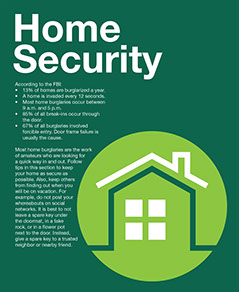
  • Your Home Is Your Castle. Keep It Safe To Prevent Costly Accidents.

    Home Safety

    Family of 4 sitting outside their front door.

    *  Install smoke alarms and a carbon monoxide detector. Check them at least every 6 months.

    *  Keep a working fire extinguisher handy.

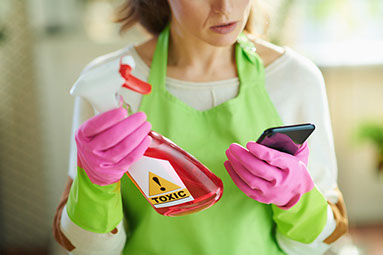
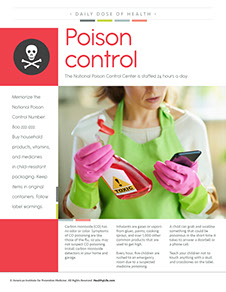
    *  Keep medicines, vitamins, and all harmful substances out of children’s reach. In case of accidental poisoning, call the Poison Control Center at 1.800.222.1222.

    Prevent falls

    *  Keep walk paths inside and outside well lit and clear of clutter, electrical cords, snow, ice, etc.

    *  Clean up grease, water and other liquids right away.

    *  Don’t wax floors.

    *  Use rugs with nonskid backing.

    *  Install and use handrails on both sides of stairs.

    *  Use safety mats, grab bars, etc. in showers and tubs.

    * If you need to reach items in high cabinets or on shelves, use a sturdy step stool with handrails.

    A Year of Health Hints book by the American Institute for Preventive Medicine. www.HealthyLife.com. All rights reserved.

    © American Institute for Preventive Medicine

  • Caring For Family From Afar

    FAMILY LIFE

    Nurse helping patient at home.

    Anyone, anywhere can help care for a loved one. You don’t have to live in the same town, or even the same state. If you live far away from an older relative, you may wonder how you can help. Long-distance caregiving is possible.

    Before you start

    Does your loved one already have a primary caregiver? Talk to that person about how you can help. It’s usually best to coordinate your efforts with the person who sees your loved one most often.

    If they don’t yet have a caregiver but need one, you can help with that too. Talk to other family members and discuss the options. You may be able to help with finding and hiring a nurse or aide if family members can’t do it.

    Even if you can’t visit often, know that your visits are valuable. It’s time to not only catch up, but to take on some caregiving duties. Maybe you can give the primary caregiver a break while you are there. You can also find out what kinds of things you can do to help when you’re away.

    Options for helping out

    Some ideas for helping your long-distance loved one include:

    *  Helping them manage their finances or bill paying, which often can be done online

    *  Arranging for in-home care such as home health or nursing aides

    *  Ordering medical equipment that they need

    *  Making calls to the pharmacy for medication when they need it

    *  Researching skilled nursing or assisted living facilities

    *  Calling them often to check in and provide emotional support

    *  Contacting their insurance company if there are questions about coverage

    *  Keeping other family members informed about their health and needs

    *  Creating paperwork for an emergency that lists their health conditions and medicines they take

    Finding local resources

    There may be many resources close to home that can help your relative. You can get started online with these websites:

    *  Eldercare Locator:www.eldercare.acl.gov

    *  National Institute on Aging:www.nia.nih.gov

    *  Family Caregiver Alliance:www.caregiver.org

    Source: National Institute on Aging

    © American Institute for Preventive Medicine

  • Prevent Child Abuse With Strong Families

    FAMILY LIFE

    Young child cuddled up with teddy bear.

    Child abuse affects hundreds of thousands of children each year. Even if you don’t know someone affected by child abuse, you can help prevent it. It starts with knowing its causes and risk factors.

    Why does abuse happen?

    If a parent or caregiver has these risk factors, child abuse is more likely to happen:

    *  Low self-esteem

    *  Poor impulse or temper control

    *  Untreated mental health conditions like depression or anxiety

    *  Substance abuse

    *  Lack of education or knowledge about child development

    *  Unemployment or poverty

    In addition, if a child has special needs or a challenging temperament, they are more likely to be abused. Babies and young children, because they require constant care, are also more likely to be abused than older children. Teens are at a higher risk of sexual abuse than younger children.

    Protective factors

    Protective factors are things that lower the risk of child abuse or neglect. Protective factors include:

    *  Having resources for things everyone needs, like food, transportation and housing

    *  Access to safe schools and health care

    *  Parents who have ways to cope with stress

    *  A strong family support system of family and friends

    *  Children who have self-esteem, confidence and independence

    *  Parents and children who communicate well with each other

    What to do if you suspect abuse

    If you suspect that someone is abusing or neglecting a child, there are resources to help.

    *State child abuse and neglect agencies:Contact your local child protective services office or law enforcement agency.

    *Childhelp National Child Abuse Hotline:1.800-4-A-CHILD  (1-800-422-4453). Professional crisis counselors are available 24 hours a day, 7 days a week, in over 170 languages. All calls are confidential. The hotline offers crisis intervention, information and referrals to thousands of emergency, social service and support resources.

    Sources: Centers for Disease Control and Prevention, Child Welfare Information Gateway

    © American Institute for Preventive Medicine
  • Easy Ways To Childproof Your Home

    Child Safety

    Image of mom placing a safety gate on stairs.

    Is your home safe for curious children?

    To see your home from a toddler’s point of view, get down on your hands and knees and crawl around. Look for conditions that can lead to burns, falls, electric shock, entrapment, or poisoning. Then take steps to prevent harm. Some suggestions:

    *  Cover all toddler-height electrical outlets with plastic outlet covers.

    *  Install childproof locks on cabinets where household cleaners, chemicals, and other items that could harm children are stored.

    *  To prevent scalding burns, lower the thermostat on the water heater to 120ºF or lower.

    *  Store medicines and alcohol in high, out-of-reach places. Never leave them on a countertop, a table, or other places children can get them.

    *  Toddlers should eat and drink from plastic dishes and cups only.

    *  Don’t place a child’s crib or bed next to a window. An active or curious toddler could accidentally fall out.

    *  Keep all sharp objects like scissors, knives, or pins out of a toddler’s reach.

    A Year of Health Hints book by the American Institute for Preventive Medicine. www.HealthyLife.com. All rights reserved.

    © American Institute for Preventive Medicine
  • Be Safe – Prevent Falls Checklist

    Home Safety

    *  Do regular exercise to improve strength and balance.

    *  Ask your care team if conditions you have or medications you take raise your risk for falls. Ask how to lower the risk.

    *  Install handrails on both sides of the stairs.

    *  Keep stair areas well lit. Install a switch at the top and bottom of the stairs.

    *  Make sure that carpet on stairs is nailed down securely.

    *  Keep stairs clear of clutter.

    *  Install grab bars in the shower, tub, and toilet area.

    *  Use a shower bench that has rubber tips on the legs.

    *  Before getting in the tub, test the bath water. Make sure it is not too hot.

    *  Use a bath mat with suction cups or use nonslip adhesive strips in the tub/shower.

    *  Don’t use any loose area rugs.

    *  Keep lamp switches within easy reach.

    *  Arrange furniture so there is a clear path for walking.

    *  Test if furniture is sturdy enough to lean on.

    *  Clear away phone or electrical wires from walk paths.

    *  Use night lights.

    *  Only use step stools with handrails.

    *  Have snow and icy patches cleared from the sidewalk and steps.

    Note: Let your health care team know if you have had a fall.

    Other Home Safety Tips

    *  Keep emergency phone numbers posted.

    *  Stock first aid supplies.

    *  Never smoke in bed or when you feel drowsy. Better yet, don’t smoke at all!

    *  Install smoke alarms. Check them every 6 months. Keep a fire extinguisher in the kitchen and garage.

    *  Install carbon monoxide detectors in your home and garage.

    *  If you use a space heater, make sure it has an emergency shut off.

    *  Plan an escape route in case of fire.

    Health at Home Lifetime book by the American Institute for Preventive Medicine. www.HealthyLife.com. All rights reserved.

    © American Institute for Preventive Medicine